
The tee time is available. That does not yet tell you what kind of golf day you are buying. A course can be open while carts stay on paths, a practice area is unavailable or scheduled maintenance changes the experience around the greens.
For Texas golfers planning a November round, the useful question is bigger than whether the reservation button works. Ask what conditions and restrictions apply to the time you want, then decide whether that round fits your group.
This is not a statewide weather forecast or a claim that particular courses are currently restricted. Texas is too large for that shortcut. It is a practical way to get better information before paying, driving and finding out at the counter that everyone made a different assumption.
Ask what is happening on the day you will play
When calling a course, name the date and approximate time. “How is the course?” can invite a broad answer. “Are there any cart restrictions or scheduled maintenance for Saturday morning?” gives the staff something specific to check.
Ask about the parts of the day that matter to you: the course, the range, the putting green and the facilities your group expects to use. An open course does not automatically mean every practice area is open at the same hour.
Keep the question courteous. Conditions can change, and staff may need to give an answer that is accurate now without promising what a later weather system will do. Ask where updates are posted so you know what to check before leaving.
Cart-path-only can change the physical day
A cart reservation does not guarantee that the cart can travel alongside every shot. If the course is cart-path-only, golfers may still walk substantial distances between the path and their ball.
The USGA explains that courses can restrict carts for several reasons, including wet conditions that leave soil vulnerable to compaction. The restriction protects the playing surface and is not simply a matter of convenience for the golf shop.
For a group with mobility needs, that information belongs in the booking conversation. Ask what access is available and what current restrictions mean in practice. Do not assume that a cart fee resolves every access question, or that an individual exception will be available without discussion.
Take useful clubs when you leave the path
If restrictions apply, carry the clubs you might reasonably need for the shot rather than making repeated trips to the cart. A distance estimate, the lie and the wind can all affect the choice once you reach the ball.
This is a planning habit rather than a demand to carry half the bag. Take a small, sensible selection and keep track of what you set down. A towel or other familiar reminder can help you avoid leaving a wedge beside a green.
Coordinate with your cart partner as well. Decide where the cart should wait and how you will meet after the shot. A little cooperation reduces unnecessary backtracking and leaves more attention for actually playing.
Maintenance changes expectations, not the meaning of golf
Ask whether aeration or other scheduled work will affect the date you are considering. If it will, find out what the course can tell you about the areas involved and any booking or pricing information.
Do not demand an exact prediction of how every putt will roll. Instead, decide what you want from the outing. A relaxed round with friends may still be worthwhile. A special occasion built around pristine putting surfaces may call for a different choice.
The important part is knowing before you pay. Maintenance is necessary work, but a golfer should be able to compare the actual experience offered with the reason for booking. That conversation is easier before the first tee than after the first missed putt.
Compare the full price for the same kind of round
A posted green fee can be only part of the total. Check what is included and what is optional: cart use, range balls, booking charges, taxes or any other disclosed costs. Compare like with like.
A less expensive walking round and a cart-inclusive rate may suit different groups. Neither is automatically the better value. Ask each golfer what they intend to spend so a surprise at check-in does not become the main story of the day.
Keep the cancellation policy with the reservation confirmation. If plans change, use the course’s process within its stated window. Do not assume a forecast you dislike automatically cancels a booking or changes the refund terms.
Match the course to the least comfortable player
A group is more likely to enjoy the round when the layout, tees and pace fit everyone. The longest hitter is not the only person whose experience matters.
Discuss the tee choice before starting. Playing from a more manageable distance can create more interesting shots and fewer exhausting recovery attempts. If the group has different abilities, ask the golf shop about suitable options and local expectations.
The same applies to the format. A casual team game may work better than four separate scorecards if some players are returning after a long break. Make the choice openly so nobody discovers on the first green that the outing is more competitive than expected.
Check the practice plan before bringing the large bucket
A range session can be a worthwhile alternative when a full round does not fit the day, but confirm the facility’s hours and availability. A golf course’s first tee time and the opening of its practice area are not necessarily the same thing.
If the range is unavailable, ask whether a putting or short-game area is open and what use is permitted. Do not improvise practice shots into an area that was not designed for them.
For a group trying to improve together, choose one simple task. Compare how different targets change your club selection, or practice a few comfortable putts with attention to speed. The session does not need to become a complete swing rebuild to be useful.
Let conditions influence the shot you choose
Once on the course, observe what the ball actually does. A shot that stops quickly on one surface may release farther on another. Use the first few holes to learn rather than insist the course should behave like the one you played last month.
Aim for sensible targets with room for your normal miss. That is particularly helpful when footing, unfamiliar lies or changing wind make a favorite shot less predictable. The goal is to choose a shot you can reasonably attempt.
If you keep an official handicap or play a competition, follow the applicable rules and any authorized local rules. A casual group’s preferred adjustment is not automatically a permitted scoring procedure. Ask before moving a ball because the lie looks inconvenient.
Respect the signs all the way around
A restriction near the clubhouse is not the only instruction that matters. Follow entry and exit signs, roped areas and staff directions throughout the round. The fact that another cart crossed a wet patch does not make it the route to follow.
The USGA’s cart guidance reinforces the value of avoiding wet areas and respecting restrictions. For golfers, the practical result is straightforward: help keep the surface playable for the next group as well as your own.
Park with care, keep equipment out of others’ way and leave the hole ready for the players behind you. Those habits matter on an ordinary municipal round just as much as on a special destination course.
Find options, then make the confirming call
Use Thunderfoot’s Texas Golf Course Finder to identify possibilities and our Golf page for more ideas. Then verify the current conditions, costs and booking terms directly with the course.
Our recent shorter-round guide addresses the daylight side of planning. This time, give equal attention to what happens underfoot and what the reservation includes.
A good golf day starts with realistic expectations. Ask a few clear questions, choose the experience your group wants and arrive ready for the course you booked.
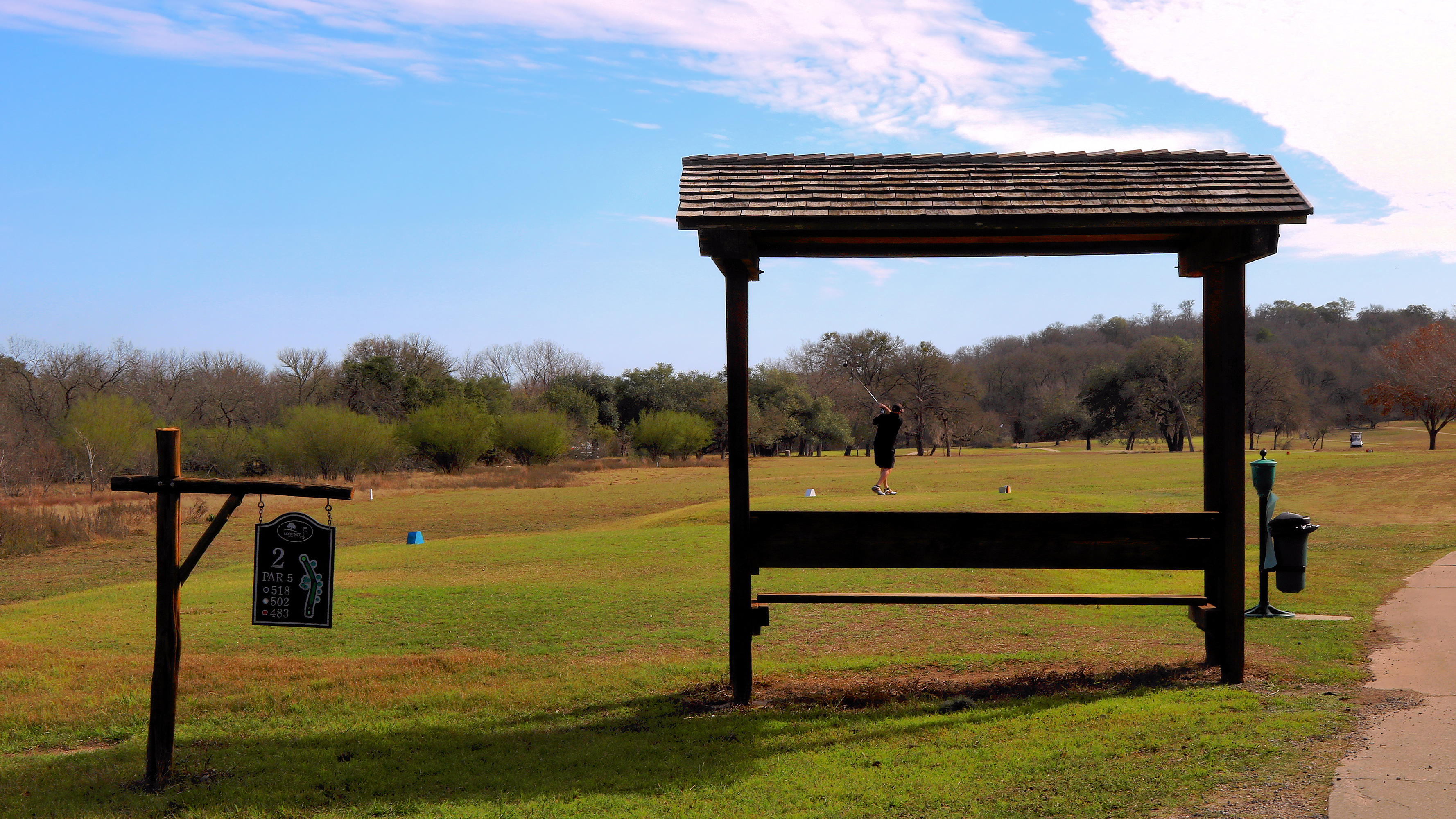
Feature photograph: real 2026 view of hole two at Lockhart State Park, via Wikimedia Commons; representative Texas course photograph, not evidence of current playing conditions. Photograph by Larry D. Moore, CC BY 4.0.
