
The cheapest tee time on the screen can be the one you never finish.
You know the conversation. The weather looks decent, the afternoon is open and someone says there is plenty of time for eighteen if everybody moves. Then the group ahead slows down. A ball disappears. By the last green, everyone is trying to follow a white speck into the dark.
Sunday’s clock change makes that bargain less attractive. On November 1, 2026, daylight saving time ends. For Texas golfers working with a small afternoon window, this is a good week to make nine holes the plan.
NIST places the change at 2 a.m. local time, when clocks return to 1 a.m. The time change shifts daylight earlier on the clock; it does not create an extra hour of evening golf. Texas also spans more than one time zone, so use the local time and sunset for the actual course. Check the course location, particularly when traveling between Central and Mountain time. Then ask the shop about the actual playing window. That answer matters more than your most optimistic estimate of the group’s pace.
Start with the return time, then find the tee time
Ask the golf shop when players and carts must be back, what pace to expect for the proposed slot and whether nine-hole bookings are available. A course’s closing procedures can matter before the last light disappears. Do not substitute an app’s sunset time for the facility’s instructions.
Work backward from the earlier practical limit and leave a buffer. If the only way the round works is for every shot to go well and every group to move quickly, the plan is already asking too much of a Tuesday.
A sample afternoon: the shop requires you back at 5:30 p.m. and advises allowing two hours for nine holes. A 4 p.m. start will not work. A 3:30 start leaves no buffer.
Book earlier or use the practice area. Those times are an example, not the schedule for a named course. The arithmetic is the useful part: subtract the expected playing time from the required return time, then allow some room for an ordinary delay. A twilight price becomes much easier to judge when you know how much golf you can reasonably expect.
What are you actually buying?
Our Texas Golf Course Finder is a starting point for locating options. Narrow the geography to somewhere you will actually drive after work or on a short weekend window. Then confirm the current booking terms with the course.
Compare nine-hole availability, walking permission, cart requirements, practice facilities and the actual departure-to-return time from home. The attractive course forty minutes farther away may turn a manageable short round into the same half-day commitment you were trying to avoid.
The full cost matters, too. Ask whether the advertised rate covers nine or eighteen holes, whether a cart is included and what happens if conditions interrupt play. Do not assume every twilight product is a discounted promise of a complete round. Read what the facility sells. A straightforward nine-hole price can be easier to evaluate than a low headline rate attached to a fading window. If you can fit nine holes comfortably and the total suits your budget, you have enough information to decide. The lowest advertised number does not have to win.
For a Texas example of the shorter format, look at Lockhart State Park. Texas Parks and Wildlife identifies a nine-hole course and provides tee-time reservation instructions. Use our Lockhart State Park Golf Course guide as another starting point, then check the park’s current booking details.
Confirm the golf charges separately from general park admission. That distinction is especially useful when a park-entry promotion is attracting attention: entry to the grounds and a round of golf should not be treated as the same purchase.
You can make the same choice near home. A shorter course or a nine-hole booking at a larger facility can remove the pressure to squeeze a full round into a small window. Choose tees that suit the group and give the outing one purpose: a social game, a scoring round or a chance to work on decisions. Leave the second nine off the agenda. It can have its own rhythm, including enough time to warm up and finish without sprinting through the last two holes.
Play ready, without turning it into a race
The USGA’s ready-golf guidance encourages safe, responsible ready golf in stroke play. It does not mean hitting while another player is in danger or distracting someone mid-shot. In a casual group, agree to be ready when it is safe and appropriate. Know which club you are likely to need, keep track of where shots finish and move with the group. Being prepared is more useful than repeatedly announcing that everybody needs to play faster.
Separate pace from panic. You can use a normal routine, make a considered decision and still avoid unnecessary delay.
Read a putt while others are preparing when that can be done without interference. Place your equipment where leaving the green will be straightforward. Handle scoring where it does not block the next group. These are ordinary habits, but ordinary habits determine whether nine holes feels relaxed or congested. If you are uncertain about a rule or a competitive format, follow the applicable rules rather than inventing a shortcut to save daylight.
Choose one thing to work on.
For a recreational outing, pick a decision you can evaluate without turning the course into a lesson studio. You might choose conservative targets for approaches, use the tee shot that keeps the widest landing area in play or commit to a consistent pre-shot routine. Choose one. The swing rebuild can wait. An afternoon round is easier to enjoy when you are making one useful adjustment instead of holding a committee meeting over every shot. A clear goal makes the shorter round easier to remember and learn from.
Keep practice experiments within the facility’s rules and the pace of the course. Do not assume a quiet hole gives permission to scatter extra balls or replay shots while people wait behind you.
If you want repeated attempts from the same distance, the practice area may be the better purchase. A range or short-game visit can be the right answer when the available window is too small for a round. Check lighting and closing times directly; a facility having a range does not establish that it operates after dark.
Keep the short round short
Check the course forecast before packing the bag. Bring the layers you expect to use, especially if you will be outside as the afternoon cools. If conditions make the available window unpleasant, change the format before the group has committed to an expensive drive. Walking can be enjoyable when permitted and suitable for the players, but it is not automatically faster than riding. Choose it because it fits the course, the group’s preferences and the conditions, not because someone has promised an unrealistic finishing time.
Tell your playing partners what you are booking. Nine holes followed by home is a different invitation from a full afternoon with an optional second nine. Clear expectations keep the outing from expanding by accident.
If there is time afterward, a meal or another activity can remain optional rather than becoming part of an unspoken obligation. The purpose of a shorter round is often to make golf easier to fit into an ordinary week. Protect that advantage instead of filling every minute you saved with another commitment.
Book nine holes you can finish. Warm up, choose sensible tees and give yourself time to putt out the last one in daylight.
The rest is golf: a few sound decisions, a shot you want back and, with luck, one you will describe in considerably more detail than anyone requested. That is plenty for an afternoon.
By Thunderfoot Sports Editorial Team
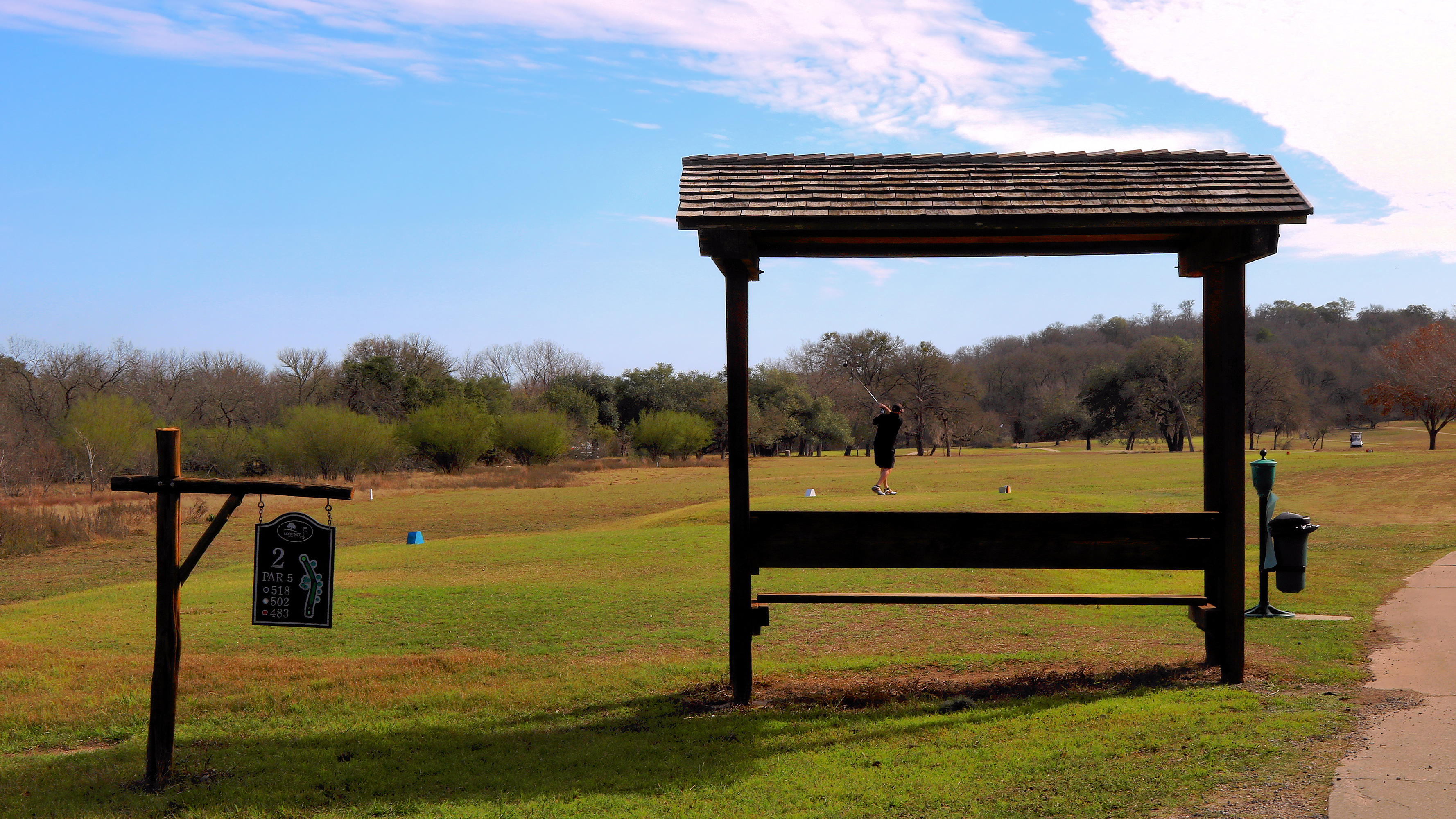
Feature photo: Hole 2 at Lockhart State Park, January 2026. Larry D. Moore, CC BY 4.0, via Wikimedia Commons. Archival photograph, not a report of current course conditions.
