
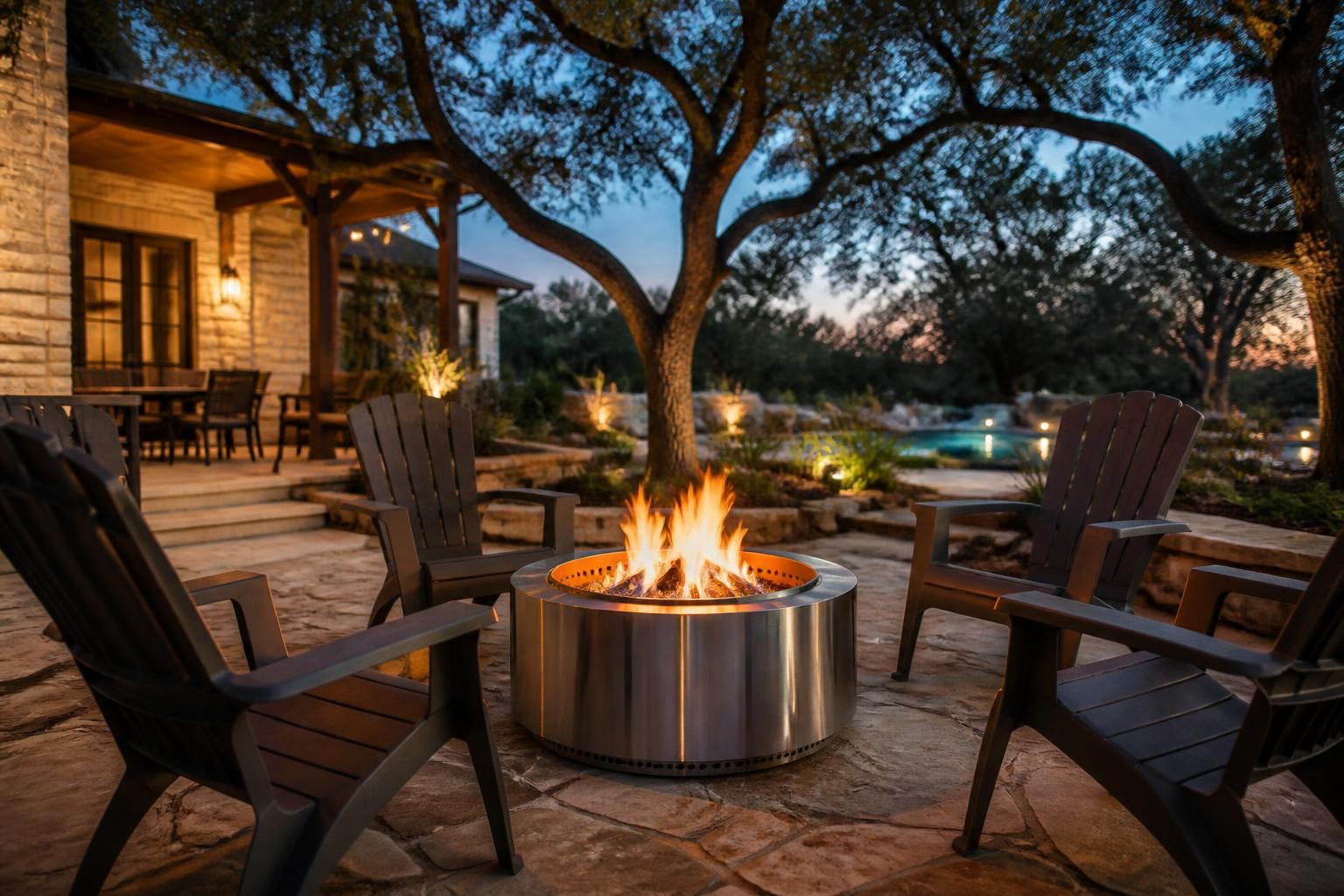
The Solo Stove Bonfire 2.0 is one of those backyard products that photographs extremely well.
Stainless steel. Big flame. Almost no visible smoke once it gets going. Friends sitting around it looking suspiciously relaxed.
The more useful question is whether it is actually worth spending roughly $350 for the current Bonfire + Stand bundle when a perfectly normal steel fire pit can cost a fraction of that.
For a Texas backyard, the answer depends less on whether the Bonfire works—it does—and more on what kind of fire-pit owner you are.
Thunderfoot Quick Take
Best fit: someone who wants a low-smoke wood fire, values easy cleanup and portability, and will use it often enough to justify paying for the design.
Think twice if: you mainly want maximum heat for the lowest price, hate buying accessories, or expect “smokeless” to mean literally zero smoke from startup to shutdown.
Current price checked: Solo Stove lists the Bonfire 19.5-inch Fire Pit + Stand bundle at $349.99. Retailer promotions vary.
Editorial note: This is a research-based product review using current manufacturer specifications, warranty terms, retailer pricing and published owner feedback. Thunderfoot Sports is not presenting this article as hands-on product testing.
What the Bonfire 2.0 Actually Is
The Bonfire sits in the middle of Solo Stove’s fire-pit lineup. It is larger than the Ranger but still compact enough to move around the yard or load for a camping trip.
| Diameter | 19.5 inches |
| Height | 17.5 inches with stand |
| Weight | About 25.1 pounds with stand |
| Material | Stainless steel |
| Group size | About 4–6 people |
| Cleanup | Removable base plate and ash pan |
| Warranty | Lifetime warranty against qualifying manufacturing defects |
| Current bundle price | $349.99 for Bonfire + Stand |
Solo Stove’s whole trick is airflow. The double-wall design pulls air through the bottom and feeds a secondary burn near the top of the fire pit. Once the fire is hot enough, that secondary combustion burns a lot of the smoke that would normally drift straight toward whichever chair you just moved into.
The Best Part: You Spend Less Time Playing Musical Chairs With Smoke
“Smokeless” is marketing shorthand, not sorcery. You can still get smoke during startup, when damp wood goes in, when the fire is starved for air or while it is dying down.
But the design is genuinely intended to reduce smoke once you have a strong, hot burn going. That matters in a backyard setting because the difference between a fire people sit around and a fire everybody slowly migrates away from is often the amount of smoke blowing into faces.
For Texas fall nights, where the fire is usually more about atmosphere than surviving freezing temperatures, that is probably the Bonfire’s biggest advantage.
The 2.0 Upgrade That Matters: The Ash Pan
The original Solo Stove cleanup routine involved flipping or dumping the unit. Bonfire 2.0 uses a removable base plate and ash pan instead.
That sounds like a boring upgrade until the first morning after a fire. Let everything cool completely, lift the base plate, remove the ash pan, dump it and put the pieces back. For a product you may use on random weeknights, easier cleanup matters more than another flashy feature.
Is It Actually Portable?
At about 25 pounds with the stand, yes—within reason.
This is not a backpacking fire pit. It is something one adult can move around the backyard, put in an SUV or truck, or take to a campsite without turning the process into a two-person lift.
That is especially useful if your backyard setup changes. You can move the fire pit away from the patio when you need more clearance, store it during bad weather, or take it along for a weekend.
The Stand Is Not Just an Upsell
The current $349.99 bundle includes Solo Stove’s stand. The company says the stand helps protect heat-sensitive surfaces underneath and is required for certain deck or grass use scenarios.
That does not mean you should ignore clearance, local codes or the manual because you bought a metal ring to put underneath it.
We just published a separate Texas backyard fire-pit setup guide covering placement, surfaces, seating and burn-ban checks. Use the stricter requirement between the product manual and your local rules.
Where the Bonfire Can Get Expensive
The fire pit itself is only the beginning if you like accessories.
Lid. Shelter. Heat deflector. Spark shield. Surround. Cooking accessories. Before long, a fairly simple backyard fire can start developing the financial profile of a hobby.
That does not make the accessories bad. Some are genuinely useful. It just means you should decide what problem you are solving before buying a pile of stainless steel around your stainless steel.
Texas Reality Check: Heat Output Matters
A smokeless fire pit burns efficiently, and a lot of the heat initially wants to go upward. If your main goal is to warm six people on a cold January night, you may eventually want a heat deflector—or a larger fire pit.
If your normal use is a 60-degree October or November evening with four people sitting around the fire, the standard Bonfire size makes more sense.
Texas is actually a decent match for this category because we spend more nights wanting ambiance and a little warmth than we do trying to heat an outdoor room in sub-freezing weather.
What Else Should You Look At?
TIKI Social Smokeless Fire Pit
TIKI’s Social Smokeless Fire Pit is currently listed at $249. It weighs about 32 pounds, includes a weather-resistant cover and is designed for groups of four to six. It is a strong lower-priced alternative if you like the black powder-coated look, though availability can move around.
Breeo X Series
Breeo’s X Series starts at $399 for the smaller X19 and goes up in size from there. The X19 is substantially heavier than the Bonfire and is built around a broad live-fire cooking accessory ecosystem. If your fire pit is likely to turn into an outdoor-cooking hobby, Breeo deserves a look.
Who Should Buy the Bonfire 2.0?
- You want a wood fire but hate constantly dodging smoke.
- You want something one person can move without much drama.
- You care about easy ash cleanup.
- Your usual fire-pit group is roughly four to six people.
- You prefer a clean stainless look and do not mind paying more for it.
Who Should Skip It?
- You only plan to use a fire pit a couple of times per year.
- Your priority is maximum warmth at the lowest possible cost.
- You want a permanent built-in centerpiece rather than a movable pit.
- You know you will resent every accessory being another purchase.
Thunderfoot Take
The Bonfire 2.0 makes the most sense for the person who wants the fire pit to be easy enough that it actually gets used.
That is the part I like about the design on paper: manageable size, low-smoke burn, removable ash pan, lifetime warranty and enough portability that the fire pit does not dictate the entire patio layout.
Would I buy it just because it looks good in backyard photos? No. At around $350 with the stand, it needs to become part of how you use the yard.
If you can picture yourself lighting it on random Friday nights, dragging chairs over and staying outside an hour longer than planned, that is where the price starts making more sense.
Check Current Product Details
Prices and bundles move around. Before buying, compare the current Solo Stove Bonfire + Stand listing with major retailers and decide whether you actually need the bundled accessories.
Product specifications and prices checked September 21, 2026. Prices, bundles and promotions can change.