
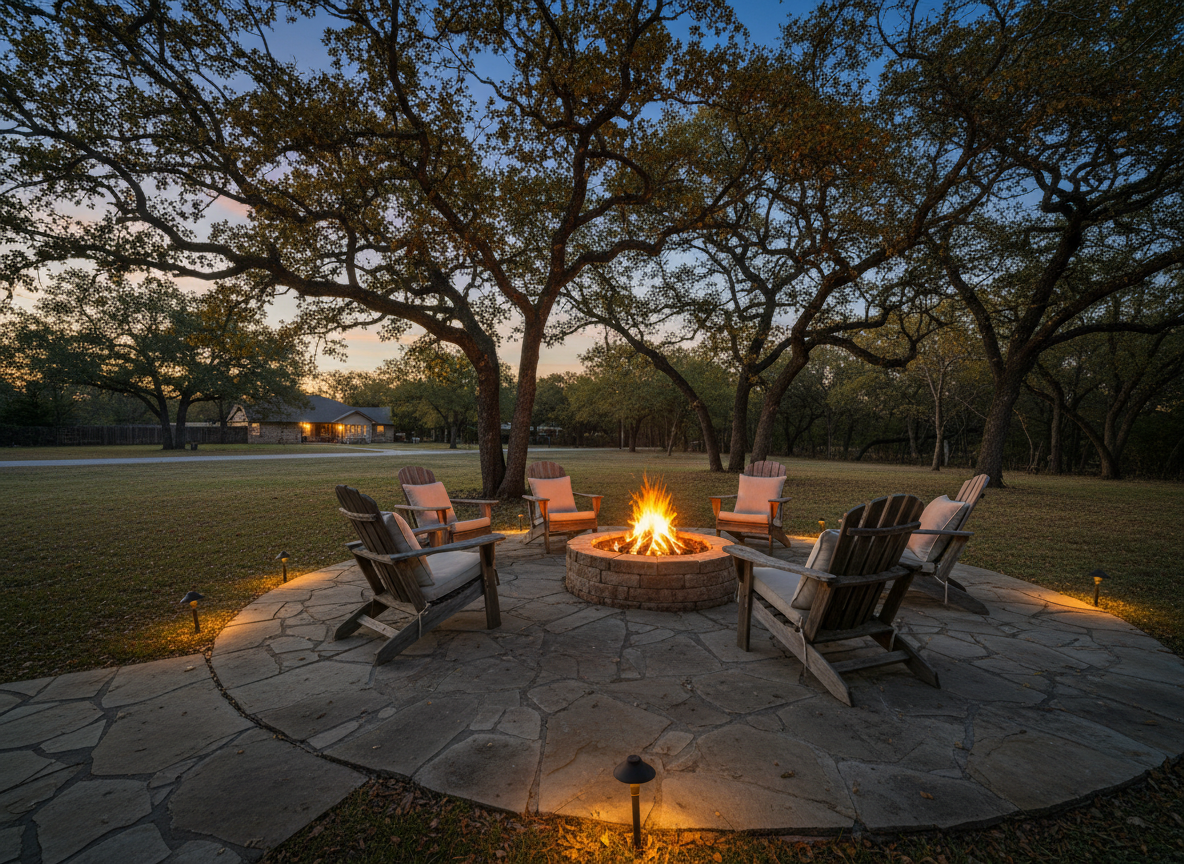

A Texas backyard fire pit has one job: make you want to stay outside after the sun goes down.
It should not require a landscaping overhaul, a stack of patio furniture nobody uses or a setup that makes you nervous every time the wind changes direction.
The best fire-pit areas are simple. They have enough clearance, a surface that can handle heat, seats people can actually move, decent lighting and a clear path back to the house. Then you add the fire—not the other way around.
Before You Build Anything
- Check your city, HOA and local fire rules.
- Check the current county burn-ban status before using a wood-burning pit.
- Follow the fire-pit manufacturer’s required clearances if they are greater than general guidance.
- Keep the area well away from the house, fence, overhanging branches and anything else that can burn.
- Do not assume a wood deck is a safe fire-pit surface.


THUNDERFOOT QUICK GUIDE
Texas Backyard Fire Pit Setup
Warm nights. Simple setup. Safer fire.
1. CLEARANCE
Keep the pit at least 10 ft from the home or anything that can burn. Use the stricter local or manufacturer rule.
2. SURFACE
Stone, pavers, gravel or concrete make the easiest base. Avoid improvised setups on combustible decks.
3. SEATING
Use movable chairs and keep a clear 3-ft kid-and-pet zone around the fire.
4. FIRE CHECK
Check Texas burn bans and local rules. Skip wood fires in high wind or extreme dryness.
Before you go inside: extinguish the fire completely and make sure the area is safe.
Step 1: Decide What You Actually Want the Space to Do
Start with the people, not the pit.
If this is mostly two adults sitting outside with a drink after dinner, you do not need a 16-foot circular patio with eight Adirondack chairs. If you regularly have neighbors, teenagers or family over on football weekends, a bigger seating ring makes sense.
Think about the nights you will actually use it: cool fall evenings, postgame hangouts, roasting marshmallows with kids, or sitting outside while dinner finishes on the grill. That tells you how much seating, light and walking space you need.
Step 2: Give the Fire More Space Than You Think It Needs
This is the part that matters more than the furniture.
The U.S. Fire Administration currently advises keeping fire pits, personal fireplaces and torches at least 10 feet from the home or anything that can burn. Local codes and the manufacturer’s instructions may require more distance, so use the stricter rule.
Look up, too. A spot that seems safely away from the house can still sit under a low tree canopy, patio cover or other combustible material.
Keep propane cylinders, stacked firewood and other fuel out of the immediate seating/fire zone as well. The goal is a fire area, not a collection of things that also burn.
Step 3: Build on a Surface That Makes Sense
Gravel, stone, pavers and concrete are the easy answers because they give you a stable, noncombustible surface around the pit.
Grass can work for some portable units when the manufacturer allows it and the area is properly prepared, but it is less forgiving. Dry Texas grass is not something I would put on the “we’ll probably be fine” list.
Wood and composite decks need much more caution. Do not place a fire pit on one unless the specific unit is approved for that installation and every manufacturer and local-code requirement is met. A heat shield is not a magical permission slip.
Step 4: Choose Wood or Propane Based on How You Live
Wood gives you the classic crackle, smell and bigger campfire feel. It also gives you smoke, sparks, ash, firewood storage and more cleanup.
Propane is easier to turn on for 45 minutes after dinner and easier to shut down when everybody goes inside. You lose some of the campfire personality, but you gain convenience.
Neither is automatically the right answer. Pick the one you will use correctly and often.
For wood-burning fires, a fitted metal screen can help contain sparks. The U.S. Fire Administration also recommends fully extinguishing the fire before leaving the backyard.
Step 5: Build a Seating Ring, Not a Furniture Showroom
Keep chairs far enough from the heat that people are comfortable, but close enough that the fire actually does something.
Movable chairs beat perfectly symmetrical furniture here. People shift with the wind, heat and conversation. A couple of small side tables are usually more useful than one giant coffee table blocking the circle.
If kids or pets use the yard, create a clear no-go zone around the pit. USFA recommends at least a 3-foot kid-free zone around fire pits and similar outdoor flames.
Step 6: Light the Path, Not the Entire Backyard
You need enough light to see the step, the chair leg and the drink somebody left on the table. You do not need the fire pit sitting under stadium lights.
Low-voltage path lights, subtle landscape lighting and warm string lights can make the area safer without destroying the reason you wanted a fire in the first place.
Keep electrical cords and fixtures away from heat, foot traffic and places where people can trip.
Step 7: Make the Walk Back to the House Easy
This sounds boring until somebody is carrying a tray in the dark.
Your fire-pit area should connect cleanly to the patio, back door or outdoor kitchen. Avoid loose stepping stones, hose crossings and a route that sends people through muddy grass every time they need another drink.
A fire pit that feels disconnected from the rest of the backyard gets used less. The setup should feel like another room, not an expedition.
Step 8: Check the Burn Ban Before You Light Wood
Texas burn restrictions can change with drought and wildfire conditions. County judges and commissioners courts can restrict outdoor burning, and cities may have their own rules on top of that.
Texas A&M Forest Service maintains a current Texas burn-ban map and information page. Check it, then confirm any city or county rules that apply to your property.
A burn ban is not the only reason to skip the fire. High wind, extreme dryness and hot conditions can make outdoor flames a bad decision even when a formal ban is not in place.
What I Would Actually Put in the Space
- One properly placed fire pit that matches how often you want to deal with wood
- Four to six movable outdoor chairs
- Two small side tables
- A noncombustible surface with room to walk around the seating
- Low-level path lighting
- A spark screen for a wood-burning pit
- A hose or appropriate extinguisher nearby where it is easy to reach
- A metal ash container with a lid for fully cooled ashes
That is enough. You can add blankets, speakers, landscaping and the decorative stuff later. Get the layout and safety right first.
The Backyard Take
A good fire-pit area should make a random Tuesday night outside feel easy.
Do not bury the idea under a giant construction project. Start with clearance, surface, seating and a safe path. Pick wood or propane based on the amount of work you actually want. Then use it.
Texas gives us plenty of months when the backyard feels too hot. When the first decent fall evening finally shows up, you should be able to sit down and enjoy it—not still be shopping for the perfect chair.
Keep Building the Backyard You Actually Use
For more practical Texas backyard ideas, explore Backyard Spaces and our guide to building a backyard setup that actually gets used.