
A telescope can make the night sky suddenly feel close, but buying one is an awkward way to learn whether you enjoy astronomy. Guadalupe River State Park has a better introduction this Saturday. The park is hosting a star party with the San Antonio Astronomical Association on October 24, beginning at 8 p.m. The event is designed to help visitors look at the moon, planets, constellations and other night-sky sights with experienced observers. That’s an opportunity to try the activity in company before spending money on equipment you may not know how to use.
The first rule is to let your eyes adjust
A dark-sky outing works differently from an ordinary park visit. Bright phone screens, flashlights pointed at faces and vehicle headlights can interrupt the night vision everyone is trying to develop. Your eyes need time to adapt to the darkness, and a group can lose that progress quickly when somebody turns on a powerful white light.
Bring a small flashlight for safe walking, but ask staff how they want lights handled near telescope stations. Red-light settings can be useful for preserving night vision, though they still need to be pointed carefully. Follow event instructions and take your time. It is better to move slowly and safely than to stumble into someone’s equipment because you were trying to find the best view.
A star party rewards patience. The first few minutes may feel like waiting, but the sky becomes richer as your eyes settle and you begin to notice fainter points of light.
What volunteer astronomers actually provide
A good astronomy gathering is more than a line of people looking through expensive instruments. Volunteers can explain what object you’re seeing, why it appears where it does and how a telescope changes the view. A newcomer may think of the night sky as a fixed pattern, while an experienced observer knows that planets, the moon and seasonal constellations shift in relation to one another.
Ask questions freely. Why do some stars look different in color? What makes a planet appear bright? How can someone tell a satellite from a star? The answers may change the way you look up from your own backyard. There is no need to memorize terminology in advance or pretend you already know the names of every constellation.
If a telescope view is underwhelming compared with a space photograph, remember that astrophotography often gathers light over time and processes the result. Looking at a real object with your own eyes is a different experience, and it can be extraordinary without looking like a poster.
Don’t promise specific planets before the event
The park’s general program describes observing the moon, constellations, planets and more, but the actual objects available on October 24 depend on weather, time and what is above the horizon. Don’t promise a child a particular planet unless the organizers have confirmed it will be visible. That kind of expectation is easily avoided by focusing on the chance to explore whatever the sky offers.
Weather is the major variable. Clouds can turn an excellent telescope setup into a gathering with little to see. Texas Parks & Wildlife warns that star parties may be cancelled for cloud cover or unsafe conditions. The park’s guidance for its recurring series says cancellation updates should be posted by 2 p.m. on the day of an event. Check the actual listing and park communications before driving.
A backup evening plan is useful, particularly if the trip is long. One cancelled night isn’t a failure; the sky will still be there another time.
The right parking area matters
The park’s recurring star-party guidance places the activity in the large overflow parking lot near the main river parking area, with a blue ‘Stargazing Tonight’ sign on the park road. Follow the instructions for the specific October event and any signs or staff directions when you arrive. Don’t simply navigate to the riverbank and wander around with your headlights searching for telescopes.
Guadalupe River State Park has its own entry system. The program is generally free with park admission, and the park describes normal adult entry fees with children 12 and under entering free. Visitors arriving after hours may need to use a self-pay station or complete a day-use reservation online. Check the official page for the currently applicable price and procedure before traveling.
The park is not a suburban entertainment venue with unlimited late-night access. Follow the posted roads and stay in designated visitor areas.
How to make it fun for children
A young visitor’s first telescope experience should be simple. Give them one question to explore: what does the moon look like up close, or why are some bright objects called planets? Let the volunteer answer and give the child time to look. Avoid pushing them along because another person is waiting; instead, help them understand that shared equipment requires taking turns.
Some children may not be able to reach a telescope eyepiece comfortably or may have trouble keeping one eye aligned. Ask the volunteer for help rather than treating that as a sign that astronomy isn’t for them. People with particular accessibility needs should contact the park to discuss the event location and possible accommodations.
A small notebook can make the night more memorable. Instead of taking an inaccurate phone photograph through the eyepiece, sketch the pattern you saw or write down the name of an object that surprised you.
What to wear when you’re standing still
A daytime hike generates warmth through movement. Stargazing often involves standing for extended periods, sometimes on a surface that loses heat after sunset. Clothing that felt comfortable at lunchtime may not be enough late in the evening. Bring layers, closed-toe shoes and water. A light jacket is easier to carry than to find after you have already entered the park.
Avoid setting up a bright lantern or elaborate picnic in the telescope viewing area unless the event explicitly allows it. Respect other visitors’ attempts to preserve the darkness and keep paths clear. Leave enough space around tripods and equipment. A telescope can be heavy, delicate and difficult to realign if it is bumped.
Patience is part of the experience. You don’t need to see every object on the volunteer’s list to have a good night.
The difference between astronomy and a smartphone app
Sky apps can identify objects, but they don’t replace the feeling of looking through an eyepiece. They also produce screen light, which may be disruptive in a dark observing area. A useful approach is to learn one constellation or planet name from a volunteer, then use the app later when you’re back in an appropriate setting.
Ask how the observer finds objects without relying entirely on a screen. Recognizing a few bright stars, understanding directions and noticing seasonal changes are skills you can use without equipment. Even city dwellers can learn to identify the most prominent stars in a sky affected by light pollution.
A Saturday star party can become the first step toward a hobby you can practice almost anywhere, not merely a one-off event.
Turn an evening in the Hill Country into a good night out
The park is near Spring Branch in the Hill Country, accessible from communities around San Antonio, New Braunfels and the broader Central Texas region. But an 8 p.m. start means families should think about the drive home and children’s bedtimes before committing. You do not need to add an exhausting afternoon hike simply because you’re visiting a state park.
If you’d like more reasons to return to the area, explore Thunderfoot’s San Marcos & New Braunfels hub. A slower visit can be a good option for someone who enjoys the outdoors but doesn’t want a full day of strenuous activity.
The useful information to keep
The Texas Parks & Wildlife calendar lists a star party with the San Antonio Astronomical Association at Guadalupe River State Park on Saturday, October 24, 2026, starting at 8 p.m. Check the current park calendar and the program description for access, end time and any weather cancellations. Bring layers, practical shoes, a suitable small light and your questions.
The sky is one of the few outdoor destinations that doesn’t require a ticket to appreciate from home. A guided night with telescopes can teach you how to notice more of it. That may be the best souvenir from the entire weekend.
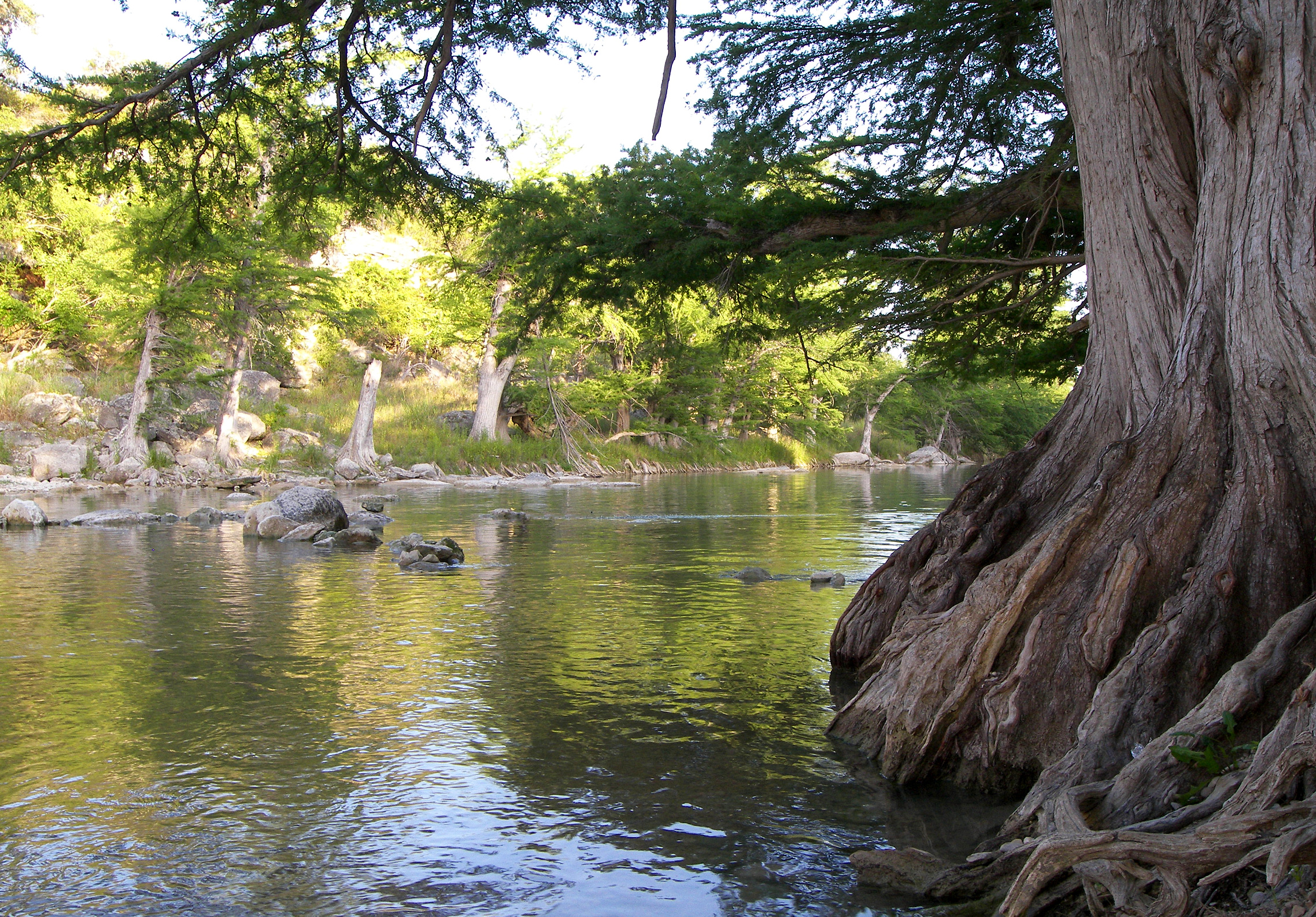
Featured photograph: Real Guadalupe River State Park riverfront photographed in 2009; not the 2026 star party. Photo by Larry D. Moore via Wikimedia Commons, CC BY 4.0.
