
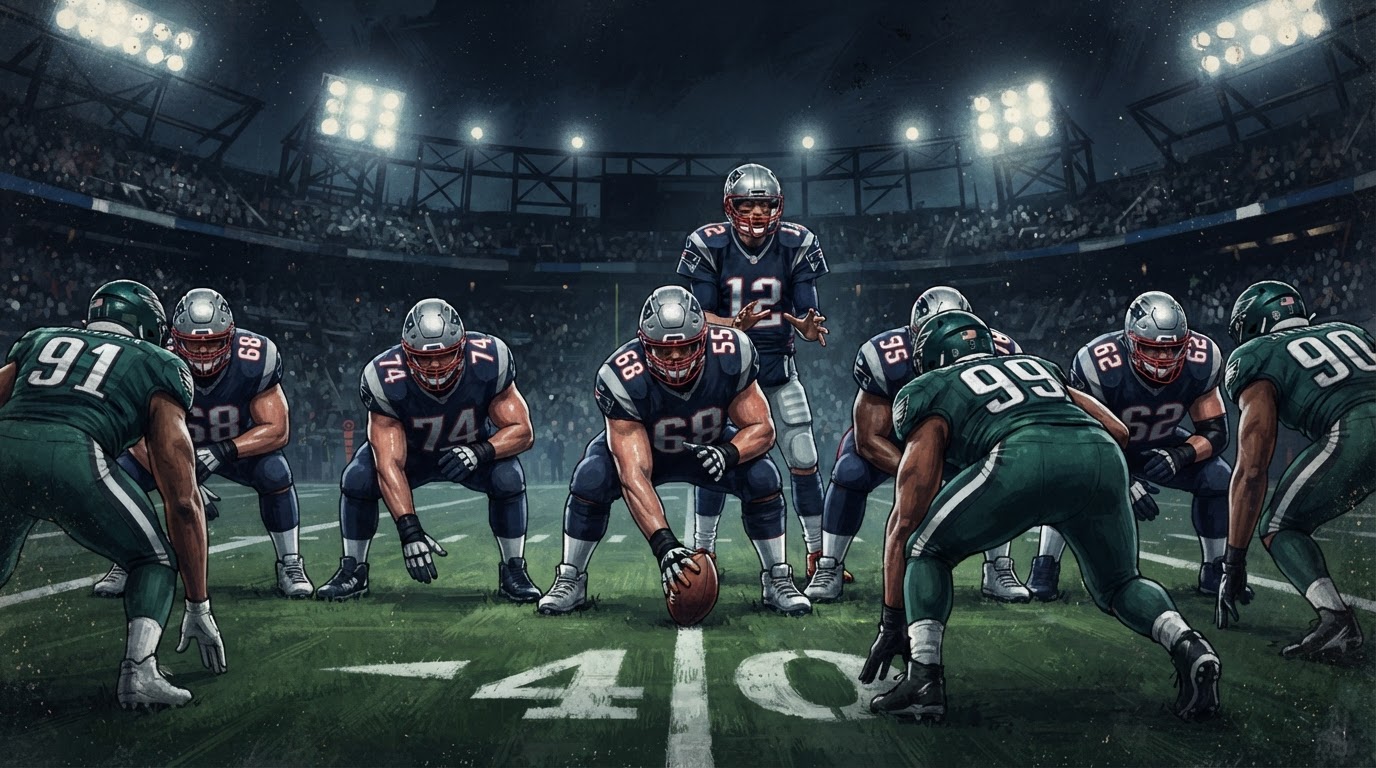
Dallas and Philadelphia kick off at 3:30 p.m. Central on Thanksgiving Day at AT&T Stadium. FOX has the game. A lot of the coverage understandably starts with what the Dallas offense can do. I’d spend the first quarter watching the other side of the ball. Dallas is capable of scoring points. The more interesting question going into Thursday is how many chances it will need, and whether its own defense can earn those chances without counting on a takeaway.
The NFL’s Week 12 game notes give the contrast some weight. Dallas entered the week averaging 30.6 points and 270.9 passing yards per game. The Cowboys were allowing 151.5 rushing yards per game, the highest figure in the table. That is a full-season snapshot, not a description of every series. It helps explain why an ordinary first-down play by Philadelphia deserves a closer look. A clean four-yard carry changes what the Eagles can do on the next snap, and a clean series of those carries can change the kind of afternoon Dallas gets to play.
The first run is worth watching twice
Watch where Philadelphia starts the run and where the contact happens. A back can gain four yards because the blocking opened a wide lane, or because he turned a small opening into extra yardage after contact. The box score treats the two plays the same. Dallas has a different problem to solve in each case. One calls for better control of the front. The other calls for a cleaner tackle or another defender arriving sooner. If there’s a replay, use it to look past the ball carrier and see who had a chance to make the play.
Then pay attention to what happens when the Eagles run a similar play again. One lost edge or one missed tackle can happen on a drive that otherwise goes well. If Philadelphia keeps getting to the same part of the field, the Cowboys have to decide what help to send there. Sending help can make it harder for the offense to get the same result. It can also give Philadelphia a chance to throw into the space that help left. Those tradeoffs are easier to see if you follow a few plays in sequence.
Second-and-medium is where the drive opens up
Say the Eagles get four yards on first down. Now they can run again, throw underneath or take a shot without automatically putting themselves in a desperate third-down situation. Dallas has to defend every part of that menu. If the Cowboys hold the first-down play to a yard, a modest gain on second down may still leave Philadelphia with a hard third down. That is the difference I’d look for on the first two drives. The exact yardage matters less than the pattern of options the offense keeps earning.
Look at the defenders behind the front as the play develops. Do they get pulled toward the line before the ball goes elsewhere? When a short pass is completed, is a defender already there to make the tackle? A short gain is something a defense can live with when it stays short. It looks different when the receiver gets away and picks up a first down. A few good tackles in the middle of the field can be the most important thing the Dallas defense does on a drive, even though none gets a replay package after the game.
Count third downs by distance, then think about pressure
A raw third-down percentage may be the easiest number to put on the screen. Keep an eye on the yards to go. Converting third-and-two and converting third-and-eight ask different things of an offense. A team living on short third downs usually did something well earlier in the series. A defense that keeps forcing long ones is doing something right even if a quarterback beats it once or twice.
On a longer third down, watch whether Dallas creates pressure while keeping enough defenders in coverage. A free runner toward the quarterback gets your attention, but the ball may already be going to an open receiver if the offense knows where the rush is coming from. Pressure that makes the quarterback hesitate or move his feet can matter without producing a sack. The replay can show whether the rush got home because someone won his matchup, or because the coverage made the quarterback wait. Both ways are useful. Seeing them together is a better sign than any single highlight.
Where the Cowboys get possession matters
A defensive series can do its job even when it ends in a punt from near midfield. The next offense might come out with a long field. If Dallas starts several drives deep in its own end, ask what happened on the possessions before those drives. A failed third down, a penalty or a well-placed punt can be part of the answer. An offense built to move the ball through the air still has fewer comfortable options when it opens a series near its own goal line.
There is a second piece to this. When Dallas has the ball, look at whether it finishes a drive in a way that gives the defense a manageable next possession. A scoring drive is the obvious example. A sustained drive that ends without points can still help if it flips the field. A quick series that ends with a short punt hands the defense a problem. That is why a game like this can look quite different in the stands than it does on a highlights show. The connective tissue is all the ordinary plays that determine where the next interesting thing happens.
Watch the first full possession after halftime
Halftime is where I’d reset the notebook. What did Philadelphia keep getting in the first half? It could be room on the edge, easy completions underneath or time to wait for a route to open. Watch what Dallas changes the first time the Eagles get the ball after the break. It may show up in where a defender lines up or how fast someone comes down toward the run. The first result is only one data point. See whether the answer keeps working the next time Philadelphia tries something similar.
There is an easy home-viewing version of this. Pick a number you can keep in your head, like how many times Dallas gives up a manageable third down on the first two drives of each half. You don’t need to chart formations at Thanksgiving dinner. Keep enough of the sequence in mind to tell whether you’re looking at a change or a couple of good plays in a row. If the Cowboys make Philadelphia work for third-down conversions and avoid handing it a short field, you’ll have a good explanation for why the game is close even before the fourth quarter.
If you’re going to Arlington
Keep the tactical stuff out of your transportation plan. Confirm kickoff, save the appropriate parking directions and give the walk to the gate a real share of the afternoon. Thunderfoot’s AT&T Stadium guide is linked below for the trip in. Once you’re in your seat, look downfield on an early Eagles possession. You can see the safety movement and receiver spacing in the stadium in a way the television view often hides. If you’re at home, look for that same information in the replay. Either way, start with the first-down snap. It may tell you more about the rest of the afternoon than the first big play does.
Sources and planning links
Thunderfoot’s AT&T Stadium map and gameday guide