
A road game that suddenly feels different
The second week of the Texas high-school football playoffs is often the point where routines disappear. The opponent may be unfamiliar, the stadium may be halfway between two communities, and the Friday-night drive that once took fifteen minutes can turn into a family expedition. There are plenty of conversations about records and matchups, but the practical details can determine whether people actually see kickoff. The UIL’s 2026 football calendar places the area round on November 19, 20 and 21. Those dates are the framework. Individual matchups, kickoff times and neutral-site choices require separate confirmation through the schools and the official brackets. Anyone planning a game needs to treat logistics as part of the story, not a footnote.
Why the neutral field matters
A neutral-site playoff game changes more than the address. Schools may split travel distance, seek a stadium with adequate seating, or choose a venue that can support a larger crowd. The arrangement can produce unexpected driving patterns around a town with relatively little connection to either team. A highway exit that seems easy on a map might serve the entire audience. Local parking lots can fill quickly when a stadium hosts schools that each travel with bands, cheer teams and hundreds of supporters. Even fans who follow their program religiously should avoid relying on the admission routine at the home stadium. Ask the host facility for its current parking rules, entry gates and prohibited items.
A bracket is a live document
High-school football playoff brackets are not souvenir posters until the results are final. They are working documents, with opponent names, dates and venues filling in as games conclude and arrangements become official. A screenshot circulated after last weekend’s game can quickly become inaccurate if a time is adjusted or a stadium changes. The best source is the UIL football page and the school district’s official athletics communication. A reliable article should distinguish a confirmed pairing from the pending details of that pairing. Fans should be skeptical of a post that lists a venue without identifying who supplied the information. For a Thursday contest, a small correction made Wednesday could matter quite a lot.
The long drive changes the crowd
Texas geography is part of the football postseason. A school from the Panhandle may travel through long stretches with limited services. A team from a fast-growing metropolitan district may run into heavy traffic before reaching the highway. In East Texas, an interstate route can be disrupted by a storm or crash while alternative two-lane roads add considerable time. Central Texas spectators may encounter travel around Austin or the I-35 corridor, and South Texas families may have fewer practical options for a late return after a night game. There is no statewide universal recommendation for when to leave. The useful practice is to build a realistic drive using current traffic and weather, then add an arrival cushion.
The ticket question nobody should guess
Tournament and playoff admission procedures are frequently different from the regular season. A host school may use a particular ticketing platform, assign separate student and adult prices, or sell tickets at a gate. Some stadiums have rules about re-entry. Because arrangements are local to the host and event, it would be misleading to publish one blanket ticket instruction for every area-round contest. Instead, look for the official game announcement and the host venue’s own event page. Verify the exact date and opponent before buying. If an event link comes from a social-media post, compare it with the district’s official account. That extra check protects fans from wasted trips and misleading third-party offers.
What to watch beyond the favorite
Records are helpful, but the second round often turns on how two teams handle unfamiliar pressure. The first playoff game tells a staff something about the team’s nerves; the next game tests whether it can adjust against an opponent whose strengths differ from district rivals. Watch field position, turnovers and the ability to finish drives. A program with an explosive offense can be dragged into a slower contest by an opponent willing to control possession. A strong defense may suddenly face a quarterback with different running ability than anyone on its district schedule. Those style differences create a better preview than simply calling the higher-ranked side the favorite.
Respect the other classification’s story
A statewide recap can become overly focused on Class 6A while ignoring communities for which the local school is the center of the week. The second round also matters to smaller programs, including six-man teams whose fan travel is just as meaningful. A small-school win may carry decades of local memory even when it earns less regional media attention. Editors should ask what changed for the program, whether it has reached this point recently and how families are making the trip. The answers deserve accuracy, not exaggerated underdog labels. Thunderfoot’s statewide football reporting should connect the major metro games with the smaller-town competitions without pretending they all have identical circumstances.
Weather does not stop at the gate
November football requires a different clothing calculation than September football. A comfortable afternoon can turn chilly in exposed upper bleachers after sunset. Wind can matter as much as temperature, particularly in the Panhandle and on open stadium concourses. Rain may affect both driving and comfort. Fans can check the forecast for the stadium rather than their hometown, bring layers permitted under security rules and carry a small weather-protected bag for essentials if allowed. Families traveling with older relatives or very young children should evaluate access to restrooms, seating and distances from parking. None of these details decides a game, but all of them shape the experience.
The stadium guide has a role
A good stadium guide is more than an address next to a map pin. It should tell people where to enter, what the parking approach feels like, how long to allow for security, whether seats are exposed and where families can find basic services. It should also link to current policies rather than copy rules that may change. For area-round football, the venue may belong to neither participating school; that makes the guide especially valuable. Fans can use Thunderfoot’s stadium coverage alongside the UIL bracket and the host school’s updates. The editorial story should lead with the competition, while the guide answers the practical questions that emerge after readers decide to attend.
How to follow the round responsibly
If you cannot travel, follow official school score updates and reputable sports reporters, then compare final results with the bracket when available. Not every school has the same streaming arrangement, and a stream link should not be assumed legitimate because it appears in a comment thread. Be cautious about pages demanding unexpected payment information to watch a local game. For reporting, do not call a team eliminated until the final result is confirmed. Keep postponed games and changed kickoff times visible in updates. A credible postseason outlet earns trust by correcting small details quickly, even when those corrections are not exciting headlines.
A plan that leaves room for the game
Start with one verified matchup and build outward: date, kickoff, venue, tickets, travel and weather. Have a second source for the location. If you are meeting friends, choose a rendezvous point outside the final stadium approach so vehicles are not searching for one another in crowded lots. Charge phones and make sure younger fans know where the group will sit. Then pay attention to the football. The area round is a memorable part of Texas sports because every program is now carrying a season’s worth of work into a single night. A good plan allows families to experience the stakes rather than spend the first quarter trying to find the stadium.
Official information: https://www.uiltexas.org/football. Confirm event details and school schedules with organizers before traveling.
Explore more Texas stories in Thunderfoot High School Sports and Events & Festivals.
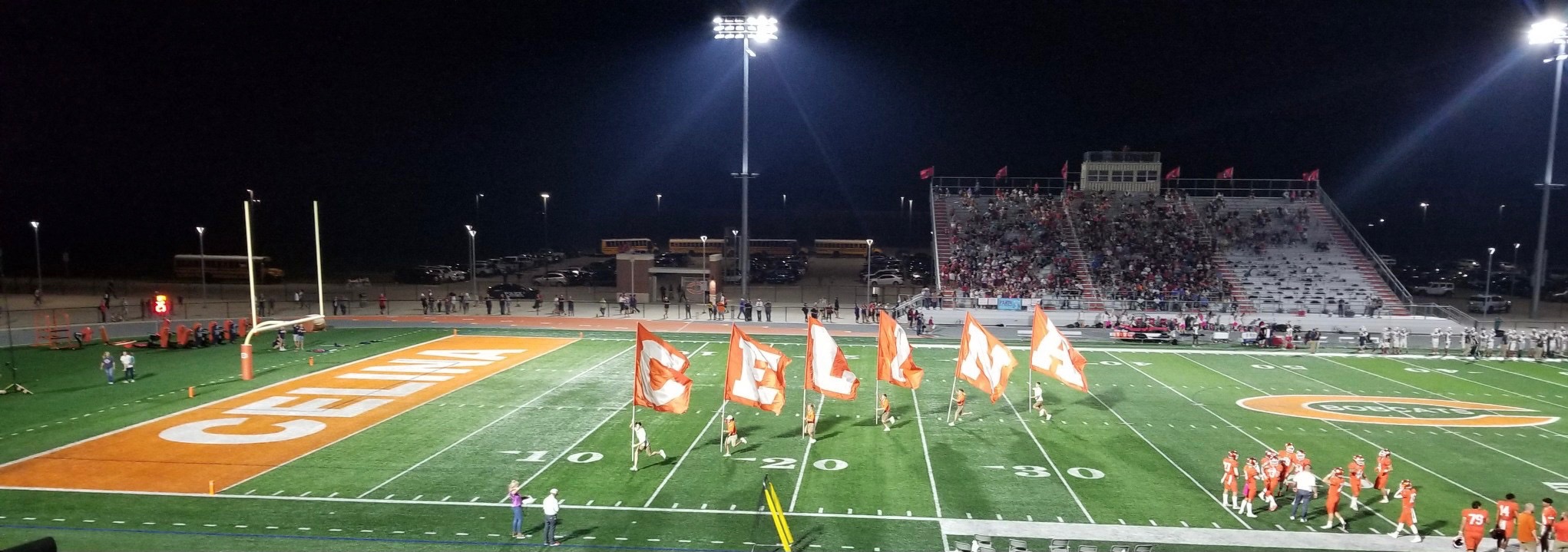
Featured photo: Illustrative Celina Texas football photograph by Heidimakb, CC BY-SA 4.0 via Wikimedia Commons: https://commons.wikimedia.org/wiki/File:Celina_High_School,_Friday_Night_Football.jpg
