
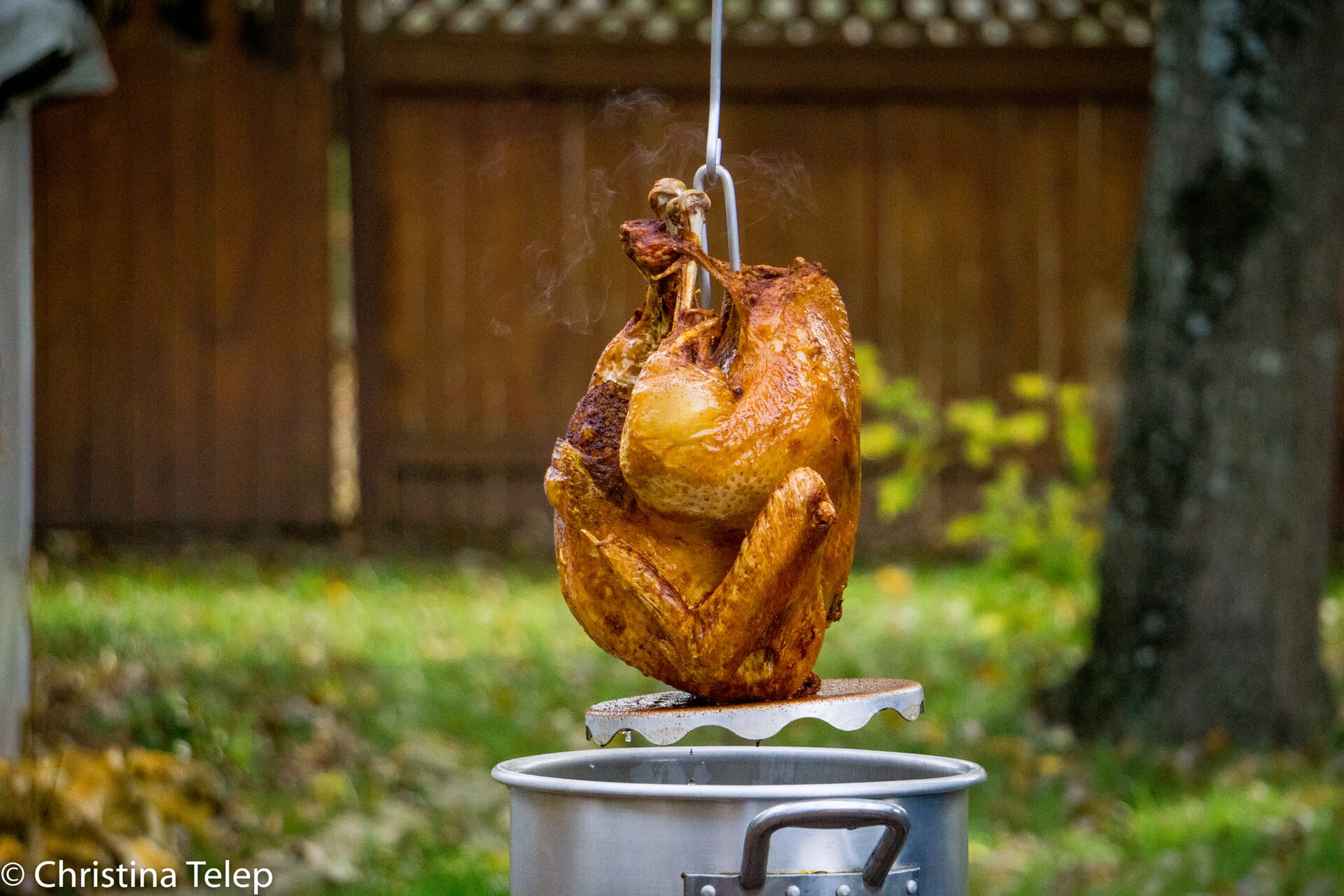
A crispy turkey isn’t worth a kitchen or backyard fire
Deep-fried turkey has become a Thanksgiving conversation in Texas because the result can be memorable: a crisp exterior and a meal that doesn’t require tying up the oven all morning. The problem is that the traditional outdoor propane fryer puts a large quantity of very hot oil beside an open flame. That creates risks far beyond an overcooked bird. A splash can cause severe burns, and a spill onto the burner can ignite quickly. The first question for a family shouldn’t be which seasoning makes the skin darker. It should be whether this is a cooking method they can perform safely at all.
The National Park Service fire-prevention guidance notes that the National Fire Protection Association discourages outdoor gas-fueled turkey fryers because of the risk of fires and serious injuries. The U.S. Fire Administration also describes the hazards of tipping, overfilling and partially frozen birds. This article explains those risks and safer alternatives. It is not a recommendation for inexperienced users to attempt a dangerous method merely because the holiday is approaching.
The safest decision may be not using an open-flame fryer
There are different ways to cook a turkey, and an open pot of hot oil is not mandatory. An oven, approved electric roaster or suitable air-frying appliance may be a more practical choice for a household that wants to minimize fire and burn risks. Always follow the appliance’s capacity and operating instructions. An indoor countertop appliance should not be confused with a traditional outdoor propane fryer simply because both products use the word fryer.
A homeowner who has never used a large outdoor cooker should consider whether the desired result justifies the equipment and responsibility. The National Fire Protection Association’s concern is not solved by having someone confident stand beside the pot. Good intentions do not eliminate the possibility of a spill, an unstable stand or an overheated oil fire. Safety is a reasonable reason to choose another menu plan.
Frozen turkey and hot oil are a dangerous combination
Water and very hot oil do not mix safely. A turkey that is still frozen or contains ice can cause violent bubbling and splatter when placed in hot oil. That can send oil over the rim and onto the burner or nearby surfaces. The U.S. Fire Administration specifically warns that a bird must be fully thawed and free of frost before cooking in oil. Never assume that the outside feeling soft means the center has completely thawed.
FoodSafety.gov advises allowing about twenty-four hours in a refrigerator for every four to five pounds of turkey, keeping the refrigerator at 40 degrees Fahrenheit or colder. A larger bird may need several days. Cold-water thawing is another recognized method when the water is changed every thirty minutes, with immediate cooking afterward. These timelines are for safe preparation, not permission to improvise around ice if the calendar runs short.
A deck, garage or covered patio is not the place
Traditional outdoor propane fryers must not be used inside a garage, near the house, under roof eaves or on a wooden deck. A spill or flare-up can ignite surrounding materials before a person has time to react. The U.S. Fire Administration advises a sturdy, level surface at least ten feet from the home and away from roof eaves. The equipment should not be moved while in use.
The setting can be inconvenient for a family that has a small patio, pets or children moving through the yard. That inconvenience is a reason to choose a different cooking method, not to squeeze the cooker into an unsafe corner. Wind and rain introduce additional hazards. If the weather or property layout prevents a genuinely safe setup, do not use an open-flame fryer that day.
Overfilling is the mistake people underestimate
A pot that appears to have enough room for oil can overflow when a large turkey is lowered into it. The displaced oil can spill down the side into a flame, creating a severe fire hazard. This is why safety guidance emphasizes knowing the correct fill volume in advance and never guessing from the appearance of an empty pot. Follow the equipment manufacturer’s instructions carefully.
An unsafe or improvised test with hot oil is not the answer. Any method used to establish capacity should occur with the equipment cool and according to the manufacturer’s directions, with water completely removed and every component dried before oil is introduced. If you cannot determine the safe fill level confidently, stop and choose an alternative. An expensive meal is not worth experimenting with a dangerous volume of hot oil.
Temperature control has to be more than a guess
Traditional propane fryers without adequate temperature control can overheat oil until it ignites. A thermometer suitable for the equipment can help monitor temperature, but it does not eliminate every hazard. If oil begins smoking or the setup feels unstable, the situation is already unsafe. Do not continue because a family meal is supposed to be ready at a certain time.
The U.S. Fire Administration also emphasizes protective oven mitts and keeping children and pets away. Hot metal, handles and oil remain dangerous even after the burner is turned off. Do not move the pot while it is hot. Assign an adult to supervise continuously, and never leave the cooker unattended to watch football, greet a visitor or check another dish indoors.
A kitchen fire has the wrong kind of emergency response
Cooking-oil fires require specific emergency precautions. Never throw water onto burning oil: it can spread burning material and cause serious injury. Do not try to carry a burning pot. If a fire occurs, move people away, call emergency services and use an appropriate extinguisher only if it is safe to do so and you are trained. The priority is life safety, not saving the turkey or the equipment.
The National Park Service’s safety guidance recommends having the correct extinguisher available and understanding how to use it. A household without a suitable safety plan should not assume a garden hose or a cup of water will solve the problem. Keep children and pets well away from the cooking area from setup through cleanup, because the danger continues after the food has been removed.
The turkey still has to meet food-safety standards
Even if a fryer operates without an incident, the turkey needs to be cooked safely. The federal FoodSafety.gov guidance lists a minimum internal temperature of 165 degrees Fahrenheit for poultry, checked with a food thermometer in the thickest portion of the breast and innermost parts of the thigh and wing. Color and appearance are not reliable substitutes for measurement.
Deep-frying times vary with bird size, equipment and temperature, so a fixed number of minutes per pound must never replace an actual temperature reading. Do not stuff a bird intended for deep frying. If the turkey is too large for the equipment’s stated capacity, use another method. A food-safety rule is not merely a detail to remember after the skin turns golden. It is part of the cooking plan from the beginning.
A family can still have a great meal without the spectacle
Thanksgiving cooking often becomes a performance, with friends gathering around a fryer and someone giving confident advice about how the process should work. It doesn’t need to be that way. An oven-roasted turkey, smoked bird or professionally prepared main dish can be excellent while reducing the risks of an open pot of oil. The goal is to bring people together safely, not to turn dinner into a demonstration of bravery.
If the family wants to try a new preparation, consider experimenting with a safer oven or roasting recipe in advance, using a thermometer and a realistic cooking schedule. Plan side dishes that can be finished without crowding the working area. A less dramatic cooking technique can provide more time to enjoy guests instead of supervising a hazardous station through the most stressful part of the day.
Make the safety decision now, not on Thanksgiving morning
Monday, November 16, is early enough to decide whether an outdoor turkey fryer is appropriate for your household and property. If it isn’t, select a different method and plan the thawing period before the holiday arrives. If you use any cooking appliance, follow its instructions and authoritative food-safety and fire-prevention guidance. No recipe or social-media video overrides those requirements.
For the best official references, review the U.S. Fire Administration turkey-fryer safety guidance and FoodSafety.gov’s turkey charts. Thunderfoot’s Kitchens & BBQ coverage has more food and backyard ideas. A successful Thanksgiving dinner ends with everyone safe, comfortable and looking forward to eating, not a preventable emergency.