
Three very different reasons to drive to one park
San Angelo State Park is one of those places where the name doesn’t tell you what makes the visit interesting. A person can come to walk beside a reservoir, look for a herd of bison or learn why a trail is named for tracks left long before dinosaurs evolved. All three experiences share a stretch of West Texas terrain near the Concho River, but they ask visitors to pay attention to different things. That’s a more interesting afternoon than simply checking a state park off a list.
The official Texas Parks and Wildlife park guide describes a site with bison and Texas longhorn paddocks, an extensive multiuse trail network and the two-mile Dinosaur Trail. This week, the park’s event calendar also lists a self-guided bison and longhorn viewing opportunity on Wednesday, November 18, at 9 a.m. The date matters: this is advance planning for Wednesday, not a claim that the scheduled ranger program is running today.
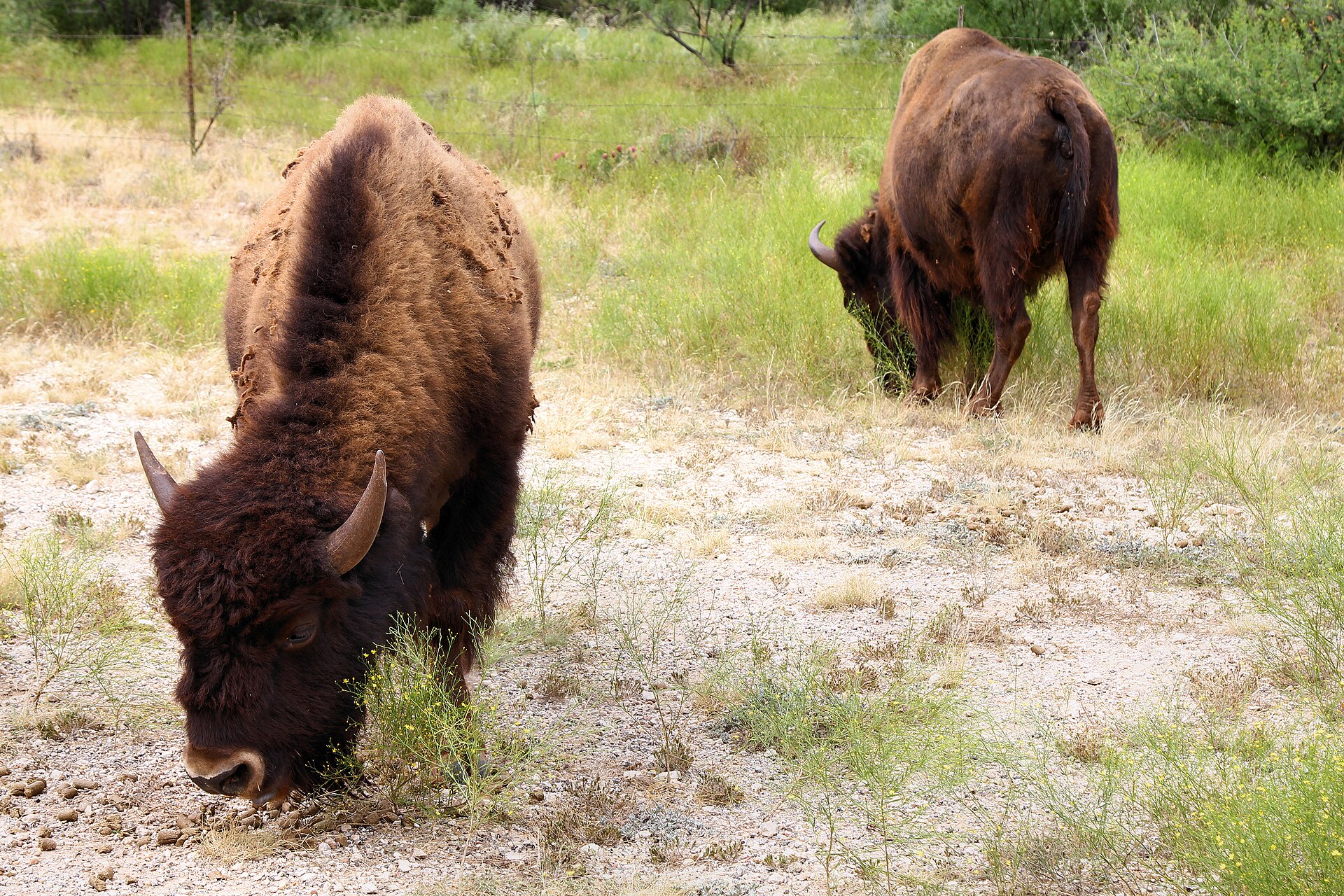
The herds are the first surprise
For many visitors, bison belong in a mental picture of the Panhandle or a distant prairie. Seeing them near San Angelo can reset that assumption. The park maintains bison and longhorn viewing areas where people can observe living animals associated with different parts of Texas history. The experience is not a petting zoo, and the animals should not be approached or fed. A large bison can move quickly when disturbed, however calm it appears in a photograph.
During the scheduled self-guided program, rangers are available to answer questions while visitors watch the herds. The published dates include November 18 and 25 at 9 a.m. The event listing says adult park entry is four dollars, with children twelve and younger free and state park pass holders covered. Confirm the latest calendar before traveling, because wildlife activities and ranger availability can change.
Longhorns tell a different part of the West Texas story
A Texas longhorn may be familiar from an illustration on a souvenir, but seeing the real animal is a reminder of how distinctive its physical form is. The width and shape of the horns are striking, yet the animal is more than a symbol. Longhorns connect the history of cattle to changes in Texas ranching and the landscapes people used to move herds across. A park setting can introduce those ideas without turning the story into a simplistic celebration of the past.
Ask staff how the animals are managed, what they eat and why their behavior may differ from bison. Avoid assuming that two large grazing animals respond the same way to human presence. Keep a safe distance, use designated viewing areas and do not hold food out for a photograph. Parents should explain those boundaries to children before a close view becomes exciting. Respect is the first part of any meaningful wildlife encounter.
The Dinosaur Trail is older than its name suggests
The park’s two-mile Dinosaur Trail includes fossil trackways made by creatures that lived during the Permian Period, before dinosaurs appeared. This is a wonderful fact to discuss with a child who has already memorized the names of famous dinosaurs. The footprints are evidence of prehistoric life, but calling every ancient track a dinosaur footprint would give readers the wrong idea. The park description explicitly calls the creatures pre-dinosaur animals.
A good walk here is less about the exact distance than the chance to imagine an environment very different from the present landscape. Ask what a track can reveal. Was the ground soft when the impression was made? Could several prints suggest the direction of travel? What are the limits of what scientists can conclude from one exposed surface? Curiosity makes a short geological trail feel much larger than its mileage.
Fifty miles of trail does not mean fifty miles for every visitor
Between the North and South units, the park says it has about fifty miles of multiuse trails. Hiking, mountain biking and horseback riding are among the permitted activities on designated routes. That is a broad network, not a recommendation to cover as much ground as possible. Different trails have different conditions and demands, and a family interested mainly in bison viewing may need only a manageable walk to enjoy the park.
Choose the route based on time, footwear, weather and physical ability. Mountain bikers should yield appropriately and be attentive to other trail users. Riders should understand that the park does not provide horses for a regular trail outing; visitors bring their own. If an activity or route has current restrictions, follow the official notices. A trail can look clear on an app and still be closed because of weather or maintenance.
The reservoir makes water levels part of the conversation
O.C. Fisher Reservoir and the Concho River are central features of the park. Visitors may fish, paddle, swim or boat where permitted, but a named boat ramp is not a guarantee of useful water depth. The state park warns that lake levels vary and asks boaters to check current conditions. An unusually low shoreline can change access, expose hazards or make a familiar-looking outing impractical.
Shore fishing in a Texas state park can have licensing exceptions, but fishing from a boat generally requires the appropriate license. Follow current Texas Parks and Wildlife rules and check the particular method and location before casting. For a family with young children, an afternoon around the water can be enjoyable without going onto the lake at all. Staying on a designated shore area, observing birds and talking about water conservation can make a strong outing.
The park has options for visitors with different needs
San Angelo State Park says an all-terrain wheelchair can be requested for use in the park by contacting staff in advance. That is an important detail in a region where outdoor adventures are sometimes portrayed only as long, rugged hikes. Accessibility should be part of planning from the beginning rather than a question raised when a visitor arrives and discovers the surface is difficult.
The park also offers campsites, rustic cabins and group facilities, each with separate reservation requirements. A group does not have to combine every feature into one visit. Some families may prefer a short morning wildlife session and lunch. Others may want a longer trail adventure or an overnight stay. Ask which amenities are operating before making commitments, and remember that a place with multiple units can involve meaningful driving between entrances.
November changes the comfort equation
West Texas mornings can be cool, and an exposed trail may feel windy even when the day’s forecast looks pleasant. Bring water, sturdy footwear, layers and sun protection. The fact that the temperature is lower than in August does not eliminate the risk of dehydration or sun exposure. The terrain can be open enough that shade is limited for parts of a hike.
Tell someone your planned route and return time if you are heading away from the main visitor areas. Carry a reliable trail map and avoid assuming mobile coverage is continuous. At wildlife viewing areas, remain on the permitted side of fences and barriers. Good planning is not complicated; it is the difference between a pleasant outing and a situation where one preventable mistake defines the day.
A West Texas story that should have its own place
The Concho Valley is easy to miss when statewide travel coverage focuses almost entirely on Palo Duro Canyon, Big Bend and the Hill Country. San Angelo State Park provides a different introduction: living herds, an old reservoir landscape and fossil evidence from a world far older than modern Texas. A regional media site should make room for those quieter experiences without pretending the park is somewhere else.
For November 18’s 9 a.m. bison and longhorn program, confirm the official event listing and current park conditions. Thunderfoot’s San Angelo and Concho Valley coverage and Event Finder provide other ideas. The best reason to go may be discovering that one park can tell more than one story.