
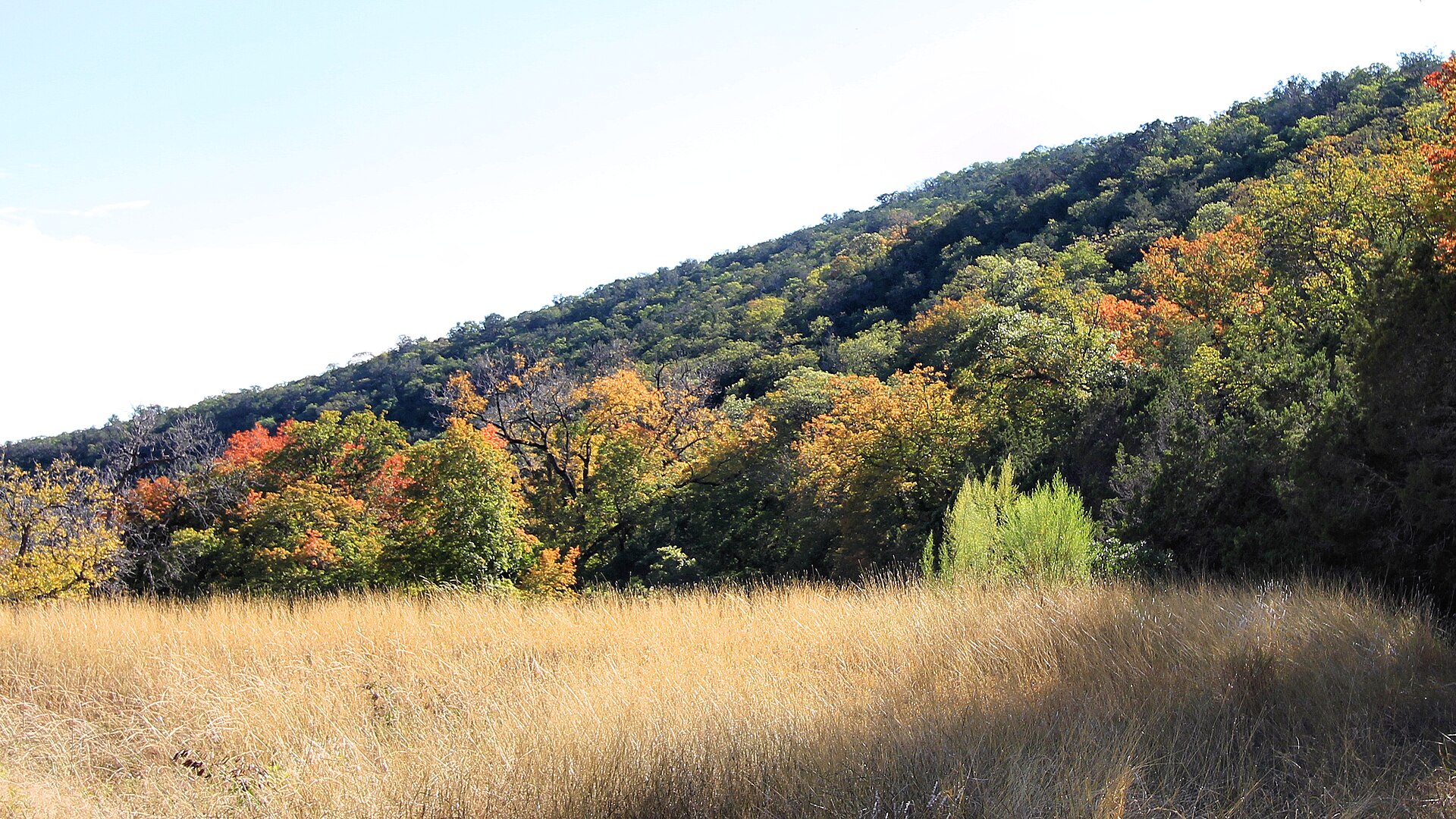
The photograph in your head may be ahead of the forest
Every autumn, Lost Maples State Natural Area becomes one of the most talked-about places in Texas. Pictures of glowing orange and red leaves circulate, somebody declares that the best color has arrived and people start considering a long drive into the Hill Country. It is tempting to assume those photographs show exactly what a visitor will see today. The official report tells a more useful story. The leaves are changing, but the maples have not all turned, and a visitor should plan around the park’s actual conditions rather than a perfect scene from a previous fall.
The latest dated entry on the 2026 Lost Maples foliage report is November 10. Rangers say buckeyes, oaks and walnuts have begun showing change, while some maples are changing but many remain green. The report specifically says the color is not yet especially strong. That is not bad news; it is the kind of honest information that helps someone decide whether to go now, visit again later or choose an entirely different activity.
A changing forest does not follow a holiday schedule
The appeal of Lost Maples is easy to understand. The mix of canyons, native plants and bigtooth maples creates a landscape that can look surprisingly unlike the image many people have of central Texas. But leaves respond to environmental conditions, not to the date printed on an annual travel guide. Temperature, rainfall, light and tree species all play a role in the way autumn appears. Not every tree changes at once, and not every year reaches the same level of intensity.
Even in a mild-color week, visitors may find beautiful details: yellow sycamore leaves, a few bright branches against green hills or a shaded canyon that seems quieter than the surrounding roads. The strongest way to enjoy the natural area is to appreciate those combinations. A drive focused on finding one famous postcard scene can overlook everything else that makes the place worthwhile.
The park is warning about demand as clearly as color
The same Texas Parks and Wildlife report warns that weekends sell out quickly and the week of Thanksgiving can bring heavy demand. Entry reservations are strongly recommended. The park can close when parking fills, and there is no reason to assume that a long drive guarantees access to a popular trailhead. For someone coming from San Antonio, Austin, Houston or farther away, checking the booking system is an essential part of planning.
Make a day-pass reservation before you depart. If the desired date is unavailable, select a different day rather than hoping to talk your way into a full park. Follow the current official notice for any restrictions or weather-related changes. A flexible visitor may have a much better day than someone who arrives at a sold-out entrance with a detailed itinerary and no actual reservation.
Choose the route for the people in the car
Lost Maples has trails that vary in length and effort. A family with small children may enjoy a shorter, more manageable outing instead of attempting a long, rocky loop because it appeared in a dramatic social post. A regular hiker may want a more demanding route, but should still consider daylight, water, terrain and the condition of the group. The area is not a paved urban park throughout. Rock steps and uneven surfaces can demand care.
The park’s official visitor guide provides trail maps and details. Decide on a realistic turnaround point before starting and resist the tendency to push just a little farther because somebody says the best photograph is around the next bend. A shorter hike can be more satisfying if everyone still has energy to notice the plants and animals along the path.
The fall light changes faster than many visitors expect
November daylight is shorter, and canyons may lose direct sunlight well before an open field does. Plan to finish a hike comfortably ahead of darkness. Even when the temperature feels mild during the afternoon, shaded terrain can feel different once the sun drops. Carry water and a layer, and avoid relying on a phone alone for navigation. A printed or downloaded park map can be useful if cellular service becomes unreliable.
Photographers can use the softer light to their advantage without stepping away from trails. Look for color against darker rock, leaves floating on a quiet pool or the contrast between sunlit canopy and shaded canyon. A compelling photograph does not require a dangerous angle or crossing a restricted area. If the scene is crowded, be patient and let other visitors enjoy the view too.
What to do if you arrive before peak color
One answer is to change what you pay attention to. Instead of searching only for bright red leaves, explore the shape of the canyon walls, the transition between different plant communities and how water has shaped the terrain. A guide to fall colors can easily reduce a natural area to one seasonal feature. The landscape remains interesting throughout the year, even in weeks when the leaves are mostly green.
Ask the ranger station which areas currently have the best color and whether a recommended route is open and suitable for your group. A local observation may be more helpful than an online image posted without a date. The official report is updated almost weekly in fall, so it should be read again near your actual visit rather than treated as permanently accurate for the rest of the month.
A car-based glimpse is possible, but it has limits
The park’s fall visitor information says there is about a mile of driving into the natural area where visitors can see some scenery without hiking. That can be helpful for someone with limited mobility or a family that cannot spend hours on a trail. It is not equivalent to reaching every canyon viewpoint, and vehicle traffic must follow park rules.
The official accessibility notes also describe accessible restrooms and picnic areas. Anyone who needs a particular route or facility should contact the park for current conditions before arriving. Trail surfaces can change after rain, and the most impressive online photograph may come from a route that is not accessible to every visitor. Good planning means choosing an experience people can actually enjoy.
Why this region deserves accurate reporting
Hill Country stories often promise perfect foliage, picturesque drives and unforgettable viewpoints. That language is easy to write and not always useful to the person deciding whether to travel. A better article tells the truth about the latest report, the fact that many maples remain green and the need for reservations. It also acknowledges that the beauty of the park is not dependent on a peak-color announcement.
The people who live and work near Lost Maples deal with the traffic and demand created by sudden waves of visitors. Reserving properly, leaving no trash and respecting the site helps keep the natural area enjoyable for the next person. The quality of a weekend destination depends partly on how visitors behave long after the photograph has been taken.
The decision for this week
As of the November 10 official update, Lost Maples is in a changing but not fully developed foliage period. That is the most accurate answer available for Monday, November 16 until a newer report is posted. Check the dated foliage report and confirm day-pass availability before driving. If the park sells out, it has done exactly what its warning says it may do.
Thunderfoot’s Hill Country articles and Event Finder can help with other ideas. Leave yourself space to enjoy whatever the trees are actually doing, whether that means vivid color, quiet green canyons or a little of both.