
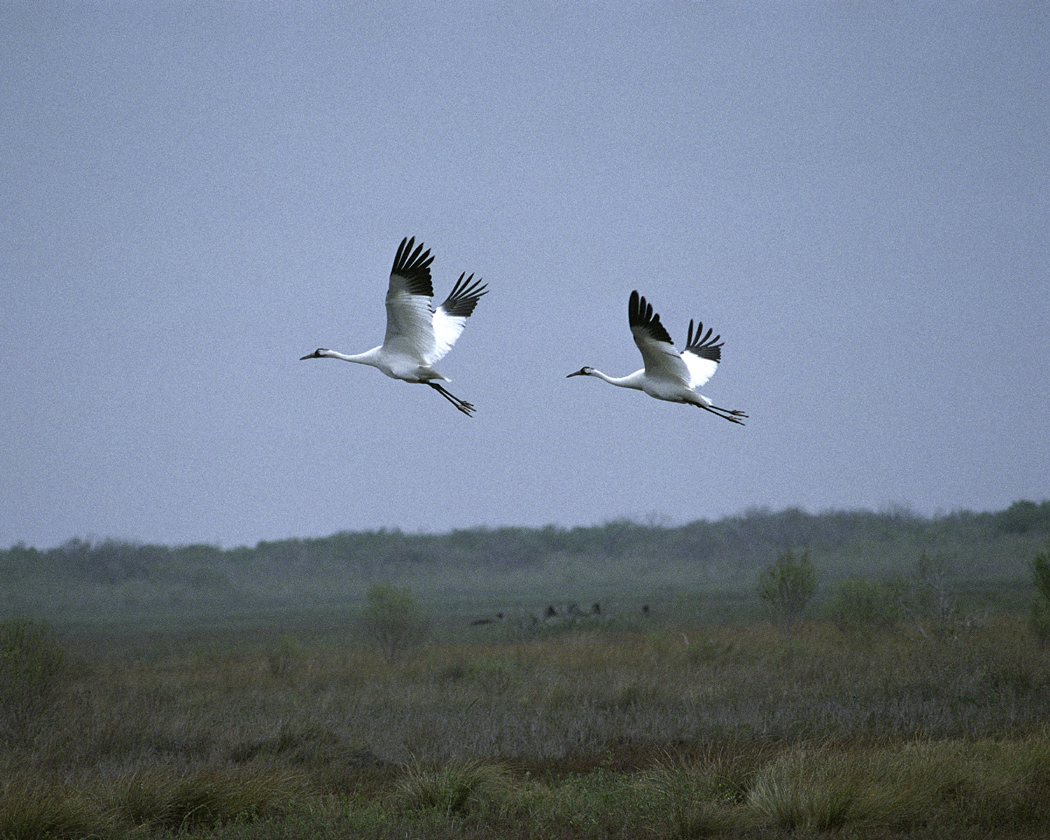
A winter arrival that changes the coastal landscape
A long stretch of Texas coastline becomes home to one of North America’s most remarkable bird stories each winter. Whooping cranes migrate south from their breeding grounds and settle around the marshes and shallow waters of the Aransas region. By mid-November, the first arrivals are part of the season’s rhythm, and visitors begin making plans to see the birds that have become symbols of conservation. The experience can be unforgettable, but it works best when expectations are grounded in wildlife behavior rather than a promise that a particular bird will be waiting for a photograph.
The U.S. Fish and Wildlife Service wildlife-watching guide identifies November through March as the prime winter period for whooping cranes at Aransas National Wildlife Refuge. The agency notes that the first migrants often begin returning in late October and early November. That supports a timely November feature, but it does not establish the number of cranes currently visible to a specific visitor. Bird distribution and viewing conditions change daily.
The refuge is a winter home, not a wildlife exhibit
The birds use coastal marshes and nearby wetland environments for food and shelter during the winter months. That means their presence depends on habitat and natural behavior, not on a tour timetable. An animal might be feeding at a distance, resting where a road visitor cannot see it or moving across the landscape during the day. A responsible guide is clear about that uncertainty.
A whooping crane is a very large, mostly white bird with distinctive black wing tips that can be apparent in flight. Identification should still be careful because other large white birds also occur along the coast. If you’re uncertain, take notes about size, shape and behavior rather than insisting a distant shape must be the famous species. Experienced birders are comfortable saying they don’t know.
The winter season has more than one bird
The Fish and Wildlife Service describes winter at Aransas as a period of broad bird activity. Ducks, geese, herons, egrets, ibis, pelicans, spoonbills and raptors may also be present. For someone new to coastal birdwatching, that variety can make the outing enjoyable even when a whooping crane remains out of view. A flock of waterfowl using a quiet wetland can tell its own ecological story.
Treat the visit as an opportunity to appreciate an entire landscape. Ask which habitats attract different species and how water level changes influence where animals feed. A marsh is not simply an open stage for a rare bird. It is a functioning environment shared by many species, including fish, invertebrates and plants that help support the whole system.
The auto tour route changes how you explore
Aransas National Wildlife Refuge provides a wildlife drive and public observation areas, allowing visitors to experience parts of the landscape without walking directly into sensitive habitat. The official refuge site provides directions, visitor information and current access notices. Start there instead of following a random map marker onto a road that is not intended for public access.
If you stop to watch birds, park only in permitted locations and avoid blocking travel lanes or gates. Bring binoculars if available; a distant, respectful view is often better than an attempted close photograph. A spotting scope can be useful for people who want to observe small details without moving nearer to the animals. There is no requirement to own professional equipment to have a good day.
Why distance is a form of respect
Whooping cranes are endangered, and wildlife encounters should minimize disturbance. Approaching a bird can cause it to stop feeding or move away from a useful habitat. That costs energy and changes the behavior you came to observe. The best photograph is not the one taken from the closest possible point; it is the one obtained without interfering with a wild animal’s needs.
Stay on public roads, trails and viewing areas. Do not use drones or other devices in ways that disturb wildlife, and follow the refuge’s current regulations. If the bird moves away or repeatedly watches your position, back off and give it room. Families can help children understand that a distant observation is a success. Protecting the animal is more important than placing it at the center of a social-media frame.
A refuge morning should start with the conditions
Coastal weather can change quickly. Wind, fog and rain affect both comfort and visibility, and an observation tower or open viewing area can feel much cooler than the temperature forecast for a nearby town. Bring practical layers, sun protection, water and footwear suited to any permitted walking routes. Avoid assuming that conditions will match the last photograph posted from the refuge.
Check operating hours, admission and any road or trail restrictions through the official Aransas National Wildlife Refuge page before driving. Weather-related closures and maintenance notices can affect what is accessible. A visitor coming from Victoria, Rockport or farther away should know which route and viewing areas are open rather than building a full day around one unchecked destination.
What a good guide can teach in one hour
A ranger or experienced local birder can help visitors understand the refuge without making the outing feel like a species-count competition. Ask how to distinguish a whooping crane from another tall wading bird at a distance. Ask why the coastal marshes are valuable in winter and how seasonal bird movement differs from summer nesting patterns. These questions lead to better observations on future trips too.
Even without a guided program, a simple family journal is worthwhile. Record the date, general area, weather and a few species you can identify confidently. Note one behavior you observed. Over time, those observations can show how different seasons change the same place. There is no need to invent a rare sighting to make the record interesting.
This story belongs to the Coastal Plains
Many Texas wildlife articles use an enormous coastal label and miss the places where people actually travel. Aransas National Wildlife Refuge lies near Austwell in the Victoria and Coastal Plains region, while boat-based wildlife tours and other coastal outings may involve communities around Rockport and the bays. Their offerings and rules are not interchangeable with the refuge’s public visitor facilities.
If you are planning a boat trip, use a legitimate operator and understand where it is allowed to travel. A boat does not grant permission to enter a protected area or approach birds closely. On land, follow the refuge’s current directions. The geography should guide the itinerary instead of being reduced to a generic ‘Texas Gulf Coast’ location.
Conservation is the larger story
Whooping cranes are widely known because the species survived an extraordinary population decline and has required sustained conservation attention. Their winter return connects ongoing habitat work, migration research and public interest. It is easy to treat a rare bird as a collectible sighting, but a more useful perspective asks what supports its survival and what visitors can do to avoid making the winter environment more difficult.
The next time you see a wetland from a road, consider how much is happening where the surface looks quiet. Food sources, water levels, seasonal movement and human activity all affect an animal’s options. The refuge exists to protect that ecosystem, not merely to provide a scenic place for tourism. Responsible public enjoyment can help build interest in preserving those places.
A simple plan for November
November is a timely part of the whooping-crane winter season, but no exact sighting or number of birds is guaranteed. Check refuge conditions, arrive with binoculars and a flexible plan, use official viewing areas and spend time appreciating other birds as well. A day without a close crane photograph can still be an excellent visit if you leave understanding more about the marsh.
Find more through Thunderfoot’s Victoria and Coastal Plains coverage and Texas Event Finder. For actual refuge rules and visitor updates, rely on the Fish and Wildlife Service. The most valuable part of the outing is seeing a wild place remain wild.