
Texas gets a two-stop NFL road afternoon without either team playing in Texas. Dallas visits Indianapolis at noon Central, then Houston visits the Los Angeles Chargers at 3:05 p.m. Central on Sunday, November 8. The Cowboys game center lists FOX and Lucas Oil Stadium; the Texans game center lists CBS and SoFi Stadium. Check local listings for availability.
Those facts settle the appointments. The more interesting question is what to watch when the road team has to make decisions with a crowd working against it. You can follow that story without predicting a winner or turning the afternoon into a statistical assignment. Start with the moments when an offense chooses how much information to show before the snap.
Our Pro Sports hub carries the wider Texas picture. This viewing companion adds three questions for the two road games: how the offense communicates, what happens after a failed play and whether late-game decisions match the situation. These are observation prompts, not claims about what either coaching staff has promised to do.
| November 8 game | Kickoff, Central | Venue / listed network |
|---|---|---|
| Dallas at Indianapolis | Noon | Lucas Oil Stadium / FOX |
| Houston at Los Angeles Chargers | 3:05 p.m. | SoFi Stadium / CBS |
Noon: listen for the problem behind the movement
Television makes pre-snap activity look familiar. A player crosses the formation, the quarterback points and the line settles. On the road, that sequence also contains a communication problem. The offense needs everyone to recognize the adjustment while the defense can keep changing the picture. You may not hear the words. You can still watch whether the group gets aligned promptly.
Pay attention to the play clock on one early Dallas possession. Does the offense reach the line with time to inspect the defense? Does a late shift force another adjustment? If a timeout follows, think about what happened before it rather than treating the timeout itself as proof of confusion. The broadcast may not provide enough information to assign a cause.
A camera cut can hide important context. Avoid deciding that one player caused a problem because the screen showed that person last. Describe what you actually saw: the offense reset late, a receiver moved after an instruction or the clock approached zero. Keeping observation separate from explanation makes the discussion more useful and leaves room for the replay to show something else.
The next snap is the response
After a negative play, watch the next decision rather than immediately reaching for a season verdict. Does the offense choose a quicker throw, change the protection or run into the space the defense is conceding? The outcome matters, but the selection tells you something about how the team intends to recover.
A short completion after a sack can look unsatisfying while still improving the next down. An aggressive attempt can fail for reasons that do not make the decision foolish. Ask what the offense needed from that moment and what the play made possible. Then watch whether the same problem returns on the following series.
You can do this for one possession and enjoy the rest normally. The point is to give the game a thread you can follow. When Dallas faces a difficult stretch, you will already have a question about communication or recovery instead of relying entirely on the commentator’s description of momentum.
Between games: preserve a little attention
A noon game can run into the later window. Decide whether your priority is the end of Dallas or the beginning of Houston, and check the local broadcast arrangement before the switch becomes urgent. A streaming service’s availability depends on the game and market; the existence of an app does not guarantee that it carries your chosen broadcast.
Use the interval for the ordinary tasks that keep a long afternoon enjoyable. Refill water, put food away and take a short break from the screen. If friends are watching together, say which game takes priority when the windows overlap. A clear agreement leaves people free to follow a close finish without negotiating over the remote on every commercial.
Neither Texas stadium is hosting these games. The Cowboys stadium guide and Texans stadium guide are useful for future home visits, not directions for today’s kickoffs. For travelers attending either road game, use the host venue’s current event instructions.
3:05: follow the Texans’ first adjustment
Give Houston a fresh viewing question. After the opening series, look for a change you can identify: a different formation, more motion, an extra blocker or a changed release point. You do not need to know the play name. Identify what moved and ask what problem the offense might be addressing.
The defense offers the same opportunity. If a receiver finds space early, see whether the next similar formation produces a different response. A defender moving closer to the line may be part of a coverage change rather than an individual guess. Wait for several examples before deciding that a matchup has been solved.
Keep the screen’s limits in mind. Television often follows the ball and leaves routes or coverage out of frame. It is reasonable to say you cannot see why a receiver became open. That restraint improves the observation. You can still notice where pressure arrives, where the quarterback moves and how quickly the ball leaves.
When the clock becomes another opponent
In a close finish, check score, time, timeouts and field position together. A decision that looks cautious early can have a different purpose late. An offense may value keeping the clock moving, reaching a shorter field-goal attempt or protecting time for another possession. The situation gives the choice its meaning.
Before criticizing a timeout, remember which team benefits from stopping the clock. Before demanding a quick snap, consider whether the offense needs a substitution or a better formation. Fans can disagree with a choice while still describing the tradeoff. That creates a better conversation than judging every decision by the result of the next kick.
Try making one prediction about the next decision, with a reason attached. Perhaps you expect a short throw because the offense needs manageable yardage, or a run because the defense has used its final timeout. When the team does something different, see whether you missed a piece of the situation. Being surprised is part of learning the game.
What stays useful after Sunday
A final score tells you who won. Your observations can explain why a particular possession felt difficult, how a road offense adjusted or which late-game choice changed the available options. Keep those ideas modest and specific. A game can be worth discussing without becoming a referendum on every person involved.
After the later game, note one pattern from each team and check it against the official recap when available. Correct your memory if the sequence happened differently than you thought. The next Sunday will bring another opponent and another set of problems. The habit that travels is noticing the decision before deciding what it proves.
For a group watching together, give different people different details to notice during one series. One can follow the play clock, another the running back and another the location where the next drive begins. Compare observations during the break. This is optional entertainment, not a test of who understands football best. A useful observation can come from someone who rarely watches, precisely because they notice a detail everyone else has learned to ignore. Keep the exercise brief enough that the afternoon still feels like watching a game with friends.
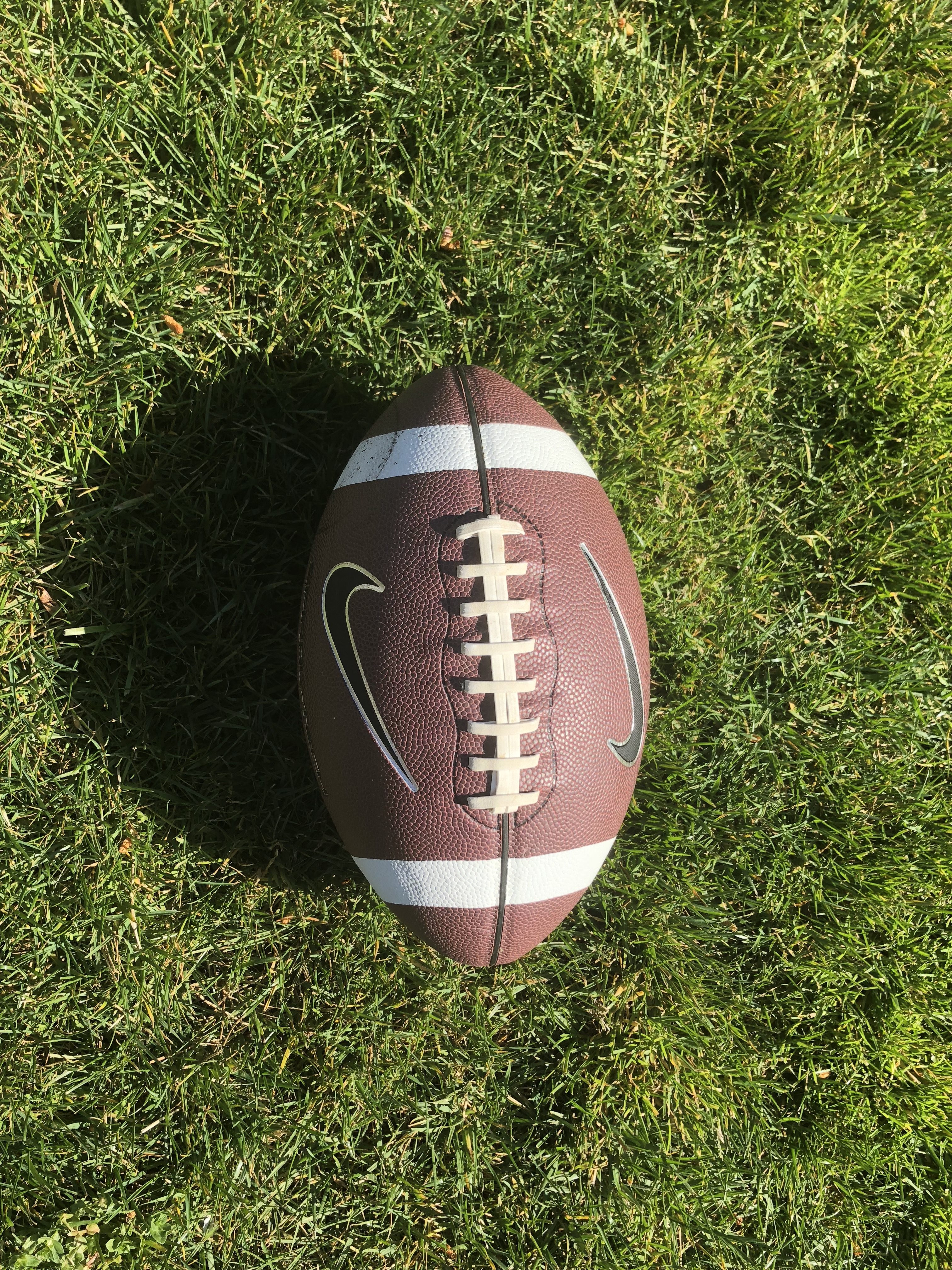
Feature photograph: Football resting in grass; illustrative equipment photograph, not today’s Cowboys or Texans game. Photo: Aloverit. Source; CC BY-SA 4.0. No editorial alterations.
