
A playoff calendar can look simple until two families compare plans. One says the next match is a regional semifinal. The other says the regional final is next. In Texas volleyball this week, both can be right. The difference is classification, and it matters before anybody buys a ticket or tells the grandparents where to drive.
Saturday, November 7, closes the current UIL playoff window. The official 2026–27 volleyball calendar identifies November 5–7 as regional quarterfinals for 1A and regional semifinals for 2A through 6A. The next window, November 9–10, is therefore regional semifinals for 1A and regional finals for 2A–6A. Those are statewide round dates, not a promise that every surviving school plays on Monday.
That distinction is the starting point for following the next stage. The more interesting part is what changes when a team has another match to prepare for and less room for a bad stretch.
Read the calendar before the bracket chatter
Start with the classification, then find the team’s actual bracket. A screenshot from a group message may omit the division, the update time or a result entered later. Follow the school or district’s current announcement for a confirmed opponent, site, start time and ticket instructions. If the match has not been announced, leave that space blank.
Our High School Sports hub is a starting point for the broader schedule. Regional fall calendars help you narrow the search: East Texas, Central Texas, North Texas, South Texas and West Texas.
Use the host’s announcement as the last word before traveling. A school name is not a venue address, and a neutral-site match can place both teams far from their own gyms. Check the campus name as carefully as the town. Districts with several high schools can make a confident but incomplete navigation search surprisingly unhelpful.
For 1A, the UIL lists regional finals and state semifinals in the November 13–14 window. For 2A–6A, state semifinals are listed for November 14. State finals fall November 19–21. These dates explain the path ahead; they do not identify a team’s next opponent or establish a particular match time.
What to watch when the serve crosses the net
The spectacular swing is usually the last act of a rally’s construction. Start one touch earlier. A serve that makes the receiver move late can pull the pass away from the setter’s preferred location. That changes which attackers are available and how much time the blockers have to read the set.
You can watch this from an ordinary seat. Pick a receiving rotation and follow it for several rallies. Does the setter have multiple reasonable options, or does the pass make a high outside ball the obvious choice? When the hitter faces two organized blockers, the difficult part may have started with the first contact.
Do not treat every high outside set as a failure. Teams use it deliberately, and strong hitters can score from difficult positions. The useful observation is whether the offense chooses that option or has been pushed into it. An attack that looks predictable from the bleachers may still succeed, but it asks the hitter to solve a harder problem.
On the serving side, look for a target pattern. The server might repeatedly aim at a seam between passers rather than at the player who appears least comfortable. A short serve can ask somebody to move forward; the next deep serve can test whether that adjustment has left space. Watch for a plan across several points before assuming a miss was random.
The rally after the timeout
Timeouts invite speculation because viewers can see a conversation but cannot hear the whole instruction. Rather than inventing what the coach said, watch the first two rallies afterward. Does the serving target change? Does the receiving group shift? Does the setter look to a different attacker?
A timeout does not need to produce an immediate point to have value. A team might make a better first pass and still lose the rally. Another might win through an opponent’s service error without showing any clear adjustment. Separate the result from the action you can actually observe.
That habit makes tight sets easier to understand. A team can lose a long rally after making several good defensive choices. It can also take a lead while making errors that a stronger opponent may punish later. The scoreboard tells you who is ahead. The repeated patterns tell you what each side is trying to repair.
If you are attending with younger players, give them one thing to notice. Ask them to follow a defender’s starting position or see how quickly an attacker becomes available after landing from a block. Keep the conversation curious. Turning every rally into an unsolicited lesson can drain the fun from a night that should inspire them.
Build the trip around the gym, then the extras
Once the match is confirmed, put the complete address and ticket link in one shared message. Include whether tickets must be purchased in advance, which entrance is designated and what the host says about bags. Do not assume a regular-season ticket account or district pass applies.
For families arriving from different towns, choose a meeting point outside the entrance and a second one inside. The person handling tickets should not also be expected to coordinate three separate dinner arrivals while standing in line. Transfer tickets early where the system allows it.
Food can fit around the match after the fixed pieces are settled. A restaurant reservation across town creates a deadline that volleyball cannot promise to meet. Sets can be short or long, and the preceding match can affect the evening. A flexible meal afterward is often easier than a tightly timed meal beforehand.
The Go With Friends tool can help keep a group plan together. Keep the actual match information in the invitation, including the host’s current link. A saved plan is useful when it carries the address everybody needs rather than only a school mascot or a vague gym nickname.
Follow the teams that finish Saturday, too
Not every team leaves this weekend with another match. An elimination does not erase the season that produced the opportunity. If you share a result, identify the round correctly, use the final score from a reliable school or competition source and resist attaching a dramatic explanation you cannot support.
For players moving into another sport, the next chapter may already be beginning. Basketball and soccer have their own calendars and preparation periods. They should not be mixed into a volleyball result as though every athlete follows the same schedule. Let the school announcements establish what comes next.
For spectators, there is still good volleyball to watch even when the familiar team is out. A neutral seat makes it easier to notice serve placement, defensive patience and how an offense recovers after a poor pass. You can appreciate a well-built point without needing a personal connection to the roster.
Before sharing Monday’s plan, make one final check: classification, round, opponent, venue, start time and ticket source. The official statewide calendar establishes the window. The participating schools establish the match. Keeping those two pieces separate is the difference between being ready for the next round and confidently heading toward the wrong one.
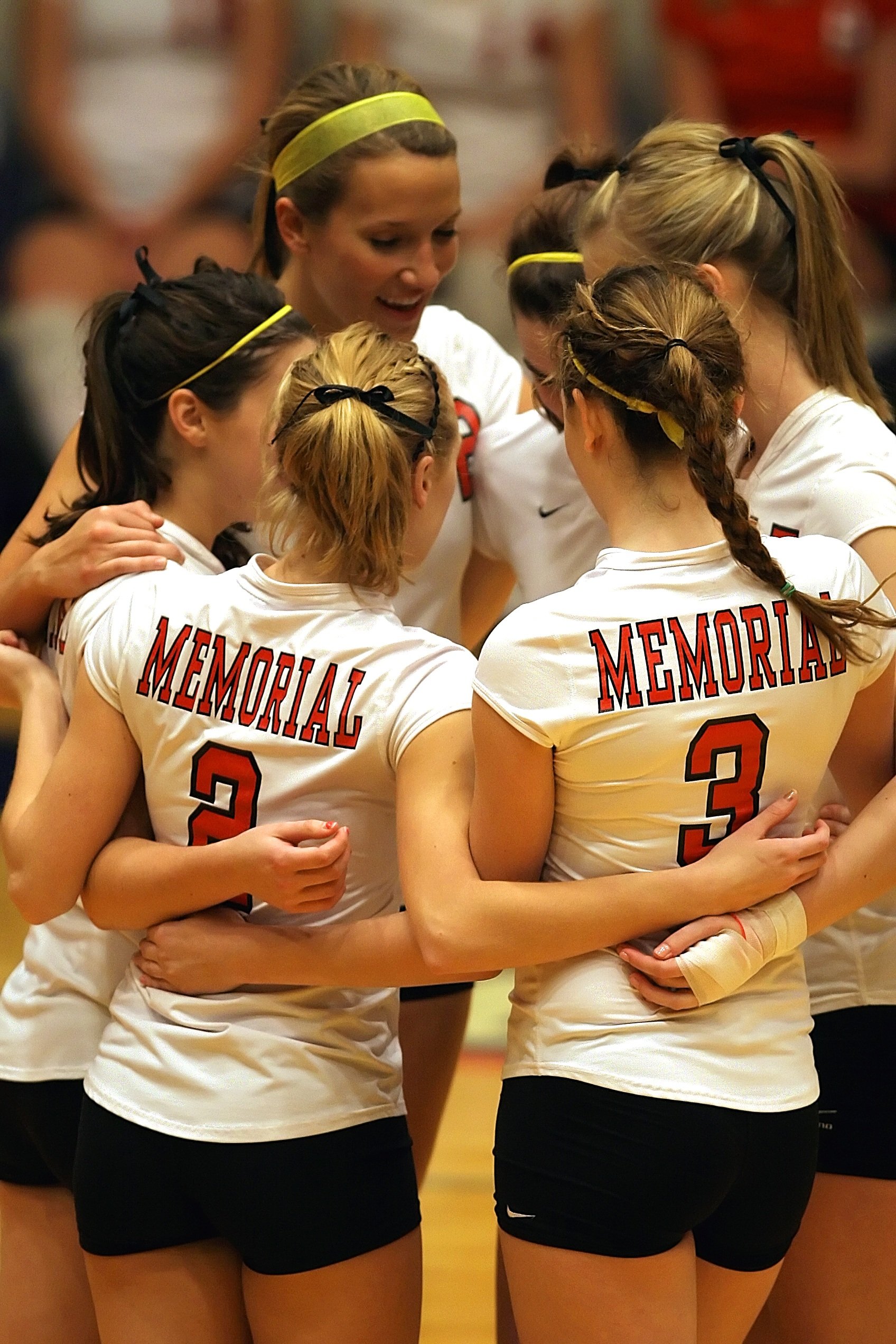
Feature photograph: KeithJJ’s archival girls volleyball huddle, via Wikimedia Commons, CC0. Representative image; not a 2026 playoff match.