
The first Saturday of November is an important date on a lot of Texas family calendars. Some people have spent weeks checking property boundaries and clearing their schedule. Others are planning their first hunt with a relative who has been doing this for decades. Still others simply want to know why traffic increases on rural roads before dawn and what outdoor precautions might matter to their own plans.
In 2026, Texas’s general white-tailed deer season opens Saturday, November 7, in both the North and South Zones. But that’s where the simplest part of the statewide story ends. Closing dates differ by zone, county-specific rules matter, and licenses or education requirements are not interchangeable from one person to the next.
Two zones begin together but do not finish together
According to Texas Parks and Wildlife, the North Zone general season runs November 7, 2026, through January 3, 2027. The South Zone general season also begins November 7 but continues through January 17, 2027. That’s an important distinction for anyone who spends time in more than one part of the state.
Archery-only season for counties with an open season runs October 3 through November 6, so the general opener follows directly after the archery window. TPWD also lists separate youth-only, muzzleloader and special-late opportunities that depend on region and date. Those are not a blanket permission to hunt any county at any time.
The official TPWD white-tailed deer page is the best place to start because it has the current season dates and links to county-by-county rules.
County rules are the part not to guess
Texas sets bag limits by county. TPWD’s statewide rule says a person may not exceed an annual total of five white-tailed deer, including no more than three bucks, but that is a ceiling, not the limit necessarily allowed in every county. Specific county regulations may be more restrictive, and additional property programs have their own provisions.
That means a hunter traveling from one part of Texas to another cannot safely assume last year’s home-county rules apply at the new destination. Buck definitions, antler restrictions, doe opportunities and other conditions can be different. The location of the hunt is as important as the calendar date.
Before heading out, check the specific county in TPWD’s annual regulations and save a copy that can be referenced without dependable cell service. If hunting on a managed property, make sure everyone understands any applicable program requirements and who is responsible for reporting.
Licenses and hunter education need attention before Saturday
A hunting license is not the same as hunter-education certification. Texas’s general requirements identify hunters born on or after September 2, 1971, as needing to complete hunter education unless a lawful exemption or deferral applies. The official page sets out age-specific accompaniment conditions as well.
For first-time participants, the sensible move is to handle training and documents now rather than on Friday evening. A small administrative problem can prevent someone from participating or create an unnecessary risk in the field. Official certification and license rules are more reliable than a friend’s memory of what was required twenty years ago.
TPWD notes that proof of certification or qualifying deferral must be available while hunting, either electronically or in printed form. Having a backup is a practical idea if phone reception is unreliable.
Read the Texas hunter-education guide for the current requirements and course options.
What responsible preparation actually looks like
There is more to preparation than equipment. Make sure the property access is authorized and everyone in the group understands where they may go. Know who else is expected to be on the property, how people will communicate and what the plan is if a member of the group does not return at the agreed time.
The safest outing is one built around clear boundaries and realistic expectations. Rural properties can include fences, livestock, roads, water and other hazards that are not obvious from a satellite view. A familiar location may still change after heavy rain or maintenance work.
If a family member is new to hunting, let them learn the process without making success the only goal. Being able to identify wildlife correctly, understand safe conduct and appreciate the environment are worthwhile outcomes in themselves. The trip can still be meaningful without a harvest.
Be considerate of other people using the outdoors
November is also a good month for hikers, campers, cyclists and birdwatchers. Texas public lands do not all follow the same access or hunting rules, and private land should never be treated as open recreational space simply because it appears empty.
Recreational users should check whether an area permits hunting and whether seasonal closures or special notices are posted. Wear visible clothing where appropriate, stay on authorized routes and follow the facility’s posted rules. Hunters likewise need to understand property boundaries and other people’s lawful presence.
For anyone driving in rural Texas, dawn and dusk are good times to remain alert for deer crossing roads. Wildlife movement can be unpredictable, and a rural road that feels quiet may still carry a serious risk. Give yourself enough travel time that there is no reason to rush.
The conservation story is worth covering
Deer season is not only about opening weekend. Regulated hunting is part of Texas’s broader wildlife-management framework, and TPWD uses seasons, county limits and other tools to support population management and conservation. That larger story is useful even for readers who do not hunt.
Responsible participants respect the rules, the land and the animal. They also recognize that wildlife populations and habitats are not uniform across Texas. What makes sense in one ecological region may not match conditions in another.
The result should be a conversation about stewardship as well as recreation: landowner relationships, habitat, youth education and why locally tailored rules are preferable to one generic statewide assumption.
Reporting and disease-related rules may vary
Some Texas counties and zones have additional rules connected to chronic wasting disease monitoring. Those can involve carcass movement, testing or reporting responsibilities under TPWD programs. A traveling hunter should verify the current map and regulations for the specific county rather than assuming the absence of a notice in a generic article means no special requirements apply.
The same principle applies to tagging and harvest reporting. Rules and available electronic systems change, and the correct action may differ with the license, property or location. Check the current Outdoor Annual and official state instructions before participating. This article is a planning guide, not a replacement for those regulations.
Someone who learns the rules ahead of time can concentrate on the experience instead of trying to find an answer after leaving the property. That is a simple but valuable difference.
For families, the season can be bigger than one morning
Many outdoor traditions are taught slowly. An adult may begin by taking a young person along to watch wildlife, identify tracks, listen to birds or learn the importance of leaving a place better than it was found. Such experiences build confidence without requiring a child to take part in every aspect of a hunt.
The conversation afterward also matters. What did you notice about the weather? Which animals were active? Did your group follow the plan it established? What would you change for another visit? Reflection turns a day outside into a more durable lesson.
For households that do not participate in hunting, the season is still a reminder that Texas’s outdoor spaces are shared and governed by different rules. Checking access and respecting private property are useful habits for everyone.
A checklist that is really about avoiding surprises
Before Saturday, confirm the county and zone, the legal season window, the individual’s license and education status, any specific land-access permission, and the current property or public-area restrictions. Then agree on communication, weather considerations and how the group will handle an emergency.
Those preparations do not require expensive purchases or bold promises. They require attention. Most preventable confusion comes from assuming someone else has already checked a rule or a boundary.
If something remains uncertain, ask TPWD or a qualified local authority rather than filling in the gap with guesswork. Regulations are specific for a reason, and it is better to postpone a plan than to discover that it relied on the wrong county’s requirements.
What happens after opening weekend
The general season continues into January, with different ending dates in the two zones. Some counties also have special late or other seasonal periods. If your schedule does not allow a November 7 outing, that does not automatically mean the opportunity is gone. Check the dates that apply to the actual location.
Thunderfoot can help readers discover related outdoor and community activities through the Texas Event Finder, but official TPWD publications remain the authority on hunting and wildlife rules. Readers should use those primary sources when making any legal or safety decision.
The Texas opening weekend worth understanding
There will be plenty of excitement around November 7. A responsible statewide feature should make that excitement easier to navigate, not turn the season into a contest to see who returns with the biggest photograph. The most useful information is accurate dates, county-specific limits and the expectation that everyone acts carefully.
Texas’s outdoor traditions thrive when participants know the rules and respect the land. Start there, and the rest of the season has a better foundation.
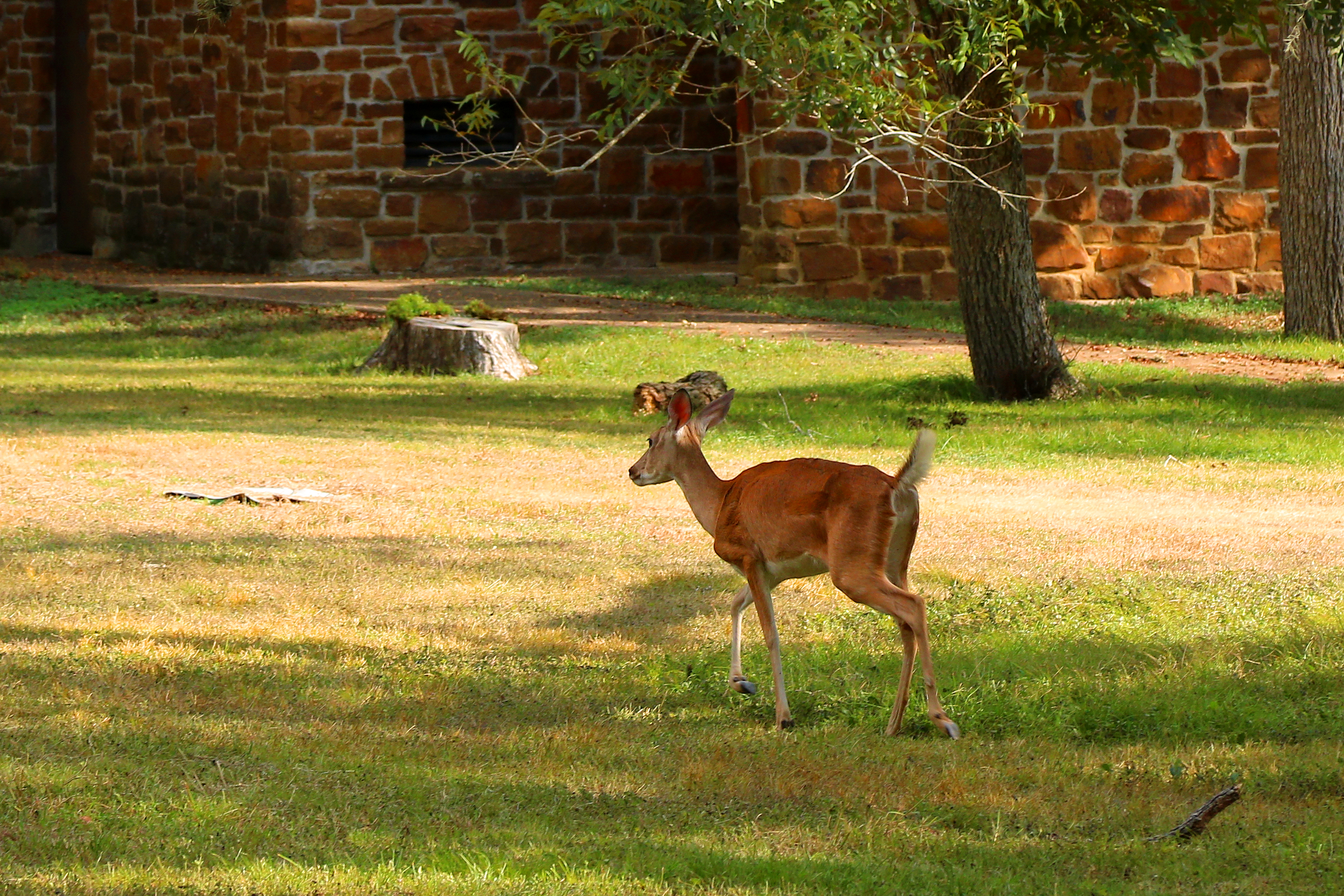
Featured image: actual white-tailed deer photographed at Buescher State Park, Bastrop County, Texas, in September 2026, by Larry D. Moore / Wikimedia Commons, CC BY 4.0. The photograph is wildlife documentation, not a hunting scene. TPWD season details checked November 3, 2026.
