There is a particular kind of Sunday that improves as soon as somebody says, “Let’s just go outside.” No elaborate packing operation, no competition over who can cover the most miles and no need to turn the outing into a vacation. This Sunday has an extra reason to make that suggestion. The Texas Parks and Wildlife Department confirms that November 1, 2026, is Texas State Parks Day, with free entry at state parks for the fourth annual celebration. Friday is the right time to choose a park and reserve a day pass. Once that is done, the rest can be pleasantly modest: a walk, lunch outdoors and enough time to notice where you are.
Free entry is the invitation; a reservation is the plan
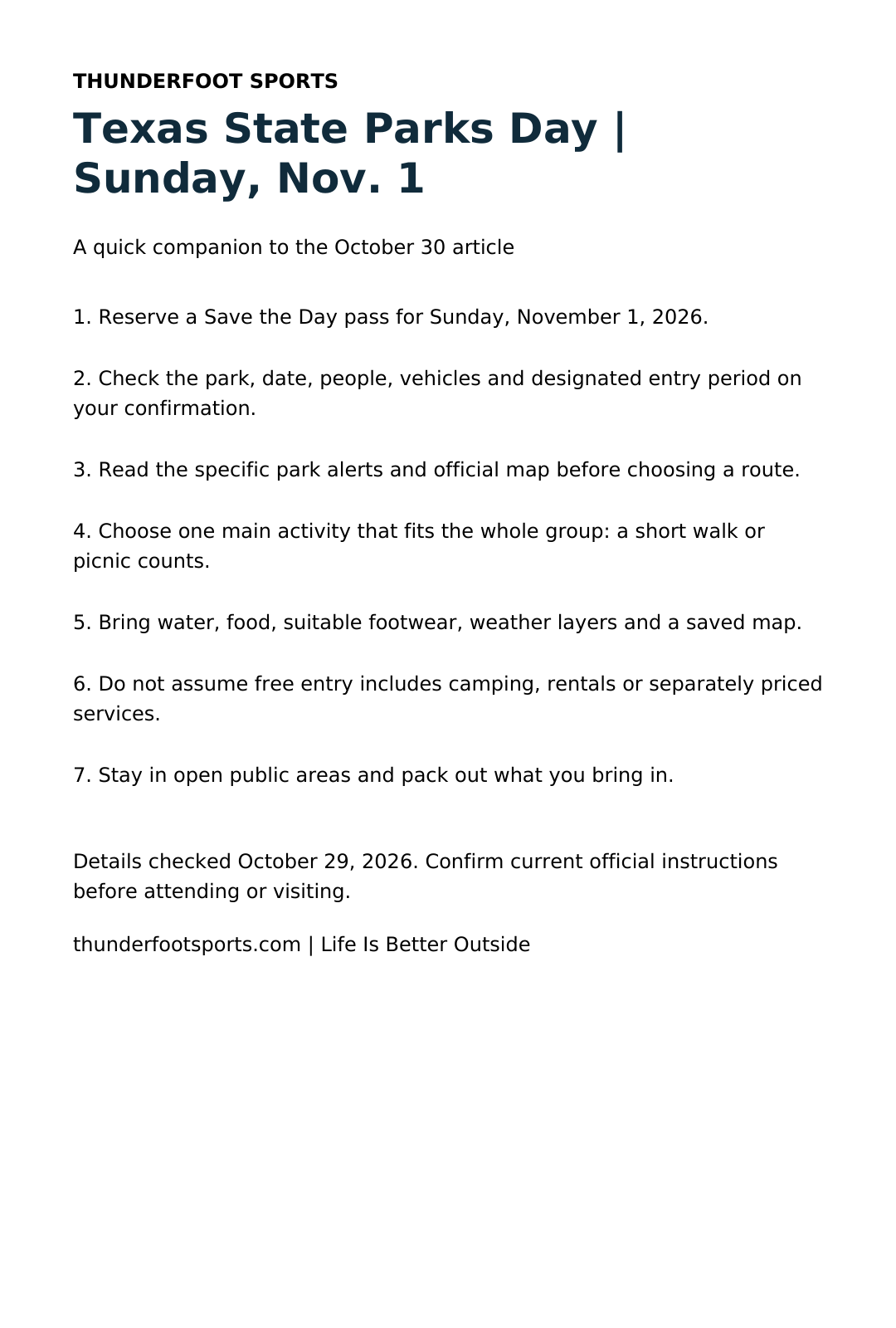
TPWD’s official Texas State Parks Day announcement encourages visitors to reserve Save the Day passes to guarantee entry at their chosen park. That distinction matters. A free-entry celebration does not create unlimited parking or remove capacity limits. Before telling the whole group where to meet, open the reservation system and check the actual date and availability. If the first choice is full, choose another park rather than assuming you can talk your way in at the gate. The most useful Friday task is securing a workable option, not building a perfect itinerary around a reservation you have not made.
Read the confirmation as carefully as you would a concert ticket. TPWD’s day-pass FAQ explains that some parks use designated entry periods and that arriving outside the selected window may prevent entry. Confirm the number of people and vehicles, save the reservation where you can retrieve it without a strong signal and send the details to the person actually driving. If friends are coming separately, make sure they have handled their own entry arrangements. Free entry is the advertised benefit; do not assume the announcement also makes campsites, equipment rentals or separately priced services free. Check those items directly before committing to them.
Choose the day you want before choosing the park
Start with the group rather than a photograph. Does everybody want to walk, or does half the group really want a shaded place to sit? Is there a child who will enjoy twenty minutes beside a pond more than a long trail? Does someone need a firm surface or a route without steep grades? Those questions narrow the choices more usefully than a list of the state’s most dramatic views. A nearby park that fits the people going is often a better Sunday choice than a famous park that requires a long drive and an argument over the first trail junction. Nobody has to earn a picnic by completing a difficult hike.
Make one activity the anchor and leave the rest optional. For a walking group, that might mean a short marked loop followed by lunch. For a family, it might be time at a designated day-use area with a brief nature walk before heading home. For someone trying a state park for the first time, simply learning the layout can be enough. Look at the official map and identify the entrance, parking, restrooms and route before leaving. A trail name is not a full description of effort. Distance, surface, elevation and exposure all affect how the walk will feel, especially when people arrive with different ideas about what “easy” means.
Check the park you will visit, not a statewide assumption
Texas does not have one set of outdoor conditions on a given Sunday. A comfortable forecast near home tells you little about a park several hours away. Open the specific park’s official page and read its current alerts before choosing the route. A closure, restricted area or changed entrance can alter the whole day. Our Texas Event Finder can help you discover other things nearby, but the park’s own information should settle access and operating questions. Treat the statewide celebration as the invitation and the individual park page as the instructions for the place you are actually visiting.
Guadalupe River State Park illustrates why that extra check helps. Its official park page provides the starting point for planning a visit, while the landscape in our feature photograph shows a real view from the Painted Bunting Trail. The photograph was taken in January 2023; it is not a promise of this Sunday’s vegetation, weather or trail conditions. That same distinction applies to every beautiful park picture online. Use images to understand the setting, then use current notices and maps to decide what is practical. A real place deserves a little more attention than assuming it will look exactly like its best-known photograph.
Pack for a pleasant few hours
For a simple day outside, keep the bag simple too. Bring drinking water, food suited to the outing, sun protection and footwear appropriate to the route you selected. Add a layer when the forecast calls for one. Carry the park map and a charged phone, and let somebody outside the group know your general plan. If the whole outing depends on a single person’s backpack, check what is actually inside before leaving the driveway. The familiar phrase “I thought you brought it” has probably spoiled more lunches than any complicated outdoor problem. A quick check beats discovering that everybody brought chairs and nobody brought water.
Set the pace around the slowest comfortable walker and discuss turnaround expectations early. If people want different outings, choose a meeting point and a clear time rather than allowing the group to split without a plan. For a first visit, leave the ambitious route for another day if the map or conditions raise questions. The goal is to come home wanting to return. A shorter route also leaves space for the parts that seldom appear in a mileage total: watching birds, looking closely at a tree, sitting beside the water or letting children inspect something interesting without an adult announcing that everybody is falling behind.
Leave the schedule loose enough to enjoy Sunday
A free day can become strangely expensive in effort when you try to attach too many other activities to it. You do not need breakfast in one town, a major hike in another and a dinner reservation on the far side of the highway. Choose a sensible departure time, allow for entry and take lunch if that makes the day easier. Families coordinating separate cars should settle the return plan before setting out. If you are meeting friends, our group planning tool can help organize the basic decision, but the actual invitation can remain one sentence: this park, this entry window, this meeting place.
Use park facilities as intended, stay within open public areas and pack out what you carry in. Leave wildlife and natural features where they belong. If a ranger’s instructions change your plan, take the adjustment in stride instead of treating your preferred route as an entitlement. A busy public day works best when visitors give one another room. That can mean moving aside at a narrow section, keeping a picnic from spreading across a walkway or saving a loud conversation for a place where it does not dominate everybody else’s afternoon. These are small courtesies, but they do much of the work of making a shared outdoor space feel welcoming.
Make the reservation Friday, then stop overcomplicating it
The best use of Texas State Parks Day is not necessarily checking off a park far from home. It may be finally visiting the one you have driven past for years. Reserve the pass, confirm the route and alerts, tell the group what kind of day you have in mind and leave some room for it to unfold. Sunday, November 1, offers a statewide reason to step outside together. A short walk and a relaxed lunch count. So does an unhurried hour in a place that makes the week feel a little less crowded. The admission is free; the worthwhile part is giving the day some attention.
Event details checked October 29, 2026, against TPWD’s announcement and day-pass guidance. Photo: Larry D. Moore, CC BY 4.0, via Wikimedia Commons. Archival January 2023 view, unaltered.

Keep the quick guide: Download the PDF or save the PNG checklist.