The best part of a small music venue can happen before you recognize a single song. Somebody counts in, a guitar finds its place and the room changes. A table that was halfway through a conversation turns toward the stage. A couple stands up. Someone asks the perfectly reasonable question that starts many good music nights: “Who is this?” Texas has room for the big-ticket concert and the evening built around an unfamiliar performer. The second kind deserves more attention. It lets curiosity do some of the work, and it can turn a night that began with no particular expectations into one you talk about on the drive home.
Pick the kind of room before picking the invitation
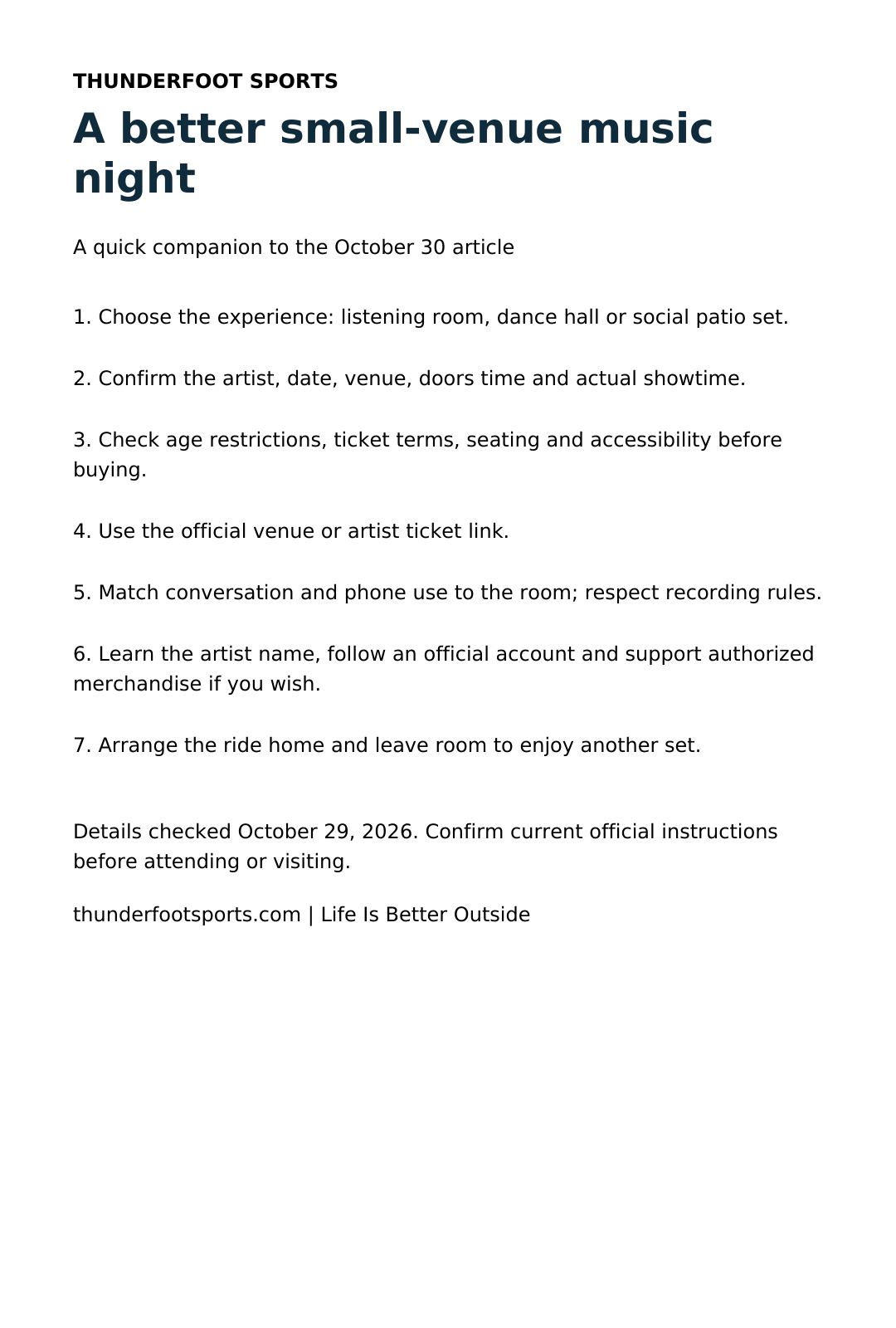
“Live music” can describe very different evenings. A listening room asks you to give the songs most of your attention. A dance hall makes movement part of the experience. A patio set may sit alongside food and conversation. Those differences matter more than whether everybody in the group knows the artist’s name. If your friends want to catch up after a busy month, a quiet songwriter performance may be an awkward choice. If you want to hear the words, a lively social patio may leave you frustrated. Start with what you want the evening to feel like, then find a show that suits it.
This is also a useful way to discover music beyond your usual favorites. Look for the format as well as the genre. An acoustic duo, a songwriter round and a full band can draw from similar material while creating entirely different nights. Read the venue’s description and listen to a little of the artist’s own music before deciding. You are not studying for a test. One or two songs can tell you whether the sound fits the mood. Leave some room for surprise, though. Knowing every chorus is enjoyable; finding a performer who makes you want to learn one can be just as good.
Doors, dinner and showtime are three separate questions
Before sending the invitation, establish the actual performance time. Doors opening does not necessarily mean the first song starts then, and a kitchen’s hours may follow a different schedule. Ask whether there is an opener, whether the event has multiple sets and whether the listed time applies to the music or admission. It is much easier to arrange dinner once those questions are settled. The same goes for a late arrival: if your group cannot make the beginning, check whether entry remains available and whether arriving partway through would disrupt a seated performance. A little clarity saves the familiar scene of six people standing outside debating what the listing meant.
Use our Texas Live Music Finder to start the search, then follow through to the venue or artist’s official listing. Confirm the date, location, age policy and ticket conditions there. A calendar is a discovery tool; the host’s current instructions should settle the final details. If the event is ticketed, use the official purchase link and read what the ticket includes. A cover charge, a reserved table and a general-admission ticket are different arrangements. Before buying for friends, make sure they understand which one you are getting and whether the purchase can be changed if somebody drops out.
A ticket does not always come with a chair
Gruene Hall offers a useful real-world example. Its official FAQ says admission does not guarantee seating or dance space and explains that show formats vary. That is a detail worth knowing before inviting somebody who needs a seat all evening. The lesson applies well beyond one famous hall: ask about the arrangement at the specific event. If seating is essential, confirm it before paying. If accessibility affects the visit, contact the venue about the route from parking to entry and the viewing area. A welcoming invitation includes enough practical information for people to decide whether the evening works for them.
The photograph above shows Gruene Hall’s exterior in January 2006, an archival view of a real Texas music landmark. It is not a picture of tonight’s crowd or a claim about a particular performance. The hall is an example here, not the only place worth hearing music. A neighborhood room with a modest stage can provide the same pleasure of being close enough to notice the exchange between musicians. Look for the actual experience you want rather than treating a familiar name as proof that every show there will match your group’s expectations. The room matters, but the event happening inside it matters too.
Read the room once the music starts
The easiest etiquette rule is to notice what the people around you came to do. If the room is listening closely, take a longer conversation away from the performance area. If it is a dance night, keep the route onto the floor clear and avoid letting chairs creep into the space people are using. You do not have to become stiff or self-conscious. Just remember that your evening overlaps with other people’s evenings. The performer trying to deliver a quiet verse and the couple trying to finish a dance both benefit when the audience pays a little attention to the setting.
Phones deserve the same judgment. A quick photograph or short clip, where permitted, can be a nice memory. Holding a bright screen above your head through an entire song changes the view for everybody behind you. Check the venue and artist’s rules before recording, especially if a performance asks for phones to be put away. Applause is a good way to be part of the room without becoming the subject of it. So is giving the musicians space when they are working. A request shouted between every song is still an interruption, even when it comes from somebody having an excellent time.
Make discovery worth something for the artist
When a performance catches you by surprise, do something with that discovery. Learn the artist’s name, follow an official account or find the next show. If merchandise is available and you want it, buy directly from the performer or the authorized table. Where tipping is welcomed, use the offered method rather than interrupting the set to arrange it. None of this requires a grand gesture. A small venue can make the relationship between audience and performer feel immediate, and a little follow-through helps that connection outlast the last song. It also makes it easier to find the person whose name you were trying to remember the next morning.
A recommendation to friends can be valuable too, especially when it explains what you liked. “Good band” is fine; “the singer made a noisy room go quiet for the last song” gives somebody a reason to listen. Be accurate when posting a clip or photograph. Name the performer and venue correctly, respect recording restrictions and avoid implying a musician endorses your business because you enjoyed the show. If you share the experience through Thunderfoot, let the music and place carry the story. The interesting part is what made people look up, stay for another set or come back the following week.
Keep enough space in the evening for a second set
A small-room night usually works best with a simple plan: a confirmed show, a manageable group and a ride home already considered. Agree on the basics before leaving, including whether people want dinner first and how long they expect to stay. Leave a little room for the evening to be better than expected. You may discover a song, a room or an artist worth following. You may simply have a good hour listening with people you like. Both count. Start with the music listings, check the host’s details and go with enough curiosity to hear something you did not know you were looking for.
Venue-specific information checked October 29, 2026. This is a statewide music-experience guide, not an announcement of unverified Friday performances. Photo: Larry D. Moore, CC BY 4.0, via Wikimedia Commons; unaltered archival photograph.

Keep the quick guide: Download the PDF or save the PNG checklist.