
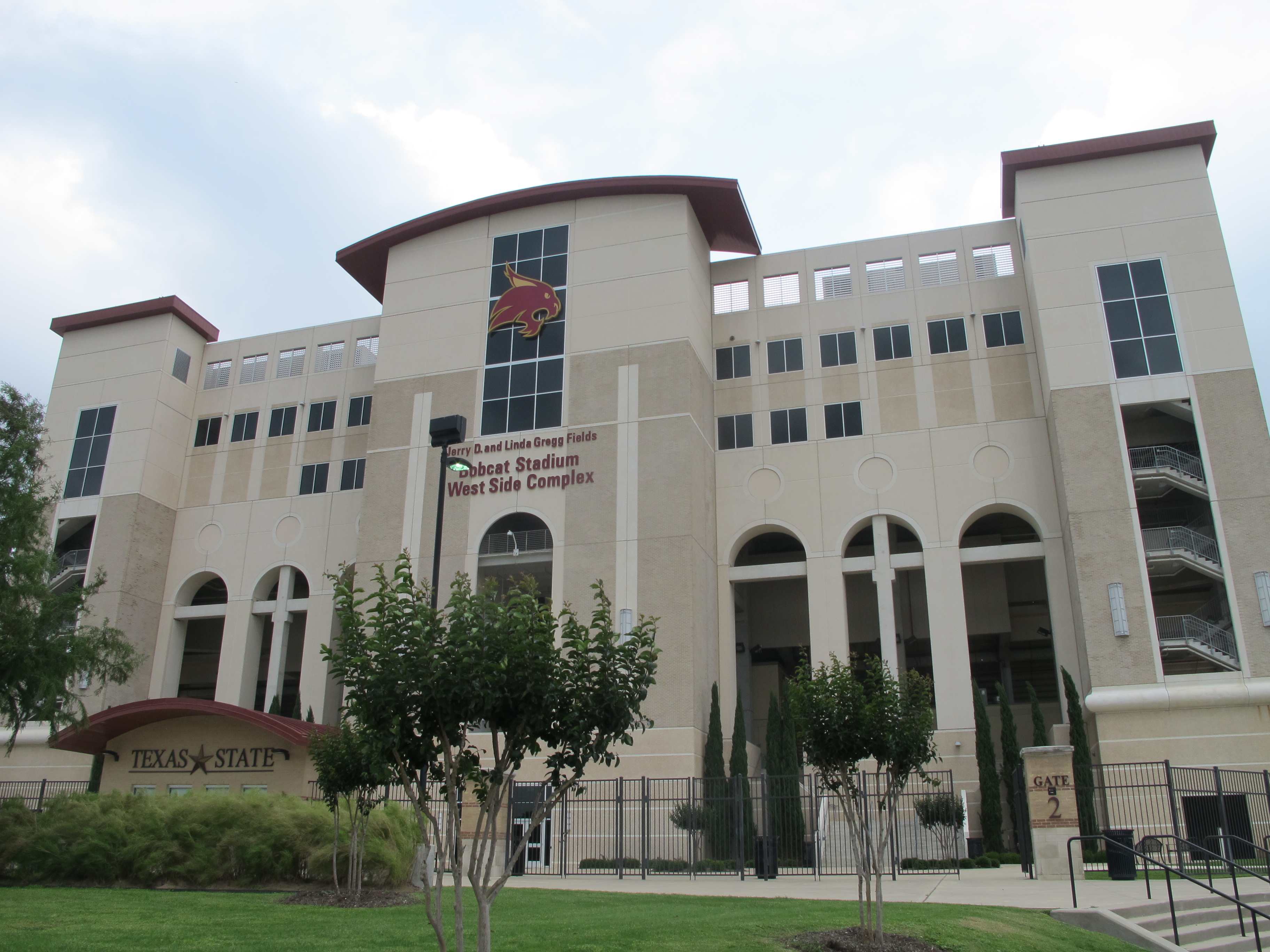
The biggest mistake people make about Texas State football is assuming that Saturday’s game is just another familiar home date in San Marcos. The Bobcats are playing their first season in a reshaped Pac-12 setting, and the October 24 home game against Utah State is part of that new identity. Kickoff is 6:30 p.m. Central at UFCU Stadium. There is still a football game to win and a stadium to navigate, but the bigger story is what it means for a Central Texas program to host a conference opponent with a different western footprint.
Texas State’s official published schedule lists Utah State at 6:30 p.m. on Saturday, October 24, with CBS Sports Network carrying the game. The Pac-12’s schedule listing agrees on the matchup and date, though some schedule views display times in Pacific time. For a reader headed to San Marcos, Central is what matters: half past six in the evening.
Start with the correct stadium name
Texas State plays at UFCU Stadium in San Marcos, the building longtime supporters knew as Bobcat Stadium. An older photo or map might still use the earlier name, and that’s understandable. It does not mean there are two separate college football venues that you have to choose between. What matters is navigating to the actual Texas State home stadium and using current university parking and admission instructions. Don’t rely on a 2016 image to figure out today’s entrance pattern.
The featured photograph is an authentic April 2016 image of the stadium’s main facade. It is correctly described as an archival photo of the real Texas State venue, taken before the UFCU naming and subsequent changes. We are not using a fictional architectural rendering or putting a stadium backdrop into a different Texas city. If you are unfamiliar with the campus, the image gives useful place context; the university’s current map supplies the operational details.
Why a conference transition should matter to ordinary fans
A new conference isn’t only a graphic placed beside a team’s name. It changes the pattern of opponents, travel and rivalries, and it gives games against schools like Utah State a different frame. Texas State supporters who built habits around familiar regional matchups now have to learn opponents whose recent history may not overlap much with their own. That is a reason to read beyond the scoreboard: what style of football does the visiting team prefer and how does that compare with what the Bobcats have already seen?
For casual fans, the point isn’t memorizing conference bylaws or the full realignment timeline before buying a ticket. It’s recognizing that the October 24 game fits into a changing competitive landscape. A home victory can feel different when it comes against an unfamiliar conference opponent. Equally, a difficult night is not a complete judgment on whether a conference move was wise. The long-term story is made across seasons, not determined by one Saturday.
Texas State’s season has not been predictable
The official Pac-12 schedule lists Texas State at 3–3 entering this game, with wins over North Texas, UIW and Colorado State and losses in other high-profile matchups. The October 15 home victory over Colorado State was especially emphatic, 66–27. That’s a result worth understanding rather than simply repeating. Scoring at that level shows an offense capable of explosive production when its pieces connect, but the next opponent can respond differently.
A productive way to follow Saturday is to watch whether the Bobcats are creating favorable positions before the snap. Does a formation force a defense to choose between defending the run and covering extra receivers? Is the ball moving quickly enough that defenders cannot settle into one predictable response? The strongest offenses make different plays look connected; a run sets up a later play-action attempt, or short throws create space for a more ambitious shot.
Utah State will have its own reasons to disrupt that rhythm. An opponent doesn’t need to duplicate the previous game’s defensive plan, and a preview should not assume Saturday will produce another extraordinary point total. Watch how the first two possessions develop. If the visitors keep Texas State behind the chains, the Bobcats may be asked to win more individual passing downs instead of operating a comfortable full playbook.
How to read the game without drowning in statistics
First-down yardage is a good beginning. Consistent small gains can be more sustainable than relying exclusively on one long completion every quarter. Then watch third-down decisions. Does the offense get to the line early enough to adjust a play, or is it rushing with the play clock running down? Finally, pay attention to field position after punts. A team that makes the opponent drive a long way may be winning a hidden battle even if the offense isn’t on the field.
If you’re more advanced, observe how Utah State handles the edges. Does it keep outside contain when a runner threatens to bounce wide? Can its defensive backs tackle receivers after a short completion? Does Texas State change formations after a series of similar looks? These patterns give the game texture beyond shouting ‘run it’ or ‘throw it’ every down. You can’t know a coaching staff’s private calls, but you can see how the players respond to the circumstances in front of them.
A real San Marcos Saturday
A 6:30 p.m. kickoff gives visitors time to enjoy the city, but it shouldn’t become an excuse to pack the entire region into one itinerary. San Marcos has a university, a river, restaurants and attractions. Choose one activity that fits your group and leave ample time for the stadium. Parking and traffic can change significantly around a home game, and people coming from Austin, New Braunfels or San Antonio will approach the city from different directions.
Use current Texas State Athletics information for parking, permitted bags, ticket procedures and gates. An old campus memory can be surprisingly unhelpful if entrances or drop-off patterns have changed. Have a charged phone, keep tickets available and tell anyone attending with you exactly which meeting point you will use. A named stadium, an agreed time and a practical parking choice create a much more enjoyable game day than the most imaginative list of pregame attractions.
For families, the evening finish time matters. The game can run well into the night, and a long return drive may be tiring. Dress for the actual forecast, consider appropriate hearing protection for sensitive children and plan dinner before anyone gets irritable in a concourse line. A first college game is more memorable when a child can watch the traditions and learn the rules rather than spending the whole time hungry.
Use Thunderfoot’s actual interactive UFCU Stadium guide
Thunderfoot has an actual interactive UFCU Stadium Map & Gameday Guide for Texas State home games. It covers seating, gates, parking, Boko’s Backyard tailgating, entry rules and traffic around Aquarena Springs Drive. Use that exact stadium guide to plan Saturday in San Marcos—not a different college’s guide or an out-of-date parking screenshot. For the latest matchup and kickoff, also check the Texas College Gameday Schedule and Texas State Athletics. The interactive guide is the right Thunderfoot resource for this venue, while official event staff and signage control any game-specific changes.
What to save before leaving
Texas State hosts Utah State at UFCU Stadium on Saturday, October 24, at 6:30 p.m. Central. CBS Sports Network is the listed broadcast. Confirm the current university information for entry and any late schedule updates, then leave room to enjoy San Marcos without racing to kickoff. The story of Texas State’s conference future will develop over years, but Saturday offers something immediate: a real home game, a new opponent and another chance to understand where this program is going.