
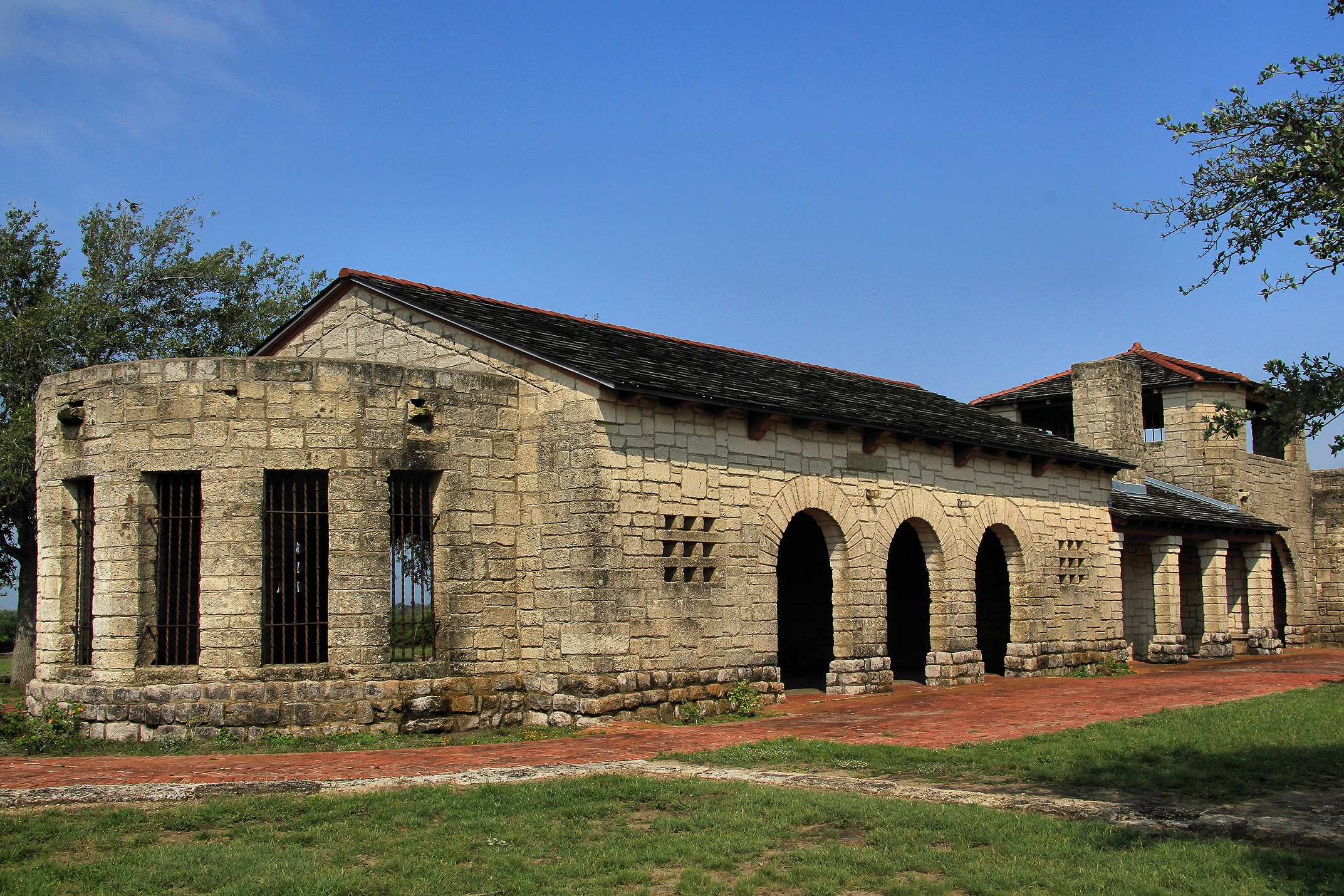
The easiest way to misunderstand tonight’s Lake Corpus Christi State Park event is to hear ‘night hike’ and imagine a difficult wilderness trek. The ranger’s plan is much more focused: a 45-minute walk through the Kiskadee and Longhorn trail areas, using darkness to sharpen how participants notice smell, sight and sound. The public program is scheduled for Friday, October 23, from 7 to 8 p.m. It begins at the Castle parking lot, not at a random lakeside trailhead. That makes it an unusually approachable way to experience the Coastal Bend after sunset.
The official Texas Parks & Wildlife listing calls the activity family-friendly and dog-friendly. It is free with normal park entry fees, and a red flashlight is optional. The Kiskadee Trail is described as flat, wide and surfaced with caliche, with a generally level parking approach. The listing even discusses possible low brick obstructions in the grass leading to the Castle pavilion. That amount of accessibility detail is more useful than a vague claim that every night hike is either very easy or very rugged.
The Castle parking lot is the beginning, not a haunted attraction
The park’s historic Castle is a Civilian Conservation Corps-era refectory, a distinctive stone structure associated with the landscape around Lake Corpus Christi. Its name makes it sound as though the evening might involve ghost stories or a themed scare trail, but the actual program is about natural senses. Don’t promise jump scares, costumes or a flashlight maze when the ranger has organized a different experience. The architecture is a real landmark and an easy meeting point, not evidence of a Halloween attraction.
The feature image with this article is a genuine archive photograph of the CCC refectory at Lake Corpus Christi State Park. It depicts the correct park’s historic building and is not a fabricated spooky castle or a picture from tonight’s hike. If you are navigating after sunset, use the current park map and the official Castle parking lot directions rather than trying to interpret the old photo as a map.
What happens to sound when sight becomes less useful
In daylight, the eyes do most of the work. We recognize a trail by its shape, read the colors of leaves and use distant landmarks to judge how far we have walked. At night, those cues become less reliable. A guided walk can make small sounds more apparent: insects, branches moving, water nearby or footsteps on a different surface. You don’t have to encounter an unusual animal to feel that shift. The ordinary environment becomes more interesting when you stop expecting it to look exactly as it did at noon.
Try a simple exercise during the permitted observation stops: notice three separate sound sources without immediately naming them. Is one a repeating insect call? Is another the wind moving the vegetation? Is the third a distant human-made sound? Asking before assuming can be a useful habit for children and adults. Don’t leave the group to chase a noise or shine a beam into vegetation to force a creature to reveal itself. The purpose is observation, not disturbance.
Smell is a surprisingly good guide
Many parks smell different after dark, particularly around water and damp soil. Plants release scents, the air temperature changes and breezes carry odors from different directions. A ranger-led sensory program can help visitors pay attention to those differences. Be careful not to interpret every unfamiliar smell as evidence of a specific animal. You may be noticing wet ground, leaf litter or something carried on the breeze. Curiosity is enough; certainty isn’t required.
People with allergies or respiratory sensitivities should prepare according to their own needs. Night walks may bring insects and pollen exposures, just as daytime ones do. Insect repellent and appropriate clothing are sensible when conditions warrant them. No one should handle unfamiliar plants or taste anything because the event discusses the senses. The learning is observational, and the instructor’s boundaries matter.
Can you really see more with less light?
It sounds contradictory, but reducing bright light can help your eyes adjust to darkness and notice faint features. That doesn’t make a forest path safe to navigate blindly. Use lighting when needed for safe footing and follow the ranger’s instructions. A red-light flashlight is suggested because it can preserve night vision better than an intense white beam. Keep the light low, avoid shining it at other faces and give people time to adjust after leaving a lit vehicle.
Children are often tempted to point flashlights at anything that moves. Explain beforehand that shining light directly into an animal’s eyes can disturb it and that the group’s purpose is to observe respectfully. A small headlamp can be convenient, but the correct brightness and use depend on the staff’s directions. It is better to have suitable lighting available and rarely use it than to be forced into unsafe footing to prove how dark the trail can feel.
A family walk with a manageable time commitment
The actual guided portion is described as 45 minutes within the 7–8 p.m. program window. That’s long enough for a memorable change of perspective but short enough to be attractive to families who don’t want a late-night hike. A child who is uncertain about darkness may still feel comfortable staying close to a ranger-led group. You can explain that the experience is about listening and looking, not being scared. If they become overwhelmed, ask the staff how to leave the group safely rather than disappearing onto an unfamiliar trail.
Adults should also be realistic about attention spans. A sensory walk works when participants remain engaged, but not everyone enjoys standing quietly. Give children something concrete to notice, such as the direction of a breeze or the difference between two ground sounds. Avoid demanding complete silence for every minute. The aim is to help them recognize a real environment more carefully, not to turn the evening into a discipline contest.
The dog-friendly detail isn’t automatic permission for everything
The organizer explicitly calls this program dog-friendly, which is welcome news for visitors who enjoy walking with a pet. But a dog needs to remain appropriately controlled, under the park’s leash rules and comfortable around other people after dark. Bring water and a waste bag, and avoid letting a pet approach unknown wildlife. A reactive or noise-sensitive dog may not enjoy a group of strangers carrying flashlights, even if the park allows dogs to participate.
If your dog is joining, think about visibility for other participants. Keep the leash short enough that nobody trips over it, especially near a narrow section or when the group pauses. Reflective gear can help when appropriate, but ask how bright accessories will affect the observing experience. Bring the dog because it will enjoy an ordinary calm walk with you, not because you want to prove the animal can handle a late-night event.
Accessibility deserves a real conversation
The park’s event listing is unusually clear about the Kiskadee Trail’s caliche surface and the flat Castle parking lot. It also identifies possible low brick obstacles around grassy areas. Visitors with wheelchairs, walkers or other mobility needs should review those details and contact the park about the complete route. A broadly flat surface can still have loose material, small irregularities or different conditions after rain. Don’t oversell the program as barrier-free simply because the ranger has provided useful accessibility information.
That sensitivity matters for older visitors and families with strollers as well. A night event can feel more difficult than the same distance by day. Comfortable walking shoes, a charged phone and a little extra arrival time help. The correct choice isn’t always completing the full program. Participating for the portion that is accessible and enjoyable may be the most sensible outcome.
Why this park is worth returning to in daylight
Lake Corpus Christi State Park has a fascinating mix of water recreation and historic CCC architecture. The same Castle area that helps visitors find the night hike can be part of a separate daytime exploration. The park calendar also lists ‘A Step Back in Time’ on Saturday, a different program about the building’s history. Don’t assume tonight’s sensory hike includes a full historic-building tour. If you want both, check the time and current rules for each event independently.
For visitors considering a longer Coastal Bend weekend, Thunderfoot’s Corpus Christi & Coastal Bend hub can help identify other options. But you don’t need a two-day itinerary to enjoy a walk that lasts less than an hour. The chance to hear a familiar outdoor place differently may be sufficient.
Tonight’s simple plan
Arrive at the Castle parking lot before 7 p.m. Friday, October 23. The ranger’s night hike is scheduled for 7–8 p.m., with about 45 minutes on the Kiskadee and Longhorn trail areas. A red flashlight is optional, the program is family- and dog-friendly, and standard park entry fees apply. Check the official program page for weather changes or cancellations. Bring a little patience, turn down the bright lights and see what the Coastal Bend sounds like when the sun isn’t doing all the talking.