
San Angelo State Park’s Friday star party has one travel instruction that is easy to miss: the viewing location and the check-in location are not at the same entrance. On October 23, 2026, the public astronomy gathering runs from 7:30 to 9 p.m. at Bell’s Trailhead Parking Lot on the park’s north side. But the organizer specifically tells visitors to check in at the south gate entrance first. A newcomer who follows only the words ‘north side’ on a map may arrive at the right telescope gathering without having completed the necessary park entry.
The official Texas Parks & Wildlife notice says park rangers and members of the San Angelo Astronomy Association will help visitors explore stars, planets, constellations and other sights. The program itself is included with park admission: $4 for adults 13 and older, children 12 and younger free, and entry covered for qualifying Texas State Parks Pass holders. Online day-use reservations are recommended. This is a real event with real directions, not a vaguely advertised chance to watch the moon from any parking lot.
Make the two-gate plan before sunset
Check in through the south gate entrance, then follow current park instructions to the north-side Bell’s Trailhead Parking Lot. Save both locations and leave time for driving inside or around the park as staff instruct. If you’re uncertain about how those entrances connect, ask the park directly rather than improvising a route after dark. Event directions may be clearer than what a generic mapping application displays, especially when different entrances serve different portions of a large state park.
A family arriving at 7:25 p.m. without a day pass may have to solve two problems at once: processing entry and navigating to the observing area. That’s an avoidable source of frustration. Make an online reservation if appropriate, confirm the entrance fee and allow enough time to get situated. If weather is questionable, check with the park before driving. Astronomy events depend on visibility; an organizer can cancel or adjust plans when conditions are unsuitable.
You don’t need to own a telescope to enjoy astronomy
A public star party is an accessible way to try observing before purchasing equipment. Telescopes can be expensive, and the technical language around mounts, eyepieces and magnification can make the hobby feel exclusive. Meeting volunteers who already know how to aim and adjust their instruments eliminates many first-timer barriers. The experience becomes about curiosity: what is that bright object, how far away is it and what can you tell about it by looking?
Don’t expect the eyepiece to display the same saturated colors as a processed space photograph. Some real objects look like points, small disks or faint smudges. Your eyes may need time to adjust, and the view can change with conditions. If you’re not sure what you’re seeing, ask a volunteer to identify a particular feature rather than silently pretending it was obvious. A simple explanation can transform a subtle view into the highlight of the evening.
Why the park suggests a red-light flashlight
The official packing guidance includes a red-light flashlight if you have one, plus a chair or blanket, water and weather-appropriate clothing. Red light is useful because it can help people navigate without disrupting dark adaptation as much as a bright white light. Keep beams low and follow staff instructions. Do not sweep phone flashlights across a line of people looking through telescopes. Even a short blast of intense white light can make faint objects harder for others to see immediately afterward.
If you don’t own a red-light device, you can still enjoy the event. Ask staff where you can walk safely and avoid using a bright phone screen unless you truly need it. Turn down screen brightness, keep the phone pointed away from the telescopes and give your own eyes a chance to adjust. Not taking a photograph of every view may be the reason you remember it better.
A family’s first astronomy evening
Children can become fascinated with a planet or the shape of a constellation, but waiting in line and standing still can be challenging. Explain that a telescope is a delicate instrument, not a playground device. Help younger children approach an eyepiece carefully and ask before moving any part of the equipment. A child who can’t see the target comfortably may need a stool or assistance from a volunteer; don’t lift someone onto an unstable surface or grab a telescope to change its height.
Ask age-appropriate questions. ‘What should I look for?’ and ‘Why does that star seem brighter than the others?’ are better than demanding a complete explanation of astrophysics. If the sky is cloudy for a while, use the opportunity to discuss the moon’s phases or the way scientists locate objects. The evening isn’t wasted merely because a particular planet is behind a cloud. A patient child who learns to enjoy uncertainty may become the person asking for another astronomy night next month.
The West Texas landscape is part of the appeal
San Angelo State Park occupies a broad landscape where open ground and the relationship between city lights and darker skies can be apparent. Astronomy is partly about location: farther from the brightest urban light sources, faint objects can become easier to notice when other conditions cooperate. That doesn’t mean every sky in the park is free from light pollution or that Friday has a guaranteed clear forecast. It means the setting is an intentional part of the observing experience.
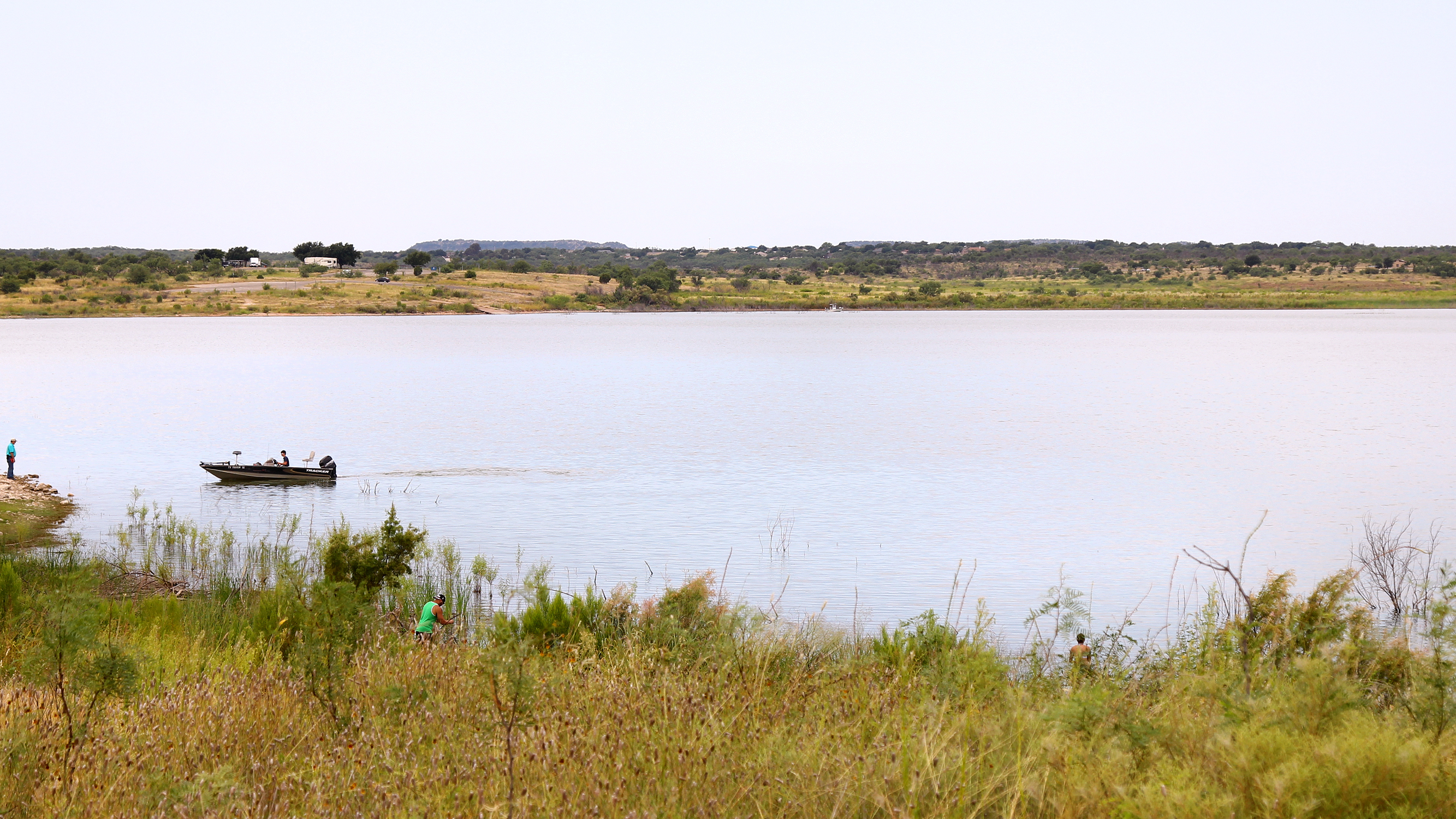
The article’s feature photograph is an authentic 2019 view toward Fisher Lake from San Angelo State Park. It is a daytime location photograph, not a fabricated picture of this evening’s sky or the precise position of Bell’s Trailhead. We deliberately label the archive instead of generating a dramatic image full of celestial objects that may not be visible on Friday. A truthful image of the destination is useful; a fake prediction of the sky is not.
Dress for standing, not hiking fast
Many visitors think of outdoor gear as something you wear while moving. A star party involves periods of standing or sitting while the temperature may fall. An extra layer, comfortable shoes and a chair or blanket can make a substantial difference. Bring water and consider insect protection as appropriate for current conditions. Check the forecast close to leaving rather than relying on how warm it felt at lunchtime. Even a gentle breeze can become uncomfortable after an hour of stillness.
For adults with mobility needs, contact the park about the observing area and routes between the check-in gate and the meeting point. A named parking lot does not automatically tell you how far someone must move across gravel or uneven ground to reach the equipment. Likewise, don’t assume an after-dark outing is equally comfortable for everyone in your group. A short call may help you choose the right plan.
Experienced astronomy fans have reasons to come, too
People who already own binoculars or a telescope can use public events to share a hobby, compare observing techniques and learn about the equipment others use. But respect the volunteer structure: the group is there to welcome a range of skill levels, not to host an exclusive debate about optical specifications. If a volunteer is teaching a child how to see a feature, that is more valuable than interrupting with the latest technical argument about magnification.
A useful skill for intermediate observers is learning to distinguish what is certain from what is anticipated. You can plan which part of the sky to examine, but transparency, clouds and atmospheric conditions affect the actual view. Even a promising forecast doesn’t guarantee a particular object will be impressive. People who approach the evening as an exploration rather than a shopping checklist tend to enjoy it more.
The specific details to save tonight
Friday, October 23, 2026, 7:30–9 p.m.; check in at the south gate and then proceed to Bell’s Trailhead Parking Lot on the north side as directed. Admission is $4 per adult 13+, free for children 12 and younger; park pass holders have eligible entry. Bring a chair or blanket, water, weather-appropriate layers and a red flashlight if available. Check the official star-party listing for changes. For other regional ideas, Thunderfoot’s San Angelo and Concho Valley hub is the next place to look.
The best part of a first star party might be nothing more complicated than seeing something with your own eyes that you had only known as a photograph. The best preparation is equally simple: arrive at the correct gate, find the right parking lot and keep the lights low. Let the volunteers handle the telescopes and the real sky provide the wonder.