
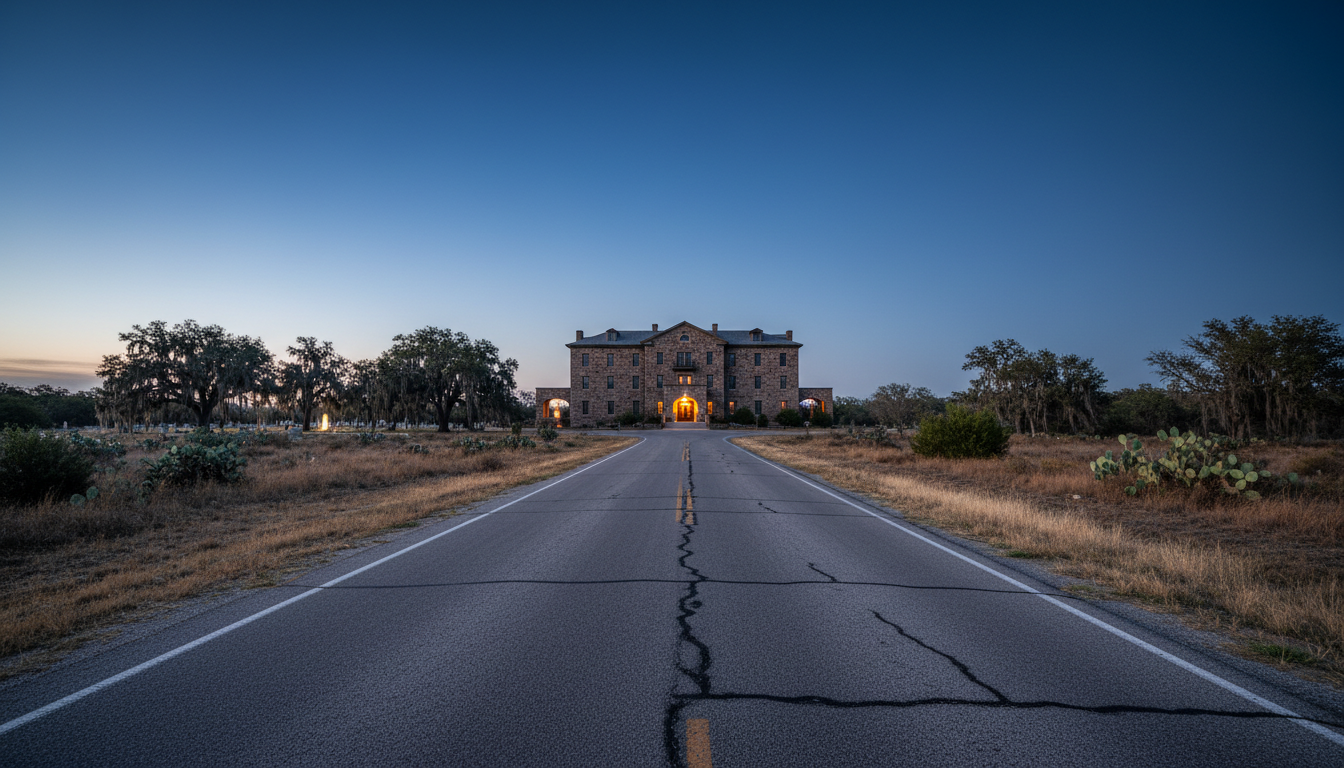
Texas has a new kind of ghost story you can explore without leaving your desk. On October 5, the Texas Department of Transportation added a Phantom Layer to its Statewide Planning Map, pairing familiar geography with tales of haunted hotels, unusual cemeteries, UFO sightings and other local folklore. The surprise is not that the state has spooky legends—every part of Texas does—but that a transportation-planning map is now a doorway into them. Treat it as an invitation to explore history, not as proof that the stories are true or that every pinned location is open for visitors. A mapped legend and a bookable Halloween event are very different things.
It is a clever idea, and it also raises a useful question for anybody planning an October outing. Does a haunted place on a state map mean there is a haunted attraction you can visit tonight? Not necessarily. There is a big difference between a historic site with a spooky legend, a public cemetery, a hotel with ghost stories and an attraction selling tickets for scheduled Halloween nights. Understanding the difference can help readers turn a fun piece of map exploration into a responsible real-world trip.
What TxDOT actually created
In an October 13 announcement, TxDOT explains that its map’s new layer includes locations and a short history or description for each. The collection emerged from staff surveys and additional research using sources such as articles, books and other accounts. The idea is to spotlight Texas’s strange stories through a tool more commonly associated with transportation planning.
That origin matters. The map is a curated collection of folklore and local lore, not a scientific registry of paranormal activity. It does not prove that a hotel is haunted or that a particular UFO story actually happened as described. The pleasure is in discovering what communities have said about their surroundings and then learning a little history behind the tale.
A ghost story isn’t a reservation
This is the first distinction we’d make for anyone planning a weekend. A map pin may lead you to an old building, a public site or a story connected to private property. It doesn’t necessarily indicate current admission, opening hours, tour availability or permission to explore the grounds. Even if the map offers useful visitor information, the actual operator controls access, and rules can change.
Thunderfoot’s Event Planner and regional Haunted Attractions planner serve a different purpose: helping readers locate organized experiences and events. TxDOT’s layer is better used as a jumping-off point for folklore, history and travel curiosity. The tools complement each other, but treating them as interchangeable can lead to a disappointing drive.
A haunted hotel may be a working business with paying guests and private areas. A cemetery might be public but governed by visiting hours and rules about respectful behavior. A ghost tour may be a bookable commercial activity with specific start times. A reported UFO or cryptid sighting might be tied to a road, rural place or legend without any visitor facility at all. Seeing these as four different types of destination prevents many mistakes.
Ask three questions before planning a visit: Is this place open to the public? Is there an actual experience to book? And will the location be appropriate and safe to visit at the hour we’re considering? If you cannot answer those questions, treat the map pin as a story to read about, not an instruction to drive there after dark.
Why the Texas map is interesting even if you don’t believe in ghosts
Folklore is part of the way communities remember places. A strange hotel room story may reveal something about a building’s age and previous uses. A local legend about a road may reflect anxieties about travel, landscape or tragedy. A reputedly haunted cemetery may contain remarkable historical records of the people who lived in a community. The supernatural claim and the human history can be separated without dismissing the reasons people keep telling the story.
That separation makes a road trip richer. You can enjoy a ghost tale and still ask whether the historical details hold up. Seek out plaques, museum exhibits, archives and knowledgeable guides. Avoid repeating an unverified claim about a named person as established fact. Stories gain value when we understand who told them, how they evolved and what they reveal about a place.
Some examples help explain the appeal
Accounts describing the map have highlighted places such as an alleged UFO crash site in Aurora’s cemetery, a historic hotel in Mineral Wells and ghost stories tied to the greater Houston area. These are examples of reported lore, not endorsements of the underlying supernatural claims. The most interesting part is often the mismatch between an ordinary modern location and an extraordinary old story attached to it.
If you explore the map, click into the background descriptions and then verify any intended stop separately. A place can be interesting without being open for nighttime exploration. In particular, do not approach private buildings, enter abandoned structures or obstruct active roads for a photograph. The state’s transportation map is not permission to trespass.
Imagine finding three intriguing legends in one region. It may be tempting to put all three into a route and call it a ghost-tour weekend. Start by checking practical geography. Are they truly close together or separated by two hours of highway? Does one require a reservation? Is one a cemetery with daylight-only access? If two of the places are merely story locations, would a museum or official walking tour make a better anchor?
This is why an itinerary should begin with an experience rather than just coordinates. Choose one real activity: a ticketed ghost walk, a history museum or a public heritage tour. Then let the folklore map provide optional context or nearby stories. That structure gives you something worthwhile even if a particular building turns out to be closed.
How to open and use it
TxDOT provides a Statewide Planning Map page with navigation instructions and a link to launch the interactive map. The department’s Halloween announcement identifies the new layer as Phantom. Use a modern desktop browser if possible, read the map’s controls and enable the corresponding overlay or special layer. Don’t assume a thumbnail of the map in an article is itself interactive.
Map interfaces change, and they may behave differently on phones. If a layer is difficult to locate, consult TxDOT’s current instructions rather than repeatedly tapping random symbols. Once the pins appear, explore several regions and read their descriptions. You don’t need to plan a road trip immediately to appreciate the project; a few minutes of map browsing can be a satisfying discovery.
TxDOT is not claiming to have verified ghosts. Its staff assembled the stories through a survey and research for a playful anniversary project. The announcement explicitly presents the material as spooky tales, local legends and unusual accounts. That is exactly the appropriate frame. Public agencies can document folklore without affirming that every supernatural allegation is factual.
Readers should apply the same distinction when talking about the map online. “TxDOT mapped a local legend” is an accurate statement. “TxDOT confirmed a haunted road” is not supported by the project description. Small wording choices matter when a memorable headline travels much farther than the original explanation.
TxDOT says the Phantom Layer will remain available as an option after October, and that future contributions may expand the collection. It has discussed potential public involvement in a 2027 version; the current project isn’t described as an open public submission system. If you know a compelling story that is absent, that doesn’t mean there is a live button to add it immediately.
That longer lifespan may be the best feature. Texas folklore isn’t only interesting during October. A story tied to a historic town or unusual site can add meaning to a spring road trip or summer museum visit. The map might encourage people to discover places they would otherwise drive past without noticing.
Thunderfoot Sports is about choosing something to go do. That means a ghost legend, while fascinating, isn’t always enough for an event listing. We want readers to know whether there is a tour to book, a public attraction to visit, a current time and price to consider, and a region in which it actually belongs. Our Halloween planners should continue distinguishing verified attractions from stories that need research rather than treating every spooky coordinate as an event.
Explore the North, Central, South and West Texas attraction pages if you want organized Halloween options. Confirm details with each organizer and respect the difference between an operating attraction and folklore attached to a location.
Go for the history, not the trespassing
There are harmless ways to enjoy creepy stories: read the histories, book legitimate tours, explore public museums, or revisit the places in daylight. There are also poor choices, such as trespassing at abandoned properties or stopping on the shoulder of a busy highway because a legend suggests something happened there. The latter aren’t adventures worth recommending.
TxDOT’s unusual project succeeds when it makes Texans more curious about their state. The best way to use it is to learn something about a community and, when appropriate, support a legitimate local experience. You can enjoy the story without believing in a ghost, and you can enjoy a ghost tour without pretending every tale is proven history.
Start with the official project
TxDOT’s October 13 Phantom Layer announcement and the official Statewide Planning Map. The layer debuted October 5, 2026 and is planned to remain optional after Halloween.