
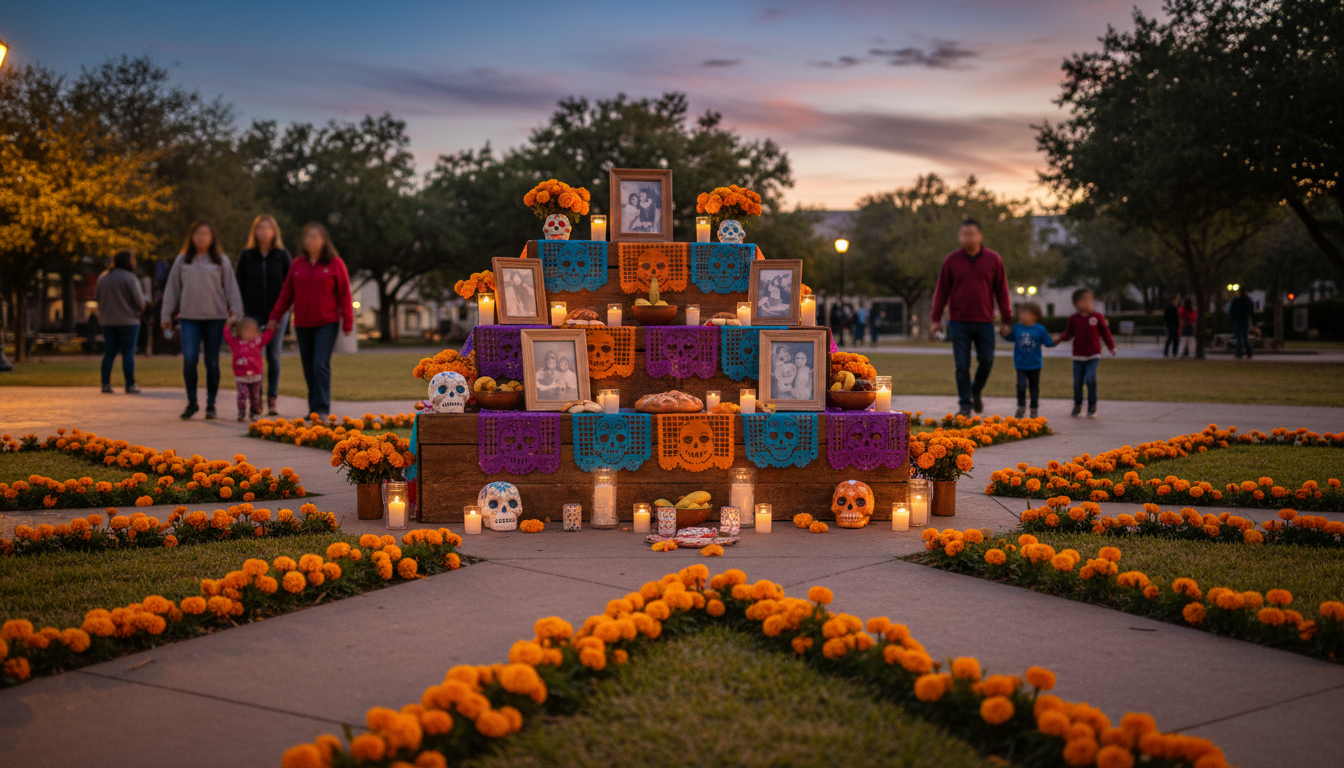
Friday evening at Hemisfair is an invitation to look closely at the altars. By Saturday, San Antonio’s Muertos Fest becomes a much bigger celebration, with stages, a mercado and processions filling out the program. Sunday’s schedule gives visitors another opportunity to explore. All three days belong to the same festival, but they don’t deliver the same experience. Someone who wants a quieter introduction to Día de los Muertos may be happiest early Friday; a family coming for music and activities might choose Saturday instead. The decision should begin with what the celebration means to your group, not with which day makes the best social-media photograph.
The official Hemisfair calendar confirms the festival is free and open to the public. On Friday, the listing runs 5–11 p.m.; Saturday, 10 a.m.–11 p.m.; and Sunday, 10 a.m.–9 p.m. The festival’s Friday opening includes sensory-friendly hours from 5–7 p.m. and an evening called ¡Presidente! “A Night to Remember.” Over the weekend, organizers describe more than 80 altars, five entertainment stages and two processions. This is not a generic Halloween party with skull decorations. It is a cultural celebration about memory, community and the people who remain important after they are gone.
Friday: make time for the altars
Friday’s biggest advantage is clarity of purpose. An altar deserves more than a passing glance, especially if you are attending because you want to understand the meaning of Día de los Muertos rather than simply photograph a colorful display. The opening is centered on altar viewing and remembrance. Visitors who value a quieter atmosphere should consider the stated sensory-friendly window of 5–7 p.m., while remembering that an event being designated sensory-friendly does not mean absolute silence or an empty public park.
Take time to look at the objects on an ofrenda: marigolds, candles or their safe substitutes, photographs, personal items and favorite foods. Each can carry a family story, even when the particular details are not explained to strangers. Do not touch private arrangements or treat memorial photographs as props. A respectful visitor can enjoy the art while understanding that some people present are there to honor an actual relative or friend.
- Friday, Oct. 23: 5–11 p.m.; sensory-friendly opening hours 5–7 p.m.
- Saturday, Oct. 24: 10 a.m.–11 p.m.; expect the full festival program.
- Sunday, Oct. 25: 10 a.m.–9 p.m.; prioritize the altars and the performances that interest you most.
Saturday: stages, mercado and processions
If you want the fullest combination of entertainment, shopping and festival atmosphere, Saturday makes a strong case. Hemisfair says the weekend program includes five stages, a curated Muertos Mercado, workshops, children’s activities and two enhanced drum-and-dance processions. With more than 80 altars in the exhibition, even an extended visit will require choices. You cannot do everything at once, and trying to sprint from one stage to another can make an otherwise beautiful day feel like a stressful scavenger hunt.
One strategy is to choose three anchors before you arrive: an altar-viewing block, one performance block and one relaxed food or mercado stop. Let everything else be optional. Families with younger children may want to arrive earlier in the day rather than save all their energy for a late-night finale. Adults who primarily want the music and dancing can build the day differently. This is exactly the sort of event that rewards an intentional plan.
Sunday: a second chance, not leftovers
People often treat the last day of a three-day festival as an afterthought. Sunday here still has a published 10 a.m.–9 p.m. window, which leaves room for visitors who cannot attend Friday or Saturday. It may also work well for people driving in from outside San Antonio who want to visit the exhibits and return home at a sensible hour. The official hours are not a promise that every vendor, performance or activity will operate continuously, so consult the specific program before committing to a favorite performer.
A Sunday strategy is to make the altar exhibition your priority, then add a workshop, stage or market experience when the schedule aligns. Arriving with one must-see activity and two optional ones is more practical than trying to “complete” the festival. If an exhibit is especially meaningful, spend the time there. The value of this celebration is not measured by the number of booths crossed off a list.
Muertos Fest is advertised by Hemisfair as free to attend. That does not mean a family should assume the entire trip costs nothing. Food, craft purchases, parking and transportation can change the spending picture quickly. An out-of-town visitor might also be considering a hotel. If budget matters, decide what you are comfortable spending before arriving, especially if kids will see crafts and snacks they want at every turn.
Downtown San Antonio can be expensive and congested during a major event. Read the Hemisfair festival listings and look for organizer updates before deciding where to park. Do not assume the closest garage will have space when you get there, and do not choose a parking spot based only on its location relative to the event entrance. The exit route after a crowded evening matters too.
What to explain to children before you arrive
A useful one-sentence explanation is that Día de los Muertos is a time to remember and celebrate loved ones who have died. Many families do that by creating altars with pictures, flowers and meaningful objects. Children may respond with questions about death, favorite grandparents or why a memorial is decorated with bright colors. It is fine to answer simply and let them lead the conversation.
Another helpful distinction is that sugar-skull imagery, painted faces and festive music are part of a broader living culture, not an invitation to mock grief or treat personal memorials as jokes. Visitors do not need to be experts. Respectful curiosity and willingness to listen are enough. If your group usually thinks of late October only as haunted houses, this weekend provides a chance to discover something richer.
Colorful scenes are tempting to photograph from every direction, but better pictures often come from patience. Wait for a clear view of the arrangement, pay attention to the light, and keep bystanders’ faces out of close-up shots unless you have permission. Never move an offering to improve the composition. Try to photograph the craftsmanship in ways that honor the people represented rather than using a family altar as scenery for a novelty portrait.
If you are sharing the visit on social media, identify the celebration accurately. Do not label the festival a Halloween attraction or imply that everyone there is performing for visitors. A simple caption naming Muertos Fest and Hemisfair, with a note about what you learned, tells a more generous story. The best travel photos can be beautiful without being possessive.
How the River Parade fits into the weekend
San Antonio also has a Day of the Dead River Parade scheduled for Friday, October 23. That can be part of a larger trip, but it is a distinct experience with its own viewing arrangements. Don’t assume a ticket or seat for the parade automatically solves your plans for Hemisfair, or vice versa. People who are trying to do both should look closely at actual event times and the travel route between them before committing.
If this is a first visit, I would choose the parade or a deep festival visit as the evening’s main activity, then add the other only if transportation and timing genuinely work. Trying to cross downtown multiple times with hungry children or tired relatives can turn a powerful cultural weekend into a logistical puzzle. Keep your itinerary human-sized.
Go Friday if the purpose of your trip is reflection, altar viewing and a calmer introduction. Pick Saturday if you want the widest festival-day atmosphere, with stages, food, mercado and processions in the mix. Think about Sunday if you have more freedom to linger over the exhibits and want to make a day trip without committing to a late Saturday night. These are editorial recommendations based on the program’s structure, not predictions about exact crowd levels.
Check the official Friday event details, official Sunday listing and Thunderfoot’s San Antonio Metro page before traveling. If you want more options around the festival, our Texas Event Planner is the place to explore other current events.
The strongest part of Muertos Fest is not the number of performances, although the program is substantial. It is the public space the celebration creates for stories about people who mattered. An elderly visitor might recognize a tradition from childhood. A teenager might discover how another family remembers its elders. Someone visiting San Antonio for the first time might leave understanding that these altars are not decorations without owners; they are expressions of love.
Go for the music if that is what draws you. Go for the art, the workshops or the marketplace. But leave enough room to spend a quiet moment reading the displays and thinking about the people who inspired them. That is what turns a busy event into a meaningful trip rather than another afternoon that disappears into your camera roll.
Before you head downtown
Dates: October 23–25, 2026. Venue: Hemisfair, San Antonio. Free public festival admission. Organizer-published hours: Friday 5–11 p.m.; Saturday 10 a.m.–11 p.m.; Sunday 10 a.m.–9 p.m. Program details, including individual performances and activities, should be confirmed with Hemisfair or Muertos Fest close to the event.