
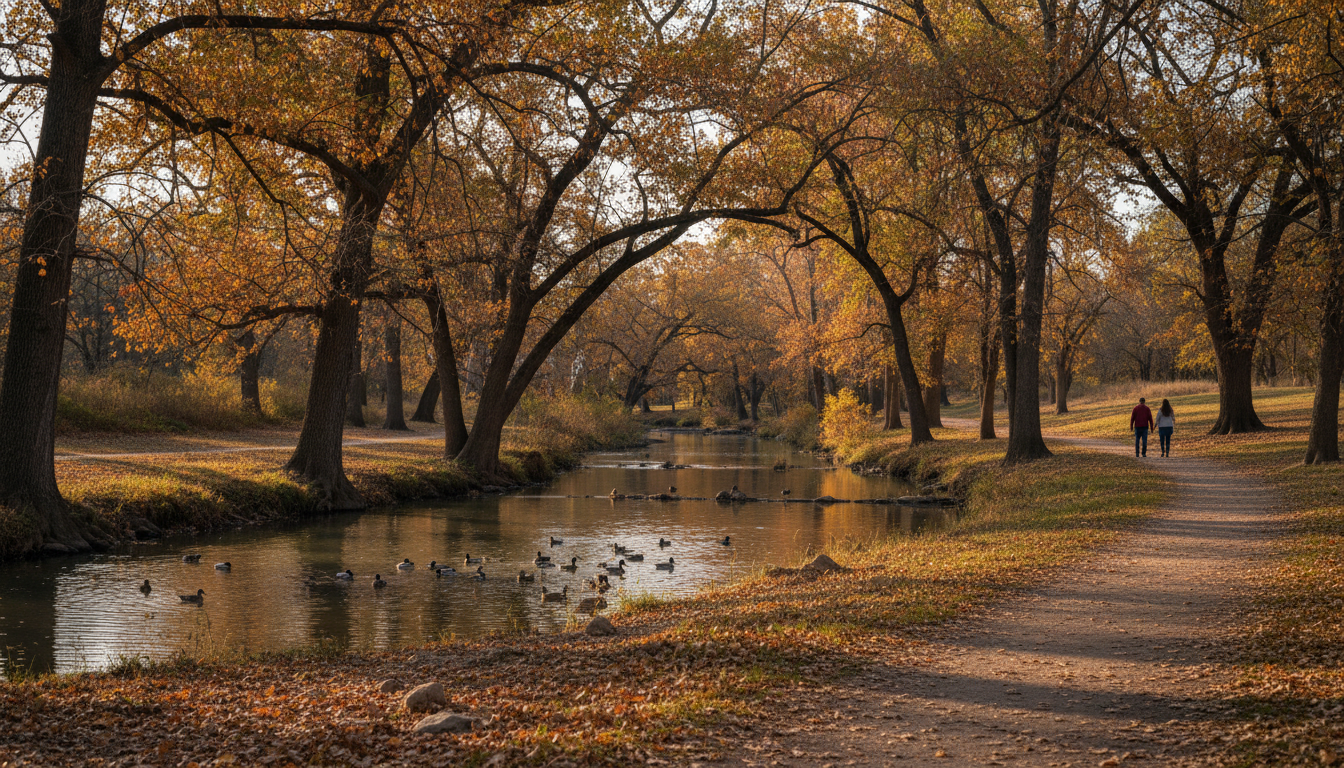
There are two good reasons to spend a nature day along the Wichita River, and they’re almost neighbors. Lucy Park is the open-ended choice: mature trees, a duck pond, disc golf and room to simply walk. River Bend Nature Center invites a more focused visit, with exhibits and habitats that help explain the Rolling Plains ecosystem. You can combine them, but you don’t have to. A family with restless children, a walker who wants a comfortable loop and someone eager to learn about butterflies may all choose differently. The trick is to decide what kind of outing you’re after before trying to do both.
The City of Wichita Falls describes Lucy Park as a 178-acre public green space at 100 Sunset Drive, with a 1.7-mile concrete loop and links into the larger Circle Trail system. The adjacent River Bend Nature Center operates its own environmental education grounds with exhibits including a butterfly and nature conservatory. Knowing which experience you’re visiting prevents surprise ticket costs and unrealistic expectations.
Two neighboring destinations, two different purposes
Lucy Park is the flexible choice. You can walk for thirty minutes, play disc golf, use a playground or sit beside the pond and leave whenever you’re ready. A family gathering can happen without everybody agreeing on one structured activity. River Bend, by contrast, gives visitors a more deliberate education experience. Its conservatory and trails invite you to slow down and notice wildlife rather than simply cover distance. Neither deserves to be marketed as better for everyone. The stronger decision starts with the group. People who want free-form recreation should begin in the public park. Curious children or adults who enjoy natural history may appreciate the added layer of River Bend.
The city’s published 1.7-mile paved loop makes an excellent entry point for beginning walkers and casual cyclists. It’s long enough to feel like exercise without requiring a half-day commitment. It is also the west starting point of the broader Circle Trail, which means stronger walkers can plan an extension after consulting current trail maps. A short park loop and an unfamiliar connected trail should not be treated as identical in difficulty. Bring a water bottle, walk the shaded stretches, and check the park’s posted rules for bikes and other users. If you’re bringing a stroller or accompanying someone with mobility limitations, inspect the desired route before committing to the full distance.
A bend in the Wichita River gives Lucy Park a feeling of enclosure that a typical neighborhood playground doesn’t possess. Pecan and cottonwood trees create shade and habitats; water draws birds; the little changes in light make a second visit feel different from the first. The city lists ducks and geese around the pond, but wildlife should be observed rather than approached, chased or fed. Teach children that looking patiently can be more rewarding than tossing bread. Waterfowl benefit from natural feeding habits, and an animal that has learned to approach people too closely can become a problem for itself and visitors.
The overlooked alternative is disc golf
Lucy Park’s 18-hole disc golf course changes the day entirely. A group that would be bored by a simple walk may enjoy a gentle, skill-based competition where everyone takes turns. Beginners do not need to buy a bag full of specialized discs. One or two appropriate discs and an understanding of course etiquette are sufficient to try the sport. Check the park map, watch for people on nearby paths and never throw when someone is within range. Players should respect existing course users rather than treating an open fairway as a picnic space. The best first round is low-pressure and leaves everyone interested in trying again.
River Bend turns observation into a skill
At River Bend, the point is not to race between displays. The Ruby N. Priddy Butterfly and Nature Conservatory is a chance to study insects and plants closely; forest and wetland trails expand that experience into real habitat. Ask children to observe one creature for a minute and describe what it does before trying to name it. That exercise rewards attention rather than memorizing labels. If a butterfly moves away, let it go. Nature centers are not petting zoos. Follow any restrictions around sensitive exhibits and avoid touching animals or plant specimens unless staff specifically invites participation.
Where the price difference matters
Lucy Park is a municipal park, whereas River Bend lists admission charges. Its official visitor page currently advertises $8 for adults ages 14–64, $6 for children ages 2–13 and discounts for qualifying guests, while members and children one and younger are admitted without a fee. Those figures should be checked before traveling and aren’t a promise about special-event pricing. If the budget is tight, spend the morning exploring Lucy Park and treat the paid conservatory as an optional upgrade. The park still offers a meaningful outdoor experience without requiring everyone to buy admission.
Arrive at Lucy Park while the group is fresh and let everyone explore for a short period. One person might walk the paved loop while another stays near a playground. Meet for a picnic or a simple rest. If the children are excited about animals and everyone has energy, continue to River Bend. If the family is already content, don’t turn a good outing into a mandatory second stop. The best itinerary often has one firm destination and one optional extension. That’s particularly true in autumn, when daylight and the weather may change faster than a packed plan can accommodate.
When to go to River Bend instead
River Bend’s hours vary by day. Its published schedule lists weekday opening from 9 a.m. to 5 p.m., Saturday 9 a.m. to 4 p.m. and Sunday noon to 4 p.m. For a Sunday morning outing, that makes Lucy Park the more flexible first choice. An afternoon visit to the center can follow if weather and admissions suit the group. Because nature facilities sometimes host programs with different access or close for holidays, review the current website on the day of your trip. Don’t assume a garden or exhibit is available merely because the surrounding public park is open.
The nature center is also about a regional ecosystem
Wichita Falls sits where ecological regions meet, and River Bend’s mission is to explain this landscape rather than display distant, exotic wildlife. A child learning to recognize a local plant or bird may be developing a skill they can use in their own yard. Visitors from other Texas regions can notice the differences between a Rolling Plains setting and the wooded wetlands of East Texas or the desert of the Trans-Pecos. Those contrasts are a reason to explore local nature centers instead of expecting every outdoor attraction to look like a national park. Curiosity about the place you’re actually standing in is the best souvenir.
Wear practical walking shoes, bring water and use sun protection even if clouds hide the strongest light. Paved paths are welcoming, but a long outdoor day can still tire small children or people with limited stamina. Take breaks before anyone is exhausted. Wildlife areas may have mosquitoes or other insects depending on conditions. Keep pets restrained wherever local rules require, and check River Bend’s specific pet restrictions before entering a facility. Never leave children unsupervised near ponds, water features or paths used by bicycles. A relaxed plan is safe only when the group remains attentive.
The honest comparison
It’s tempting to post a photo and tell everyone the park is the city’s “best-kept secret.” That phrase says more about marketing than the place. Lucy Park is a longstanding city recreation destination, and River Bend is an established nonprofit nature center. The real useful discovery is how easily their experiences complement one another. Nor should anybody pretend that every butterfly or duck appears on demand. Seasonal conditions change what visitors see. Promise the opportunity to observe, not a guaranteed animal encounter or a particular photograph.
One weekend could focus on walking and the pond. Another could focus on disc golf. A third might be built around River Bend’s educational programming. Repeating a destination with a different purpose can be more rewarding than driving farther every time. It also creates a healthy routine without the pressure of turning every outing into an expensive event. The Wichita Falls & North Texas Plains hub can help you find nearby activities when you want to make a larger day of it. Keep the outing simple enough that returning feels easy.
The verdict
Choose Lucy Park when your group wants flexibility, walking, playground time or disc golf. Choose River Bend when your priority is a more structured opportunity to learn about butterflies, wetlands and local nature. Visit both if the group is genuinely enthusiastic, but don’t measure success by how many attractions you complete. Check the city’s park information and River Bend’s current admissions and hours before departing. Wichita Falls has a beautiful advantage here: you can spend more time discovering the outdoors than driving to reach it.