
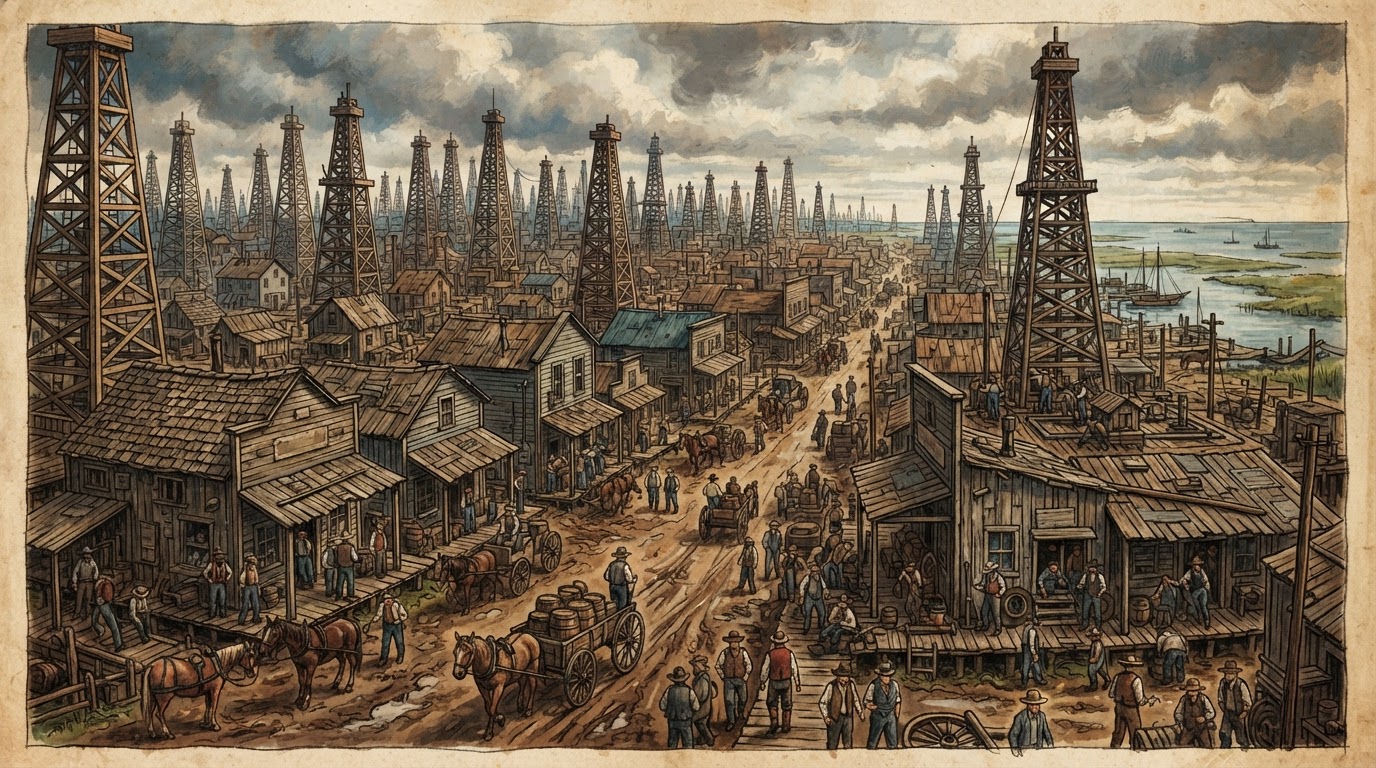
The Spindletop Boomtown Museum in Beaumont is a place where two kinds of history sit close together. There is the dramatic story of the 1901 oil discovery, when a well south of the city changed the scale of the oil business. Then there is the everyday story of Gladys City, the boomtown associated with the rush. The museum gives you a chance to spend time on both. If you’re planning one family outing over Thanksgiving weekend, start with how the buildings help tell the second story.
Visit Beaumont lists holiday dates at the museum on Nov. 27, 28 and 29. Check the listing and Lamar University’s current visitor information before choosing a time, especially if you’re traveling on Thanksgiving Day itself or arriving close to closing. The museum is on Jimmy Simmons Boulevard in Beaumont. Put that specific destination into your plans. The story of Spindletop covers more than one place, and an address for the wrong piece of it makes for an unnecessary drive.
What changed when the well came in
Oil had been found in Texas before Spindletop. What makes the 1901 discovery so useful to study is the scale of what followed. The well showed what a large oil field could do to the prospects of a city, and it brought people who wanted to work, sell supplies or make money from the new industry. A boomtown gives you a way to picture the consequences as something more than production figures. People working near a new oil field still needed places to eat, buy things and send word home.
Start the visit with that simple idea. Ask what a town suddenly has to provide when a lot of people arrive faster than its ordinary services can grow. A place to stay is an obvious answer. Other needs are easy to overlook until you spend time looking around the museum. There are things workers need when a tool breaks, when they have money to send somewhere else or when they want news from home. The buildings give a young visitor a chance to connect those problems to real objects instead of trying to remember an abstract description of a boom.
Start with the town, then come back to the derrick
A derrick is the thing most people expect to see at an oil museum. Go look at it and give it a little time. Then choose a few indoor or small-building stops that show what it took to live near the oil work. Before reading the label in one building, see if the group can guess what kind of business or activity belonged there. Look at what would have been easy to reach, how much space people had and what had to be done by hand. A few questions like that turn a walk between buildings into something more than a photo stop.
If you’re visiting with children, give them one thing to look for in each place. It can be as simple as choosing a tool they recognize and an object they don’t. Adults can get something out of that exercise as well. It is easy to skim a label about a business and miss the thing hanging next to it that shows how somebody worked. Give each person a chance to pick one room or stop to look at for longer. That keeps a party with different interests from moving at the speed of only its most enthusiastic reader.
Recreated streets are a good place to ask better questions
A museum reconstruction helps you picture what a place may have been like. The displays and explanations tell you what the museum knows about the original town and how it chose to present it. Keep an eye on the labels and ask staff about details you’re curious about. For a student learning Texas history, that is a good chance to talk about the difference between a period object, a copy and a building recreated to tell a story. All of them can be useful in a museum, and they answer different questions.
If somebody in the group wants to know what life was like before and after the discovery, give them time to compare two displays. Look at an item tied to the oil work and an item from daily life. Ask which one would have become easier to find after people arrived and which one might have become harder to afford. You don’t have to settle the answer during the visit. It is a richer question than asking only when the well blew in, and it opens up the part of the story about the people who stayed in the area.
Give the holiday visit a little room
A late-morning visit can be a way to see the museum and still have time for lunch. An afternoon visit can work for relatives who are taking their time getting out of the house. In either case, find out how long you’ll have once you arrive. If you want to attend a particular demonstration or activity, check whether one is listed for the actual date. A museum can be open while a program is unavailable. It is worth making that distinction before promising something specific to children.
The site includes walking between buildings. Ask the museum about route surfaces, entry and current access if a visitor needs a predictable walking distance or a specific kind of entrance. Have a plan for the family member who wants to read every label and the one who wants to keep moving. One practical answer is to agree to meet again by a landmark after a short stretch. People can look at the material at a pace that suits them and still share the visit.
Check regular admission against the holiday date
Lamar University’s regular schedule is 10 a.m. to 5 p.m. Tuesday through Saturday and 1 to 5 p.m. Sunday. It lists last admission at 4 p.m., along with regular admission of five dollars for adults, three for seniors 60 and older and two for children six through twelve. Check the holiday listing and the museum’s own information for your date before counting on those hours or rates. A family that gets there just before last admission will still have a much shorter visit than the five o’clock closing time might suggest.
The university says much of the complex is wheelchair accessible and that some building porches have benches. Ask which parts of the site will work for your party if access matters. You can plan a short loop around the stops that interest everybody and give an enthusiastic reader time to make an extra stop.
Leave with something to talk about at lunch
Pick your favorite part of the town and ask what it would have been like during the fastest part of the boom. The question helps connect the quiet museum visit with a city that was changing quickly. Somebody may choose a room because of the tools. Somebody else may choose it because the people who worked there probably heard the latest news first. That is good ground for a conversation on the way back to the car.
If you only have a short window, see the derrick and spend serious time with two of the buildings. Give the town a chance to explain the oil discovery in human terms. That is the part of Spindletop that stayed with me as an idea worth writing about. The well changed the scale of an industry, and the town shows where people had to live and work while that change was happening.
Sources and planning links
Lamar University museum visitor information
Visit Beaumont’s holiday date listing
Texas State Historical Association Spindletop history
Thunderfoot’s Texas Attractions Finder