
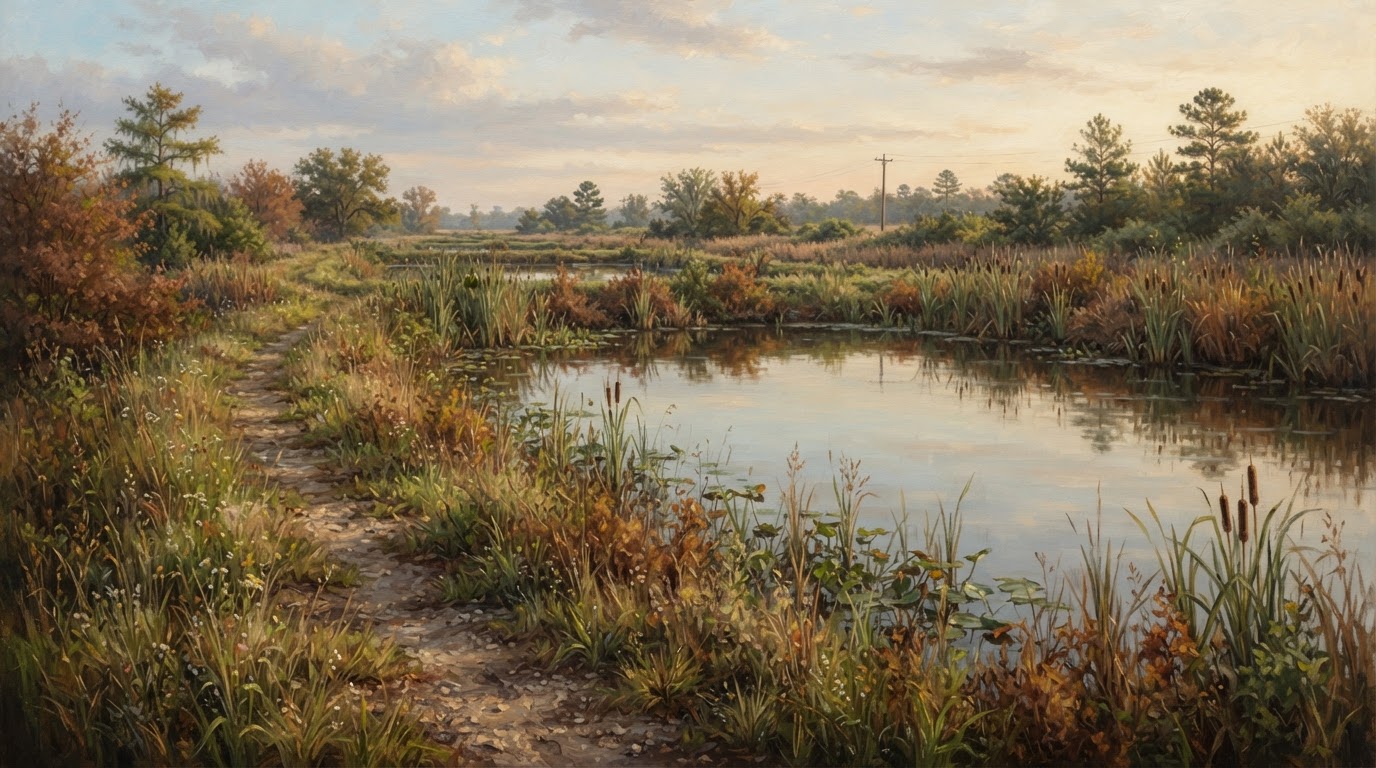
Sheldon Lake is a good place to go when the house is full and you need to get everybody outside for a bit. At this state park on Houston’s east side, I’d start with the Pond Loop. It takes you past old fish hatchery ponds that have been returned to nature. The ponds give you something to look at even if the group never makes it to the observation tower.
Read the park alert before loading the car
Texas Parks and Wildlife lists construction on Park Road 138, with sections reduced to one lane and limited parking. The agency also warns of temporary closures of the park and Prairie Boardwalk Trail. Read the alerts before you head out and allow extra time both getting in and leaving. The park’s main page lists free admission, so parking and access are the variables I’d pay particular attention to on a holiday weekend.
The John Jacob Observation Tower has its own alert. TPWD says its elevator is closed for maintenance and the tower is open by stairs only. If somebody in your group needs the elevator, skip the tower as a centerpiece for the day. Check current trail access and surface details with the park before promising a particular route to someone who needs accessible terrain.
Take the loop slowly enough to notice the ponds
Twenty-eight former hatchery ponds line the route, according to TPWD. You can make a walk out of watching how one differs from the next. Give the kids a job they can do from the trail. Ask them to count ponds or point out which ones have the most visible vegetation at the water’s edge. It’s a better reason to stop than asking everyone to pose for another picture.
Pick a turnaround time before setting out if there’s a meal or football game waiting at home. It gives the group permission to walk at the pace of whoever wants to look around. If you finish early and the park alert allows it, you can decide what else to see when you’re there. No one needs to be talked into stairs to make the trip count.
Have a second outing ready if access changes
Save the park page and alerts together, then check again before leaving. If road work has temporarily closed the entrance or parking is full, move on to another outing and come back when you can take your time. Sheldon Lake’s appeal is that you can show up with a modest plan and get something out of it. Give yourself enough room in the day for that kind of visit.
The distance is short enough to let the ponds set the pace
Texas Parks and Wildlife lists the Pond Loop at about six-tenths of a mile and estimates 30 to 60 minutes. That is a good span to share with the family. A brisk walker will see the distance and imagine it is over in fifteen minutes. A child who keeps stopping to look for a frog will have a different calculation. The agency’s estimate leaves room for the reason you are on the trail in the first place.
Take a moment at the pond crossing if it is open and you can stop without blocking the way. Look along the edge, then a little farther out. You might see a bird move from one side to the other or spot the difference between an open pond and one with plants crowding the bank. If the group wants to compare ponds, pick two and ask what looks different. The changing edges tell more of the park’s story than the number of ponds alone does.
Why the old hatchery is easier to understand on foot
The ponds began as part of a fish hatchery. Now they hold a variety of habitats, which is apparent if you walk past several in a row. Some things are easy to see from the path, like how much water is open and where plants shade the edges. Wildlife can take longer to turn up. It might be enough to hear frogs or watch an aquatic bird make its way across a pond.
The fun of a walk here is how often the people in a group notice different things. Someone is watching the water while somebody else is looking up. A kid may spot a turtle right beside the trail that the adults missed because they were following a bird. Give everyone time to catch up with what the others saw. A walk you could fit into an hour becomes a better story when the group remembers something besides how far it went.
Check the short connecting trails if you have time
The park’s trail guide describes the Bent Pine Trail as a short, shady loop through a former hatchery pond. It also maps small connections between the Pond Loop and Swamp Rabbit Trail. If your party wants another stretch of walking and the route is open, pull up the map and choose a short addition. A named trail you can point to is easier to agree on than following an appealing path and hoping it takes you to the right side of the park.
The park alert may make that decision for you. Road work can affect the entrance and the Prairie Boardwalk Trail, so check current conditions before relying on a specific trail as a backup. If a small loop is all you can do, give the ponds your time. There’s nothing wrong with coming back for the prairie when the access is easier and you can make it the point of a second trip.
Make space for wildlife, especially by the water
Alligators live here. Texas Parks and Wildlife asks visitors to stay at least 30 feet away, stay out of the water and leave the animals alone. Keep children close enough that you can stop them from stepping off the path to look at something on the bank. A photograph from farther away will do fine. If an animal or an obstruction makes a route unsuitable, step back and use another available route.
A pair of binoculars can be more useful to the group than a long list of things to see. Share them at a point where you can stand off to the side. Let a child take a look after you can describe where to aim. Keep conversations low and give people room to pass. The few minutes when everyone stops hurrying are often the part of the walk you end up remembering.
Build the visit around the person with the least flexibility
If someone in the group needs to avoid stairs, make the trail or a visit near the visitor facilities the plan and confirm current access with the park. If another person wants the tower, they can add it after the group walk if the stairs are open. Decide where you’ll meet again before anyone heads off. A short outing feels easy when everyone knows how much walking to expect and when they can sit down.
A short visit is sometimes the right visit
If this is your first stop at Sheldon Lake, try the Pond Loop as a standalone visit before committing to more. You’ll learn which part of the park your group likes, how long they want to spend beside the water and whether they’d come back for the prairie or the tower. That is enough to make the next visit easier to plan.
Bring the trail map even for the short loop
Download the trail map before leaving. It shows how the pond paths fit together and gives you a reference when a sign offers a choice between two directions. If you want to stay on the Pond Loop, check the trail name at the junction before following another group. They may be walking toward the tower or using a connection that takes them somewhere you did not plan to go.
Sources and planning links
TPWD’s Sheldon Lake State Park guide
Thunderfoot’s Texas Trails & Hiking Finder
Sheldon Lake official trail guide