
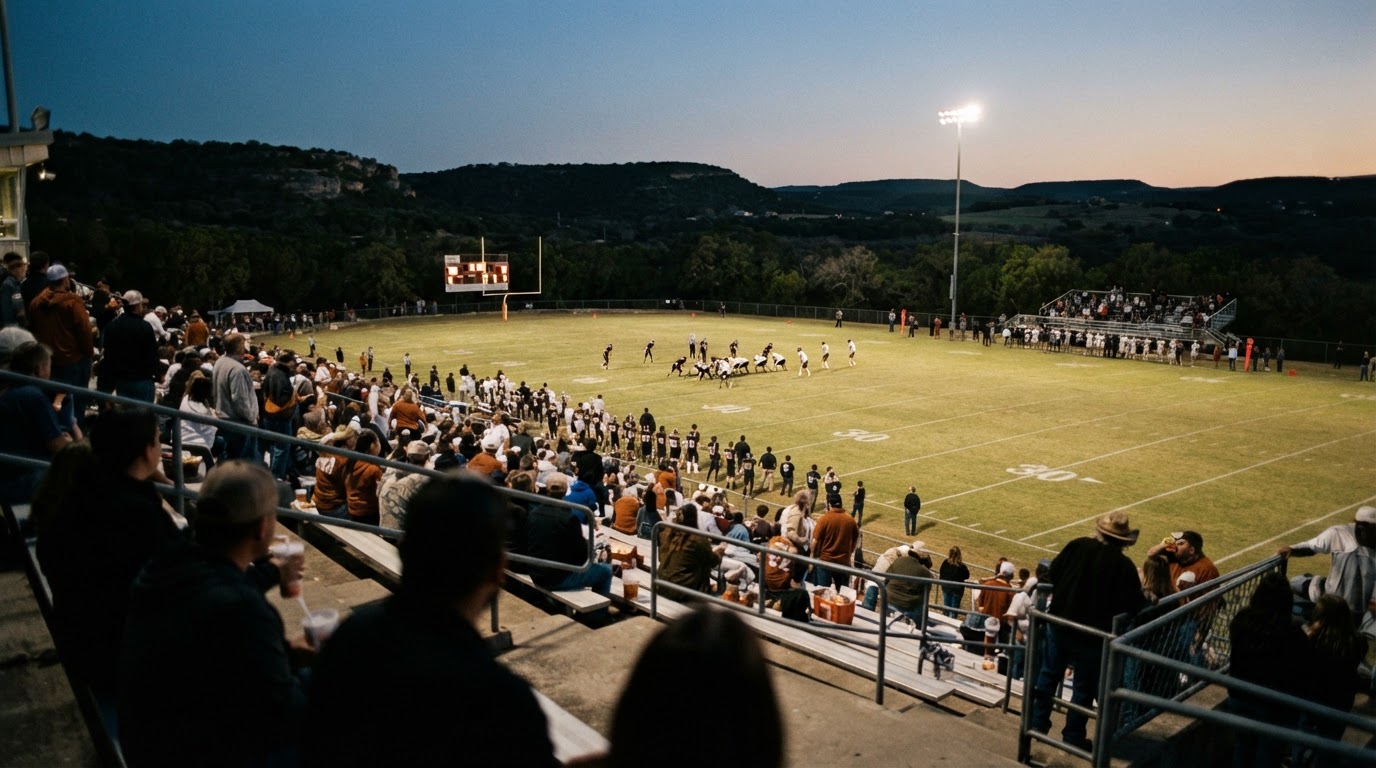
Texas State’s Saturday game against Washington State gives San Marcos a 5 p.m. kickoff at UFCU Stadium and gives fans three things worth tracking from the first series. Can either offense stay ahead of third down? Who has the better answer when the field compresses near the goal line? Which sideline makes the smarter adjustments as the game wears on? The score will tell you who leads. A few details between snaps will give you a clearer feel for how the game is moving. Here’s a way to watch from the stands, plus a straightforward plan for getting to campus.
The first quarter belongs to first down
Follow the opening two drives for each team and mark how often an offense faces third-and-long. The previous two snaps often do more to explain the outcome than the call on third down. A modest gain on first down can leave room to run the full playbook. A penalty or tackle behind the line can force a predictable passing situation. From the stands, notice how the defensive front changes once it can concentrate on the quarterback.
Take the same notes from the couch
You can test the first-down idea without a spreadsheet. Pick one possession and write down the yardage left before third down, then note whether the offense converts. Do it for the next drive. Two drives are a tiny sample, but they’ll give you something to compare as the game changes. If one team starts using shorter throws and stays on schedule, you’ll notice the shift before it shows up as a lead. A play-by-play log is especially useful when an earlier penalty leaves you wondering how the ball wound up behind where the previous series started.
Don’t lose sight of the edges
It’s tempting to follow the ball behind the line on every running play. Watch the edge defender instead. Is he forced to widen because of the formation? Does he step inside and create room for a run around the outside? The same principle applies on passing downs. Where the pressure comes from can be more revealing than how many defenders rush. If an offense slips a receiver into space behind that pressure, watch whether the defense changes the look on the next trip downfield.
The short field changes the choices
Near the goal line, a defense has less ground to cover behind it. There’s also less room for receivers to build separation. Watch how an offense uses motion there. Even when the moving player never touches the ball, the reaction can show whether a defender is following one player or guarding an area. On the next snap, check whether the offense uses that same look to set up a run, a quick throw or a misdirection play.
Watch where a punt leaves the next offense
Football often asks two different questions of a defense. One is whether it can protect most of the field. The other is whether it can keep an opponent out of scoring position when the next drive starts near midfield. Pay attention to where each possession begins after a punt, penalty or return. A drive that ends quietly can still leave a team with a better answer on the next exchange. In a tight game, the field-position swings help explain when a staff decides it can afford to be more aggressive.
Use halftime to grade your first impression
A single long touchdown can put a team in front while the other has been moving the ball more steadily. At the break, remember which team consistently reached manageable downs, stayed on the field and forced difficult throws. Then watch for the first change after halftime. A different blocking assignment or a receiver lining up in a new spot can be a better clue to a staff’s plan than a dramatic fourth-down call.
The campus part of gameday
Texas State’s preview lists the game for 5 p.m. Central at UFCU Stadium. Start with the athletics site for tickets and the game’s current information. Decide where you’ll park or get dropped off before joining traffic near the venue. Set a meeting place for anyone arriving separately and plan a little breathing room between when you get to campus and when you want to be in your seat. The opening snaps are where you’ll get your first answers.
There’s a slower way to get into the stadium
If someone in the group has never been to a college game, meeting early can be part of the outing. Show them where you plan to enter and let them see the pregame activity for a few minutes. It’s easier to make sense of the layout before the concourse fills. Budget more time for any accessibility arrangements and consult the venue’s current rules for bags, tickets or items you intend to carry. Save the official directions before heading out so the driver can open them quickly at the point where campus traffic begins to slow.
Notice the finishing choices
If the game still hangs on one possession late, compare what the coaches are asking of their quarterbacks. Does a team with the lead choose a safe throw that gives the receiver a chance to finish in bounds? Does the team chasing the game push downfield immediately or take open space and hurry to the next snap? Context changes the value of the same five-yard gain. A little attention to the clock and timeouts helps you understand the choice without assuming every play is supposed to earn the biggest gain available.
Take one question into the fourth quarter
Ask whether the team leading on the scoreboard can keep the ball long enough to make the other team hurry. Then watch how it manages the early downs on its next possession. If the defense forces a short drive, the game can turn without a turnover or a long gain. That is one reason to keep watching field position, even when the broadcast or the people around you are already doing clock math.