
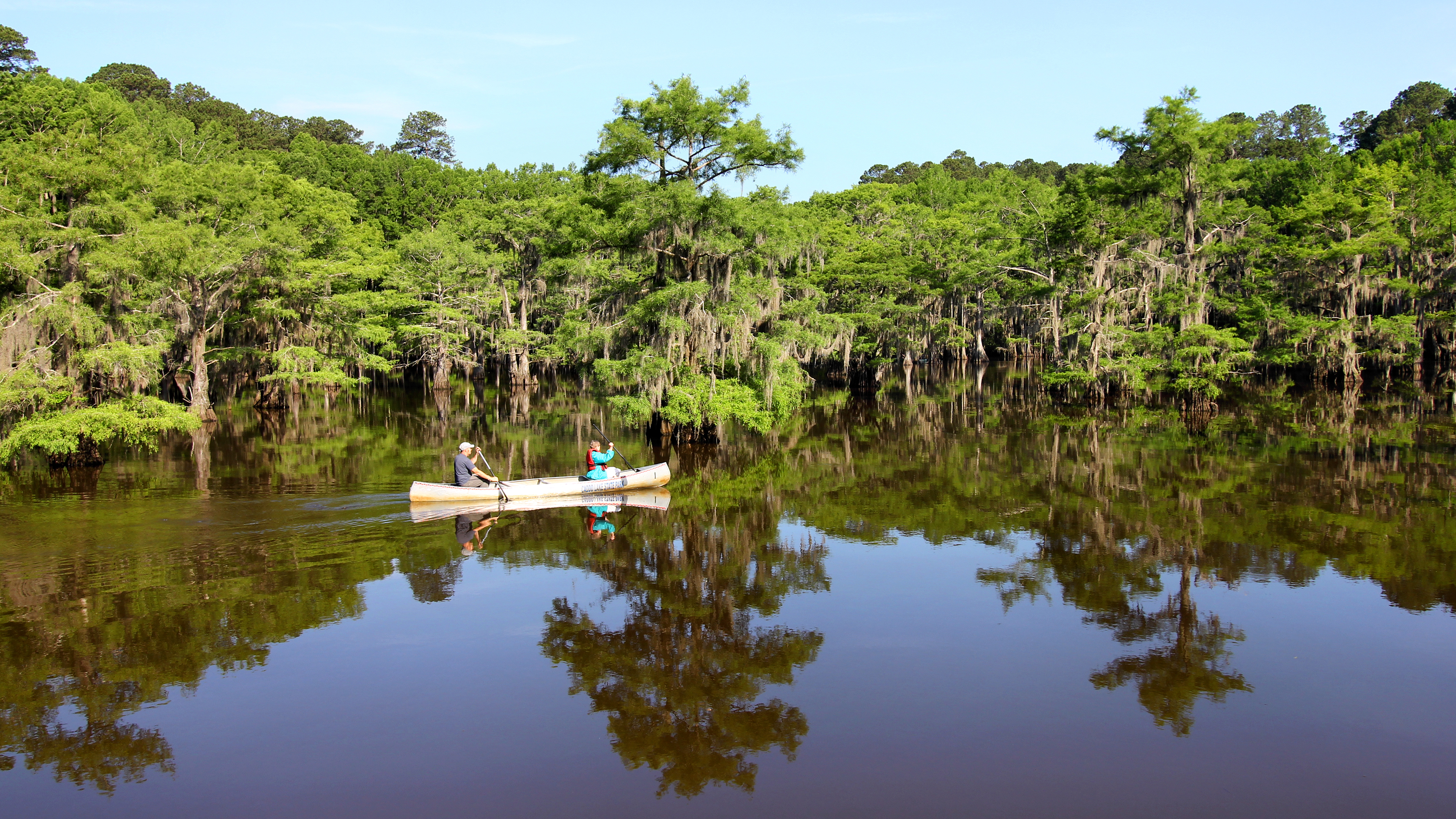
The water does not look like an ordinary Texas lake
Caddo Lake does not present itself like the wide-open reservoirs familiar to many Texas boaters. Its cypress trees, hanging vegetation, winding bayous and quiet water can feel almost like entering another landscape. That is precisely the appeal, but it also changes the demands of an outing. Texas Parks and Wildlife lists paddling, hiking, fishing, camping and cabins at Caddo Lake State Park, and its visit-planning guide describes canoe options around Saw Mill Pond and nearby bayous. For a first-time visitor, the temptation is to paddle toward the most dramatic stretch of trees and keep going. The wiser approach is to understand the route, how to find the way back and what the conditions mean for a small boat before launching.
Start at the state park rather than a random map pin
The park’s official page is the best place to begin because it identifies public access, facilities and current guidance. A photo of a cypress tunnel does not establish that the photographer launched from the same place you plan to use. Some routes have different access arrangements, private property boundaries or navigation challenges. The park’s canoe rental information and paddling-trail references can help a visitor choose a realistic first experience. If renting equipment, confirm current operating times and availability. A map listing from a third-party app may be useful for orientation, but it should not override official access information. Getting onto the water legally and safely is more important than choosing the most photogenic starting point.
Why route choice matters
A beginner may see a calm bayou and assume paddling will be effortless. But narrow channels, submerged obstacles and confusing intersections can make navigation challenging. Caddo’s tree-lined passages can look similar from one turn to the next, particularly when light changes or the sky is overcast. Choose a route that matches the group’s experience and daylight, not merely one described as famous. Ask park staff about the current map and any cautions. A short out-and-back can be more rewarding than a long loop that leaves paddlers unsure of the return. Make sure every person knows the intended turnaround time before the boat leaves shore.
Alligators are part of the habitat
Texas Parks and Wildlife explicitly notes that alligators live in the park and directs visitors to alligator-safety information. That fact should be discussed plainly without turning the destination into a sensational hazard story. Do not approach, feed or provoke wildlife. Maintain distance, avoid blocking an animal’s movement and follow official advice if one is encountered. Paddlers should never assume that a quiet-looking patch of water is empty. Nor should they expect to see an alligator on command. Wildlife viewing depends on season, conditions and chance. The meaningful approach is to respect the animals’ habitat while enjoying the landscape from a safe distance.
The canoe is not a substitute for a safety plan
A stable boat can still capsize, especially if a paddler stands unexpectedly, leans too far for a photograph or strikes an obstacle. Each person should have a properly fitted personal flotation device and know how to use it. Follow Texas boating rules and any additional rental requirements. Keep a whistle or appropriate signaling device available, protect the phone from water and let someone on shore know the route and expected return. Do not rely on mobile coverage as the only navigation and emergency plan. A first-time paddler may benefit from learning basic steering and turning before entering a longer bayou. A safe outing should feel deliberate, not improvised after the first wrong turn.
The light changes quickly in November
Late-fall daylight is shorter, and wooded waterways may appear dim before official sunset. That makes route planning particularly important around Caddo’s trees and curves. Start early enough to return with a margin rather than finishing in fading light. A backup light is useful but does not make an unfamiliar route suitable for night paddling. Wind and changing temperatures can affect comfort on the water even when the afternoon feels mild. Check the local forecast and the park’s current alerts just before departure. If an unexpected front arrives, heading back early is the sensible choice. The scene will be there for another visit; paddling into worsening conditions to capture one last photograph is not worth the risk.
Photography needs a stable platform
Caddo Lake is a natural place to bring a camera, but a canoe can move while someone frames a picture. Keep equipment secured and avoid leaning or reaching outside the boat. A waterproof case or dry bag can protect devices from splashes and a sudden capsize. If using a phone, plan how to access it without dropping a paddle or losing control of the boat. Some of the best compositions include reflections, trees and the quiet geometry of a winding waterway. There is no need to crowd wildlife or step onto fragile shore habitat for a better image. Photos that convey the setting honestly can be more powerful than heavily edited scenes that make the location look unreal.
Fishing offers another way to slow down
The park lists fishing as an activity and notes that a fishing license is not required to fish from shore within a Texas state park under the state’s exemption. That does not mean fishing anywhere on the lake from any boat is exempt from normal licensing rules. Anglers should check the current Texas Parks and Wildlife regulations for their activity and species. A paddling trip that includes fishing also needs to account for tackle, hooks and equipment stored in a small space. Keep lines away from other boats and wildlife. If the goal is simply spending time outside, a short shore-fishing session may be more practical than trying to combine a demanding paddling route with a full tackle setup.
The forest deserves a different pace
Caddo’s appeal is not limited to one spectacular photograph. The landscape changes as a visitor notices tree shapes, reflections, birds and the way sunlight filters through the canopy. A person rushing through a route may miss details that become clear when the paddle rests for a moment. That is a good reason to choose a manageable itinerary with time to look around. Avoid treating the waterway as an obstacle course or racing other paddlers in narrow passages. Keep noise low when possible, do not litter and respect private access boundaries. The lake is a living wetland environment, not a theme-park set built for visitors’ convenience.
What the park can offer beyond water
For families who are unsure about paddling, the state park also provides hiking, picnic areas and opportunities to stay overnight, subject to availability. Its planning page says a half-day visit can provide a useful introduction to the surrounding wetlands. That is not a guarantee that every facility is open or that a canoe can be rented at any hour. Reserve or confirm services in advance when needed. If one person in the group prefers to remain on shore, coordinate the outing so they have a comfortable and permitted place to wait. A trip can be worthwhile even if conditions prevent the planned paddle. The outdoor experience is larger than one activity.
A very different East Texas story
East Texas is often described through its pine forests, but Caddo Lake adds a wetland landscape that feels distinctive within the state. The cypress-lined water connects fishing, wildlife watching, paddling and conservation. It also deserves specific reporting rather than a generic lake checklist copied from a reservoir guide. Current water conditions, access routes and safety advice matter more than claims that the place is magical or hidden. The lake is well known to people who live nearby and deserves respectful attention from visitors. A responsible guide helps newcomers see why the landscape is special while making sure the practical demands are clear.
Before pushing off
Check the park’s official paddling and visit-planning information, confirm access or rental arrangements, choose a route suited to the group and plan an early return. Wear a flotation device, protect communication equipment and keep an emergency contact informed. Respect alligators and other wildlife, and do not chase an image into unsafe or restricted areas. Caddo Lake rewards people who treat it as a real wetland with complex waterways rather than simply another picturesque Texas destination. A shorter, thoughtfully planned paddle among the cypress trees may be the best introduction to one of East Texas’s most distinctive outdoor settings.
Official information: Current details and policies.
More from Thunderfoot: Outdoor Adventures and Texas Events.
Feature photograph: Larry D. Moore, CC BY 4.0, canoeing Caddo Lake State Park Texas in 2023, https://commons.wikimedia.org/wiki/File:Canoeing_Caddo_Lake_State_Park_Texas_2023.jpg. Archival, not current conditions.
