
The postseason is close enough to start making plans, but not every detail in the group chat belongs in ink. Here is how Texas fans can prepare for the opening round without losing the fun of the game.
The first week brings different decisions
Texas high school football fans can feel the postseason arriving before the first kickoff. On Tuesday, November 10, group chats are already filling with opponent names, tentative dinner plans and screenshots of brackets. But a successful playoff night begins with understanding the matchup and the arrangements around it. The UIL football calendar places bi-district play on November 12–14, and that wider window matters. The game you care about might be Thursday, Friday or Saturday.
A bracket is not a travel itinerary
The bracket identifies the road through a classification and division. It does not always tell a spectator which parking lot is open or which entrance the visiting band should use. A team may play at its own facility, at the opponent’s site or at another stadium. Fans should use the latest announcement from the participating school and host for location, kickoff and ticketing. It is surprisingly easy to arrive at a campus instead of the athletics complex where the game is being held.
The big matchups need exact school names
Statewide bracket coverage includes Allen against Lewisville Hebron and Odessa Permian against El Paso Eastlake in Class 6A Division I, examples of how different corners of Texas collide in the postseason. But abbreviated names can produce bad assumptions, particularly when districts have similarly named campuses. Confirm each school in the actual classification and bracket before sharing a matchup. The full identity is more useful to a family making a drive than a mascot graphic with no district or city attached.
A record is a beginning, not a prediction
One team may arrive with more regular-season wins, but a win total alone does not establish how two programs match up. District strengths, the quality of opponents and recent injuries may differ. Rather than treating the bracket like a simple ranking, consider whether a team can sustain drives, protect the ball and defend situations it has seldom encountered. A first-round matchup can be an introduction to an unfamiliar offensive style. That uncertainty is a major part of what makes postseason football interesting.
The opening possessions tell a story
Watch the first third downs. Does the quarterback have time to reach a second read? Does the defense adjust to motion or repeatedly surrender the same easy completion? Those are more reliable early clues than one long touchdown. A big play can come from a single missed assignment. Repeated four- and five-yard gains, however, may suggest that a team is controlling the terms of the game. Ask what the offense can keep doing after its first scripted sequence ends.
Special teams can become the headline
Close playoff games are often shaped by field position. The casual viewer might notice only a missed kick, while a coach sees a week of poor starting positions, a punt that never flips the field or a return that changes the rhythm of the quarter. Watch the coverage units and the decisions around fourth down. A disciplined punt that pins an opponent deep can be more valuable than a risky attempt at a flashy highlight. Football rewards small advantages as much as dramatic moments.
The ticket you bought last week may not work
Regular-season habits do not automatically carry over to the playoffs. A season pass, usual reserved seat or familiar digital wallet setup might not apply at the hosting facility. Find the event through the official school or venue link, verify the date and opponent and review the transfer or mobile admission instructions. Do not assume a screenshot will open the gate. If relatives arrive in separate cars, decide how everyone will receive valid admission before leaving home.
The stadium has a second map
Navigation apps guide drivers to an address; they do not tell them which parking lot the host designated for visitors. A postseason venue may have separate bus areas, spectator lots and gates. Check those details before picking a meeting spot. The Thunderfoot stadium guides can provide useful context, but event-specific host instructions are more important when they conflict with a general guide. Allow time to walk from the actual parking location to your seat.
Weather is part of the game plan
November football in Texas can bring warm afternoons, damp evenings or a sharp turn toward cooler conditions. Check the forecast for the stadium location and kickoff hours, not just the weather at home. A rain jacket or warm layer can make a long night easier. Also confirm the host’s bag policy before packing. A bag that was accepted at the home stadium does not necessarily meet the next venue’s rules, and returning it to the car can cost precious time.
Make a plan for the younger fans
Younger children may be delighted by the band and student section but less interested in watching every snap. Locate restrooms, know how your family will handle crowded concessions and choose a meeting location in case anyone gets separated. Adults should also agree on pickup instructions for athletes, cheerleaders and band members who finish their responsibilities later than spectators. The walk out after a close playoff game can be more congested than the trip into the stadium.
One shared message prevents five mistakes
A simple group message should contain the two full school names, classification, game date, time, stadium name, exact address, official ticket link and a note about when those details were last checked. Assign one person to update that message as new information arrives. This is more reliable than sending a fresh screenshot every hour without saying which one is current. Anyone joining the trip late can open the latest version without sorting through a long argument about kickoff.
Respect the people working the event
The postseason brings extra visitors to places that may already be busy on an ordinary Friday. Gate staff, parking attendants, concession volunteers and administrators are helping thousands of people navigate a night that may be unfamiliar to everyone. Read signs, follow permitted routes and ask concise questions when something is unclear. Being a supportive fan includes making the experience workable for the people who are keeping the event running.
Football can be a whole community event
The band rehearsed for this night; students made signs; parents rearranged work schedules; coaches put together film plans. A playoff game is a gathering of all those efforts. Arrive early enough to notice the atmosphere before the opening whistle. The sound of warmups and the first appearance of both teams are as much a part of the memory as the final score. Good planning protects those moments from last-minute parking stress.
One eye on what happens next
Fans naturally talk about possible opponents in the next round. It is fine to look at the bracket, but the team has a game to play first. Do not announce future dates, ticket links or neutral sites as confirmed simply because a bracket path is visible. Each next-round pairing depends on completed games and subsequent venue decisions. Keep the focus on the actual contest, and allow the postseason to unfold one week at a time.
The useful way to follow the week
Our High School Sports hub collects the broader school-sports conversation, while the earlier stadium-and-ticket feature covers additional travel considerations. For the official postseason structure, the UIL is the source to consult. For your school’s actual game arrangement, rely on its current announcement. Those sources complement one another and help turn an anxious week of screenshots into a confident trip.
Friday night still needs room to surprise you
The best thing about bi-district football is that even a carefully studied bracket cannot tell you exactly what happens once the ball is kicked. A quiet player can produce a season-changing moment, and a favorite can discover a stubborn opponent. Show up informed, give the contest your attention and let the athletes settle the matchup. The stadium, tickets and directions are things fans can control. The football itself is why they make the trip.
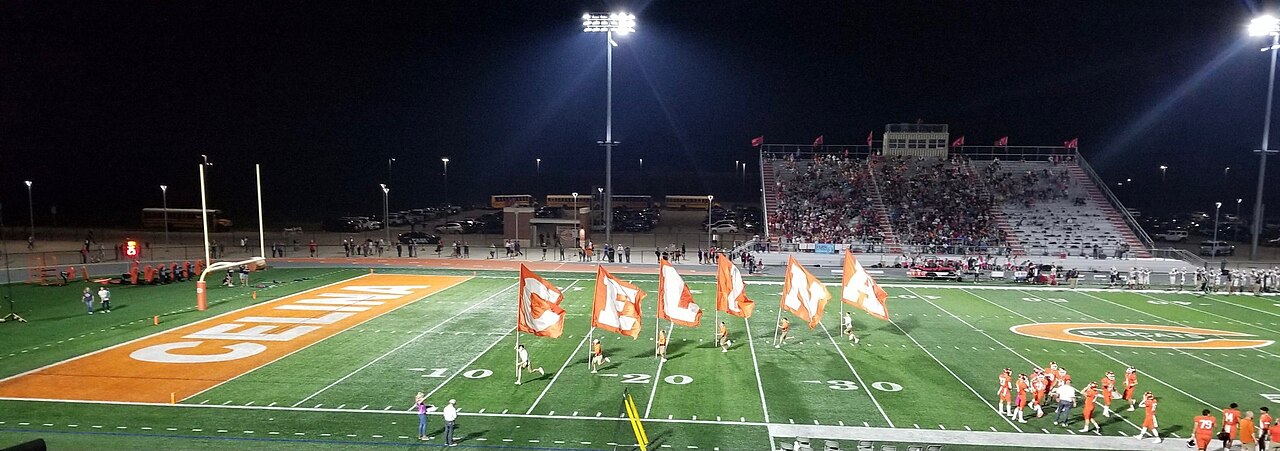
Feature image: Wikimedia Commons. Texas high school football scene; archival, not an announced playoff venue.
