
A bird list can make a South Texas morning feel urgent before you have seen the first bird. Somebody has mentioned a species, another person has a photograph and the group begins walking as if the next turn must produce the same experience. The landscape becomes a place to search quickly instead of a place to understand.
Try reversing that order. Choose a habitat, spend time watching what uses it and let identification follow observation. Bentsen-Rio Grande Valley, Estero Llano Grande and Resaca de la Palma state parks offer three useful places to practice that approach. They are separate outing choices, not a promise that a particular bird will appear or an instruction to cover all three in one morning.
The South Texas hub can help orient the wider visit. For each park, use the official page, current notices and map to choose the actual route. These pages showed active-alert notices when checked November 8. Verify current access and any program information directly before leaving, especially if a particular trail or guided activity is central to your plan.
- Choose one park and check its current route and access.
- Observe behavior, shape and habitat before reaching for a name.
- Record uncertainty honestly.
- Treat wildlife as an opportunity to observe, not a promised appearance.
First, choose a question the bird can answer
Instead of beginning with a name, ask what the bird is doing. Is it moving along the ground, working through leaves, pausing on an exposed perch or using the edge of water? Those observations remain useful even if you cannot identify it immediately. They also give another birder a better description to help with later.
Notice size and shape before reaching for a phone. Compare the bird with something familiar and look at the outline, posture and way it moves. A brief observation can disappear while you are searching an app. You can make a note afterward without interrupting the moment you hoped to experience.
Keep uncertainty in the record. A possible identification is different from a confirmed one. Writing down what you actually saw preserves information and makes the next attempt more useful. The purpose of the outing can be learning to notice, which is a skill available even on a morning when the hoped-for species stays out of view.
Bentsen: let the route reveal the habitat
The Bentsen-Rio Grande Valley State Park page describes its birding setting and links to maps and visitor information. Start there rather than borrowing a route from an old trip report. Current access arrangements and conditions determine how your group should move through the park.
Choose one appropriate observation place and allow more time there than your first impulse suggests. Birds and other wildlife may become easier to notice when you stop changing position. Listen, scan gradually and let other visitors use the space as well. A quiet pause can be more productive than repeatedly walking toward distant movement.
If a blind or another viewing feature is open and suitable, follow posted instructions and the behavior of considerate visitors. Keep conversation low and avoid blocking the view while adjusting equipment. Shared observation works when everyone has a chance to see, including the person who arrived without a long lens.
Do not treat a location mentioned in a bird report as a guaranteed appointment. Conditions change, animals move and reports describe a particular moment. Use a report as context while allowing the visit to become its own experience. That leaves room to appreciate a familiar bird doing something you have never noticed before.
Estero Llano Grande: follow the water’s edges
At Estero Llano Grande State Park, wetland habitat offers opportunities to observe how birds use different edges and surfaces. The park’s official information and map provide the starting point. Confirm which routes and viewing areas are currently available rather than assuming a picture from another season describes today’s access.
Watch the relationship between a bird and the place it occupies. A shallow edge, open water and vegetation can support different behaviors. You do not need to supply a scientific explanation for every movement. A careful description of where the bird stood and what it did is already more useful than simply recording that you saw something brown.
Compare observations from two permitted locations without rushing between them. Perhaps one view reveals activity close to vegetation while another opens a broader water surface. Let the comparison guide your attention. The exercise works whether you identify many species or only a few.
For a guided outing, check the park’s current calendar and registration instructions. A general mention of bird walks does not establish that a program is happening on your chosen day. If expert guidance is what makes the visit appealing, confirm that detail before building the morning around it.
Resaca de la Palma: make the landscape part of the memory
The Resaca de la Palma State Park page supplies the current visitor information for this Brownsville-area option. Read the route and access material carefully, especially if you need a particular surface, service or accommodation. The park’s name is an introduction, not a complete plan.
Give the setting a place in your notes alongside the birds. What did the vegetation look like? Was the view open or enclosed? Where could the group pause comfortably? Those details help you remember the experience and choose a useful place to return, rather than keeping only a list detached from the landscape.
Use the same observation question you tried elsewhere. Follow movement, position and behavior before seeking a name. Repeating the method in another setting makes the differences easier to recognize. You are developing a way to watch, which can travel home to a neighborhood park as well as another South Texas outing.
Ask staff or an experienced guide about appropriate observation practices when uncertain. Avoid approaching wildlife, using food or improvising methods intended to force a better view. A good sighting is one that leaves the animal able to continue its ordinary behavior and other visitors able to enjoy the place.
Prepare for the people as well as the birds
Choose equipment the group can use comfortably. Binoculars are helpful when available, but a difficult-to-adjust pair can occupy all of a beginner’s attention. Practice focusing before the outing. Bring appropriate water, clothing and a map, and keep the route manageable for the least comfortable person attending.
If you use a phone for notes or identification, keep the device from becoming the main view. Look first, record a few details and return to watching. A photo can support an identification, but every outing does not need a photograph of every bird. Some moments are better preserved as a clear observation.
For children or first-time birders, agree that the group can stop while the experience is still enjoyable. A long list of possible sightings can encourage adults to extend a visit beyond everybody’s attention. Choose a modest route and leave room for a snack or a quiet break in an appropriate area. Someone who remembers one bird clearly may bring home more interest than someone who was hurried past twenty names. Let the next visit grow from that interest rather than from the adult’s unfinished checklist.
End by sharing one thing each person noticed. It may be a behavior, a sound or a part of the habitat rather than a new species. That makes the morning rewarding for people with different experience levels. Nobody has to compete with the most knowledgeable birder in the group.
South Texas is worth watching slowly. Choose one park, check current access and give a place enough time to become more than a stop on a list. The bird you hoped to see may appear, or it may not. The practice of noticing will still be there, ready for the next morning outside.
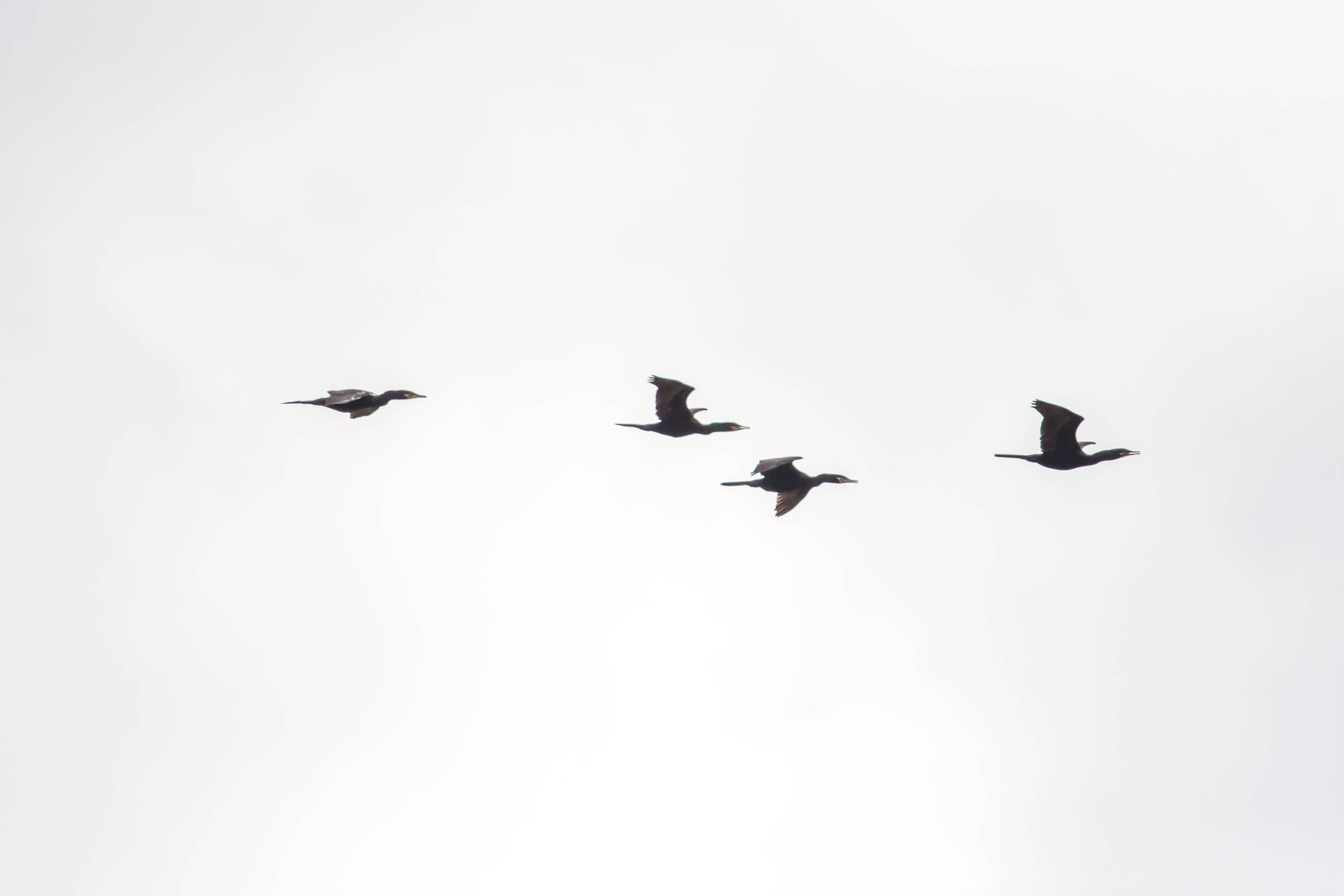
Feature photograph: Neotropic cormorants at Estero Llano Grande State Park, Texas; archival photograph, not a promised November 8 sighting. Photo: cricketsblog. Source; CC BY 2.0. No editorial alterations.
