
On an ordinary Tuesday, a high-school gym might be nearly empty by the time the evening news starts. On November 3, gyms across East Texas will feel different. The volleyball area round is finishing, and the teams still standing have earned one more chance to turn a season into something longer. That means road trips, busy parking lots and families juggling work with a match at a school they may never have visited.
This is a practical East Texas guide built around the verified Tuesday area-round pairings published by KLTV and KTRE. It includes match times and host gyms rather than simply naming opponents. Results are not assumed, and no program is called a winner before its match has been played.
The larger schools have a busy Tuesday
In Class 4A Division I, Lindale faces Caddo Mills at 6:30 p.m. at Rains High School. Sulphur Springs meets Pine Tree at 6:30 p.m. at Hawkins High School. Bullard takes on Huffman Hargrave at 6:30 p.m. in Lovelady, and Livingston plays Lumberton at 6:30 p.m. in Woodville.
That is a spread of communities, opponents and host sites. One fixture has a relatively familiar East Texas feel, while another brings a team from well outside the region. Travel conditions and the location of the neutral court matter, especially when the adults in the group are leaving work close to game time.
A family following Sulphur Springs against Pine Tree, for example, should navigate to the match venue in Hawkins, not a campus in either hometown. A person attending Livingston–Lumberton needs Woodville. Even a quick glance at a playoff bracket can conceal the detail that most often causes trouble at the last minute.
In Class 4A Division II, two more regional paths
Van faces Sunnyvale at 6 p.m. at Wills Point High School, while Spring Hill takes on Farmersville at 7 p.m. at Grand Saline High School. Those matchups are in a separate division from the 4A Division I games above. That detail is not clerical trivia. The division determines which bracket a winner will enter next.
A match at 6 p.m. deserves a different departure plan from one at 7. For families coming from a neighboring county, that hour may change whether dinner happens before or after the game. Players and coaches have their own travel routines, but spectators benefit from making a plan that is not dependent on arriving exactly at first serve.
Avoid assuming that the gym door is the most prominent building entrance. High-school campuses often have multiple athletic facilities and parking zones. An official match announcement may include a door number or parking detail that an automatically generated map will not show.
Class 3A Division I offers variety
White Oak meets Eustace at 7 p.m. at Tyler High School. Sabine faces Grandview at 6:30 p.m. at Kaufman High School. Huntington is scheduled against Columbus at 6:30 p.m. in Willis.
The spread illustrates an important part of postseason volleyball. A school’s regular-season district schedule becomes a poor predictor of the opponent and court it will see in November. A side that is accustomed to one set of rotations and serving patterns must solve a new problem with very little time to prepare.
The interesting competition is often in the first two contacts. If a receiving team handles serves cleanly, it can run its planned offense. If the pass pulls the setter away from the net, the attack becomes easier to read. You can spot that pattern from the bleachers without needing a scouting report or a deep knowledge of statistics.
Class 3A Division II keeps several small communities involved
Malakoff faces Tatum at 6 p.m. at Tyler Junior College. Harmony meets Leonard at 7 p.m. at Sulphur Springs High School, and West Rusk plays Scurry-Rosser at 7 p.m. at Athens High School.
These are not side notes to the larger schools. For the players and communities involved, the stakes are the same. A postseason match may be one of the biggest sporting events of the week, and a trip to a neutral-site court can draw a crowd well beyond the students’ immediate families.
In the smaller-school matchups, a few players often carry several responsibilities. You might see the same athlete make a difficult dig, chase a ball out of system and come back to serve in a pressure situation. That level of versatility is worth watching in its own right, independent of which classification is printed on the bracket.
Why one loss feels so different in November
The regular season allows a bad night to become a lesson. A team may lose to a district rival and still have another week of matches to repair its standing. In the playoffs, there is no such guarantee. A missed serve in the final set or a brief stretch of poor passing has more immediate consequences.
That tension can make teams play tight. It can also bring out excellent volleyball. Experienced players know how to reset after a point. Coaches know when to use a timeout not simply to stop an opponent’s scoring run, but to give their own side a moment to hear the next instruction clearly.
Fans can support the teams without turning every call into a confrontation. The best local crowds are loud for their players and respectful of the officials and opposing athletes. A close match can be an unforgettable community night without becoming an unpleasant one.
How to choose which match to attend
Start with proximity and connection. Maybe you know a player at Lindale, follow Pine Tree each year or have family in the White Oak program. That is an obvious reason to attend. If you have no team allegiance, choose a game with a confirmed start and a manageable route. A good high-school volleyball match doesn’t require you to follow the statewide rankings.
Confirm the venue on the school athletics page or a current district announcement. Then confirm tickets, whether seating is general admission and whether the building has a specific spectator entrance. Your school’s regular-season passes may not apply at a neutral-site playoff gym.
Arrive with enough time to park and get settled. A row of cars arriving together can make a small campus feel surprisingly congested. Parents with young children should consider concessions and restroom access before first serve rather than trying to figure everything out during a close set.
The date on a bracket is not the full game plan
The UIL identifies November 2–3 as the area-round window. A third-party listing might still show a venue change or adjustment before the match, and school accounts can provide the freshest information. It is worth checking once at lunchtime and again before leaving if your drive is long.
Watch for a common confusion: the school listed first in a pairing is not necessarily the host. That team may be designated the home side for administrative purposes while the actual game takes place in an entirely different town.
Also be careful with live-stream links. Search-result spam and comments under school posts sometimes advertise unauthorized feeds. Use a school’s official communication channels and confirmed providers before giving anyone payment information.
What follows the area round
Class 2A–6A volleyball’s regional semifinals are scheduled for November 5–7 under the UIL calendar, while 1A teams have regional quarterfinals during that window. Specific pairings depend on actual results, and matches can be set at neutral venues selected after the previous round.
That quick turnaround is one reason Tuesday matters so much. Athletes who win may practice only briefly before facing an unfamiliar opponent later in the week. Families have even less time to arrange transport and tickets. A timely follow-up should publish confirmed results and next-round assignments, not guess the pairings now.
The larger statewide picture deserves coverage, but it should not erase the regional communities that make the tournament memorable. A Tyler-area match is not automatically relevant to a reader in El Paso; a regional feeder should keep its focus.
How Thunderfoot can help you follow the region
Use our High School Sports hub to browse coverage and the Texas Sports Schedules tool for planned events. For the schedule in this story, the original KLTV/KTRE area-round report is the key starting source, with the school’s own notice as the final travel check.
Every one of these games has a story beyond a bracket number: a senior hoping to play again, a student section making the trip, and a team trying to hold its nerve when the score gets close. That’s what a Tuesday area-round slate represents.
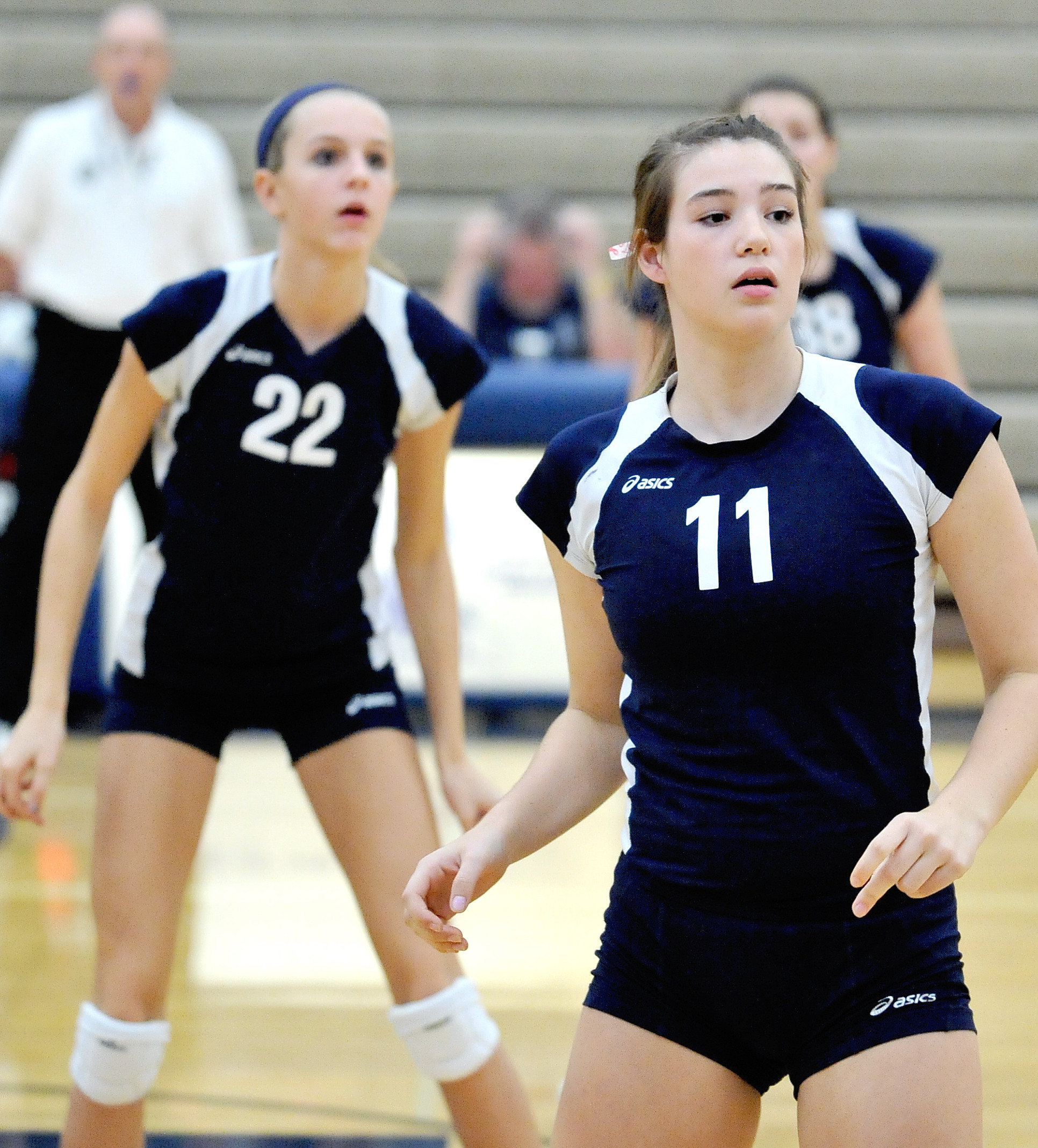
Featured photo: archival high-school volleyball action by K. M. Klemencic, Wikimedia Commons, CC BY 2.0; not a photograph of any East Texas team in this story. Schedule checked November 3, 2026.
