
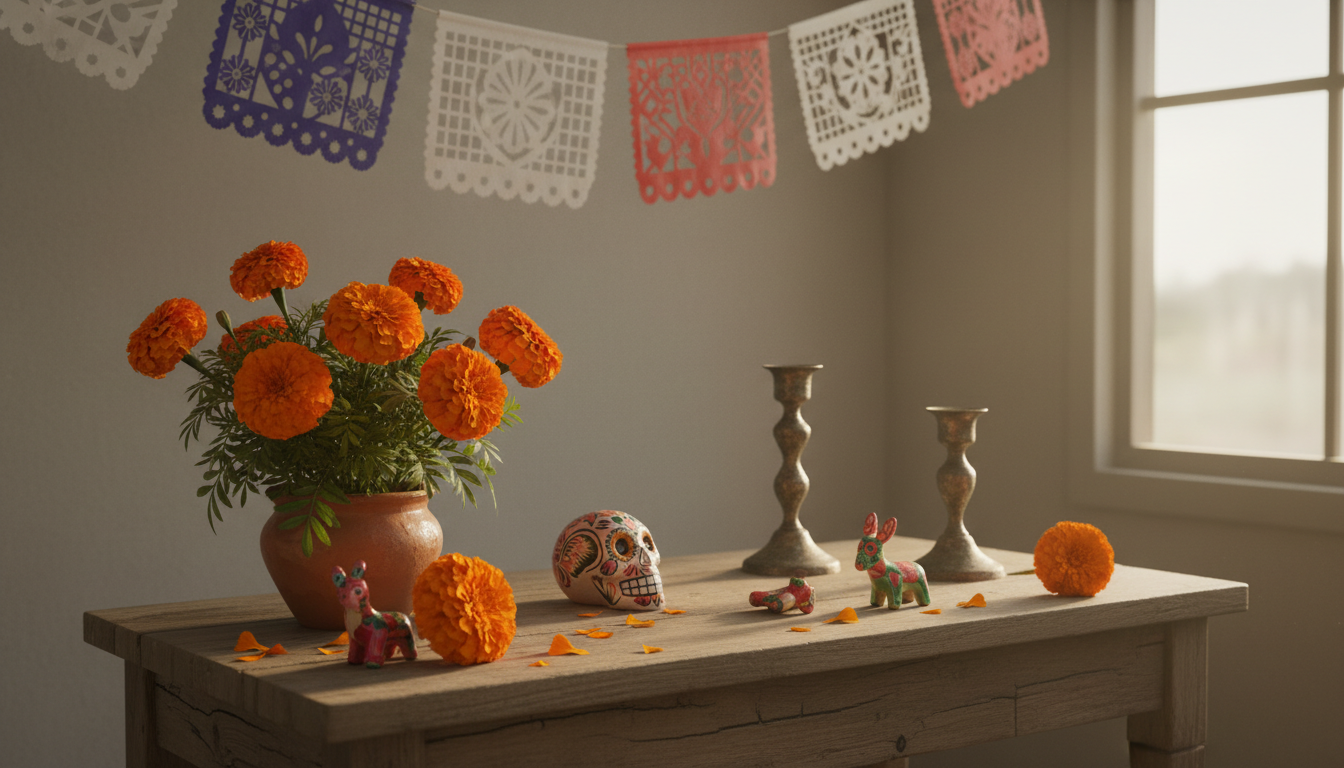
October has a way of making everything look like Halloween. Pumpkins appear on doorsteps, stores turn their windows orange and black, and children negotiate how much candy a costume ought to earn. But as the last Saturday of the month arrives, another set of celebrations across East Texas asks visitors to think about something deeper than being scared. Día de los Muertos—the Day of the Dead—is a joyful tradition of remembering people who are no longer here. Its colors are striking, its music can be exuberant, and the stories beneath it are profoundly personal.
This year, the timing makes the contrast especially clear. Halloween falls on Saturday, October 31. In Galveston, a parade will fill downtown that afternoon. In Houston, MECA opens a two-day community festival on October 31 and November 1. Then Discovery Green becomes the center of a public remembrance on Sunday, November 1, with an ofrenda, performances and a musical tribute. These aren’t the same event, and they aren’t simply three opportunities to photograph face paint. Together they tell a larger story about culture, memory and the different ways a community chooses to gather.
Why these celebrations mean something different
Día de los Muertos has roots in Mexican traditions shaped over centuries by Indigenous practices and Catholic observances. The occasion is often marked on November 1 and 2, though community festivals may take place on adjacent dates. At its center is remembrance: a belief in keeping connections with departed family members through stories, offerings, photographs, food and music. An ofrenda, or offering altar, may hold the favorite foods and meaningful objects of someone being honored. These are expressions of love and memory, not props created for a haunted-house theme.
The public imagery is unmistakable. Marigolds, papel picado, colorful skull motifs and candles can transform a festival space into something beautiful. But it’s possible to admire those details without understanding them. The more rewarding approach is to slow down and notice that an altar often tells you about a particular life. A cherished photograph or an ordinary object can matter more than the most elaborate decoration in sight. Visitors who approach with curiosity and respect are more likely to leave with a genuine connection to the tradition.
Galveston begins with a parade
On Saturday, October 31, LULAC Council 151’s seventh annual Día de los Muertos Fiesta and Parade opens downtown Galveston with a noon lineup gathering and a 1 p.m. parade. Organizers welcome families, dancers, musicians, decorated floats and community members in traditional or creative attire. The parade begins near City Hall at 25th and Ball and moves through downtown toward the courthouse area, where the afternoon’s fiesta continues.
That procession is more than a chance to see elaborate clothing. It’s a public act of remembrance, one that invites participants to honor people they have lost and reflect on the community around them. Music, dancing and vivid artwork are part of the experience precisely because this is a celebration of life rather than a quiet event that asks everyone to hide their grief. Families can join the gathering, support vendors and watch performances while recognizing the meaning behind the festivities.
The Galveston visitor guide lists food, art, music and vendor activity through the day. Because the parade moves along downtown streets, plan around closures and pick a realistic place to watch before the procession begins. If you’re bringing younger children, be prepared for crowds and noise, and give them a moment to ask questions about what they’re seeing. Those conversations can become the most memorable part of the outing.
At MECA, remembrance becomes something you make together
In Houston’s Old Sixth Ward, MECA’s Día de Muertos Festival runs Saturday, October 31, and Sunday, November 1. The free event is rooted in Latin American folk-art traditions, with ofrendas, children’s art activities, food, artisan vendors and three stages of performances. The campus is the historic Dow School at 1900 Kane Street; the festival’s published vendor information lists 11 a.m. to 7 p.m. for the two-day celebration.
What makes MECA especially interesting is the connection between the artists and the community. The celebration is not just something to watch from a distance. Children can encounter art activities that connect a joyful public festival to traditions practiced at home. Visitors can see handmade work, listen to music and understand the role artists play in helping communities express what matters to them. The presence of altars also gives the weekend emotional texture that a typical craft market does not have.
It’s also worth checking the official site for the day’s performance times and food arrangements. A multi-stage event can be delightful, but families with limited time may want to choose one or two performances rather than trying to cover everything. As with any popular community festival, a little planning makes room for the unscheduled moments that become the best memories.
Sunday at Discovery Green gives the day a musical voice
On Sunday, November 1, from 3 to 7 p.m., Discovery Green’s Día de los Muertos celebration brings the tradition into a central Houston park. Admission is free. Visitors are invited to contribute a copy of a photograph or a keepsake to a community ofrenda created by Houston artist Angel Quesada. The organizers also invite people to honor beloved pets through a special altar, an acknowledgement of how deeply animals can become part of family memory.
There is an important practical request here: bring copies, not irreplaceable originals. Discovery Green warns that keepsakes cannot be guaranteed to be returned. For someone who wants to participate personally, a duplicate photograph is a small preparation that can make the day more meaningful without risking a treasured family object. Even if you bring nothing, the event is open to people from different backgrounds who want to listen, learn and remember.
The public program includes a Catrín y Catrinas parade and contest, live music, crafts, vendors and performances. The musical highlight is La Musical Ofrenda, a concert led by Houston’s Nick Gaitan and the Tejas Roots Band that pays tribute to artists whose music helped shape Texas and its communities. It’s a fitting connection: songs can keep memories alive long after a performer or a listener is gone. The concert turns that idea into something an audience can experience together.
How to choose a celebration that fits your weekend
Galveston’s October 31 parade is ideal for those drawn to a public procession and an island-day outing. MECA offers a two-day arts-centered celebration for families who want to explore traditions through performances and handmade work. Discovery Green is a Sunday-afternoon choice with a prominent community altar and musical tribute. All three deserve more time than an impulse stop on the way to another destination.
You don’t need to attempt a three-city checklist. Consider where you’re traveling from, the age of your companions and whether you most want to watch a parade, explore art or take part in a communal act of remembrance. Check each organizer’s schedule close to the event for any weather or access changes. Be especially mindful of traffic around Galveston’s procession and the ordinary parking demands of central Houston.
There will still be plenty of pumpkins and costumes across East Texas on Halloween weekend. That is part of the season’s fun. But Día de los Muertos offers something different: a chance to gather in celebration of people and stories that remain important even after a life has ended. Its beauty comes not only from flowers or music, but from the tenderness of remembering. The best way to experience it is to arrive ready to notice both.