
A skull looks like a spooky Halloween prop until somebody places it beside another skull and asks what the animal actually ate. Suddenly the teeth, the jaw and the shape of the eye sockets begin telling a story. At Abilene State Park on Saturday, October 24, a ranger-led program called Skins & Skulls uses animal furs and replica skulls to introduce visitors to local wildlife. It is a calmer kind of October activity for families who want something interesting without the noise, crowds or manufactured frights of a commercial haunted house.
The park’s official Skins & Skulls listing identifies a 10–11 a.m. session on Saturday, October 24. Visitors meet at the CCC Concession Building, and no separate registration is required. The program itself is free with park admission, although the organizer recommends buying a day-use pass in advance on busy weekends. Water and an open mind are the items specifically requested. That is a much easier preparation list than one requiring technical hiking equipment or a costly admission package.
The Saturday date matters because park calendars can disagree
One dated event page elsewhere on the Texas Parks & Wildlife site also describes an Edible & Medicinal Plant Hike on October 24. The main Abilene State Park calendar, however, identifies Skins & Skulls as the October 24 public program and lists the next edible-plant hike for November 21. That discrepancy is exactly why we are reporting the event shown in the main current calendar rather than promising a plant hike that staff may not be running. If the specific subject is essential to your trip, call the park to confirm before making a long drive.
It is reasonable to ask questions about an event schedule; it is not reasonable for an editorial site to quietly fill the gap with an invented answer. Park calendars are updated for weather, staffing and other practical reasons. We can confirm the listed time, place and program title, but the final authority for a change on Saturday morning is the park itself. Save the office contact information and look for alerts close to departure.
A replica skull can teach more than a scary mask
Skulls provide clues about how an animal lives. The position of eye sockets can reveal something about how a species observes its surroundings; different tooth shapes can suggest the types of food a mouth was suited to handle. A long narrow muzzle and sharp teeth invite different questions from a short, sturdy jaw with grinding surfaces. These are clues, not a perfect shortcut to species identification. The best ranger programs demonstrate how to ask questions before announcing conclusions.
A child who is drawn to Halloween imagery may be surprised to find that real skulls are much less frightening and much more interesting than the plastic versions. Why are some teeth sharp and others flat? Why are certain skulls tiny compared with the body size of another animal? What happens to these bones after an animal dies? Each question opens a door to ecology and adaptation. The point isn’t to memorize dozens of Latin names in one hour; it is to discover that objects usually used as spooky decorations are also evidence about living things.
Touching furs without forgetting the animals
The organizer mentions a chance to touch animal furs and replica skulls. That is different from a promise that live animals will be handled or on display. Don’t tell a child there will be foxes, deer or a particular species to pet unless the ranger has specifically confirmed it. This session is about examining prepared educational materials, not a petting zoo. Handle anything offered according to staff instructions and treat the specimens as teaching resources rather than souvenirs.
Fur can provide another set of clues. Think about insulation, camouflage, movement through brush or how a coat changes when an animal lives in different surroundings. A texture may feel unexpectedly soft or coarse, but touching it alone won’t tell you the full story. Ask where the animal normally lives and what its coat helps it do. Connecting a texture to a real habitat makes the lesson more memorable than simply declaring which fur feels nicest.
The CCC building is part of the reason to visit
Abilene State Park’s Civilian Conservation Corps heritage is an important part of the landscape. The event meets at the CCC Concession Building, a location that ties the program to the state’s history of park construction and public recreation. Visitors can enjoy the educational hour, then take time to understand how the historic stonework and park facilities became part of the recreational landscape. It turns a small wildlife program into an opportunity to notice a place’s human history as well.
But don’t assume a building associated with a historic work program is automatically a modern museum with extensive displays. The event notice identifies the building as a meeting place. If you want a deeper historical tour, see what the park actually offers or ask staff about current interpretation. The best local reporting respects the difference between what is documented and what would merely make a nicer story.
What makes this a good first state-park outing
A one-hour ranger session can feel much more approachable than a demanding trail hike. Families with children, older visitors and people new to outdoor recreation may appreciate an activity where a knowledgeable person organizes the experience. That doesn’t guarantee every accessibility need is met automatically; contact park staff about the building, parking and accommodations that matter to your group. But compared with a remote off-trail event, a program meeting at a known building often provides an easier entry point into state-park culture.
Parents can prepare young children with three questions to ask the ranger. ‘What animal made this?’ ‘How did it use its teeth?’ and ‘Where would it live around here?’ are all good starts. Avoid turning the program into a classroom examination where every child has to give the right answer. A curious child who leaves talking about one surprising skull has gained more than one who has been pressured to memorize a list of specimens.
Extend the visit, but keep the expectations honest
After the session, Abilene State Park offers space to explore woodland, recreation areas and wildlife-viewing opportunities. Check which routes and facilities are open, then decide whether your group has energy for a short walk or picnic. Buffalo Wallow, a spring-fed pond in the park, is a known location for wildlife watching. You might see birds or other signs of life, but there is no guarantee any particular species will appear. Nature doesn’t operate according to the event calendar.
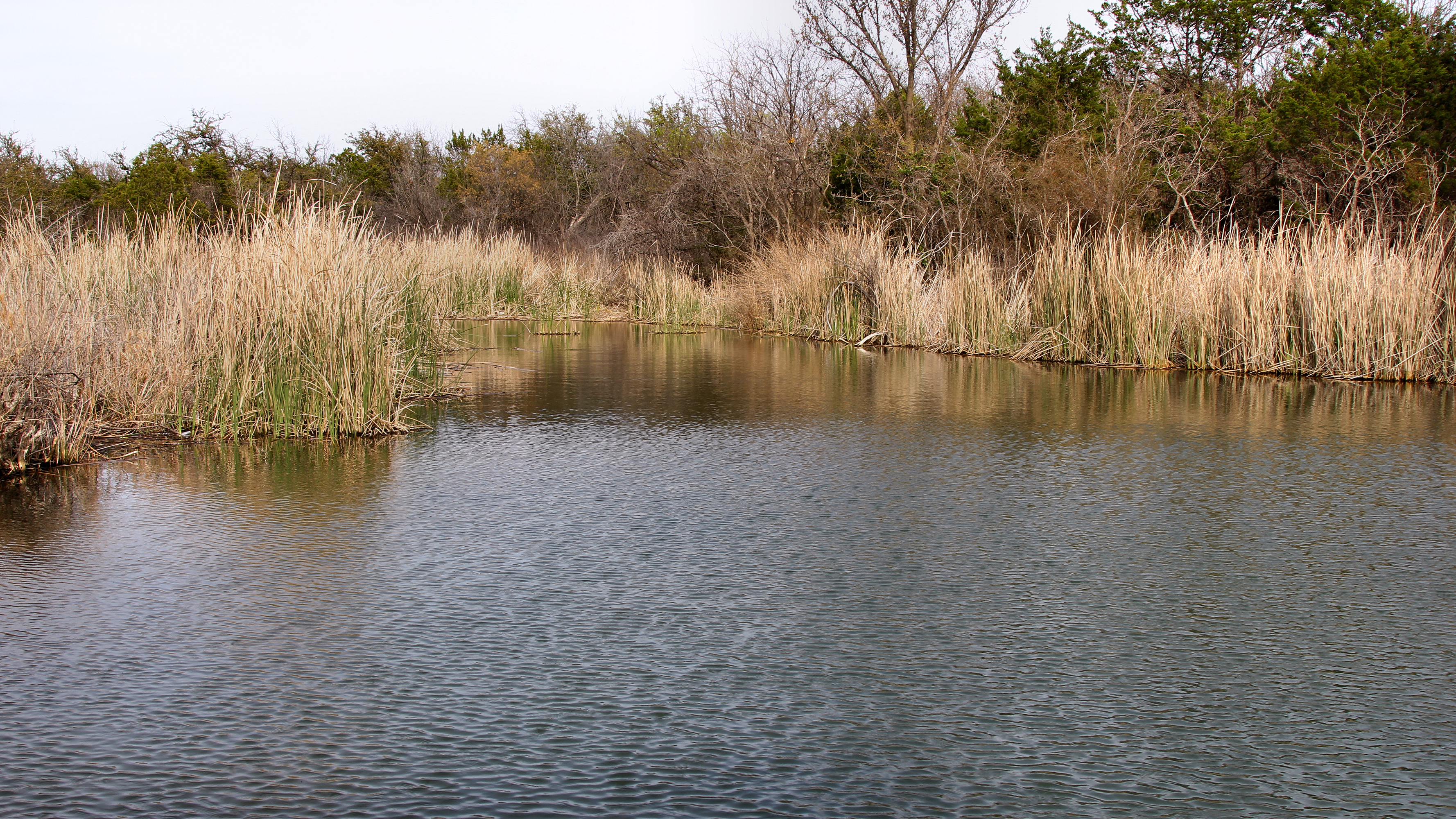
The feature photograph for this article shows actual Buffalo Wallow at Abilene State Park in March 2023, photographed by Larry D. Moore. It is a verified real location photograph, not a fake image of a CCC building, a museum or a future ranger activity. It shows the landscape where visitors can spend time after the program. The photo is archival and should not be used as evidence of the park’s precise water level or vegetation on the upcoming Saturday.
A few practical decisions before you leave
The main requirements are modest: suitable clothing, water, an admission pass and enough time to locate the CCC Concession Building before 10 a.m. Bring sun protection or a layer if the actual weather warrants it. Don’t assume that because a program meets at a building, you will never spend any time outside. Take the opportunity to ask about local wildlife without wandering into closed areas or collecting animal parts on your own. Respecting park resources is part of learning how those ecosystems work.
If you are bringing a large group, contact the park rather than assuming there will be unlimited indoor room. If the forecast changes, check for cancellations. The organizer notes that programs may be canceled because of inclement weather. A ranger may be able to suggest another activity on site, but you should not treat an unannounced replacement as guaranteed. The best family plans leave room for a change without making everyone frustrated.
Why the Big Country deserves small, specific stories
A West Texas guide can fill pages with popular weekend destinations and still overlook the things that make an individual Saturday easy to enjoy. A wildlife lesson at Abilene State Park isn’t a headline event with a stadium-size crowd. That is part of its appeal. Families who want a quieter experience can find it near home, learn something real and leave with enough energy for the rest of their weekend. It deserves precise coverage rather than being buried under generalized October advice.
For the rest of your regional plans, use Thunderfoot’s Abilene & Big Country hub. But save the official state-park event calendar before driving. As currently listed, Skins & Skulls is Saturday, October 24, 10–11 a.m., at the CCC Concession Building, included with park admission and without separate event registration. The real value is getting a closer look at how the wildlife around Abilene lives—not just what its skeleton might look like in a Halloween decoration.