
You can ruin a good view of the night sky without ever looking up. All it takes is one bright white flashlight in the middle of a group whose eyes have spent twenty minutes adjusting to darkness. That’s why one of the most practical details of Friday’s telescope night at Purtis Creek State Park isn’t a planet name or a complicated piece of equipment. It’s the park’s recommendation to bring a red-light flashlight. For someone who has never been to a star party, that little detail explains how different the evening can be from an ordinary walk outside.
The Astronomical Society of East Texas and a park ranger are scheduled to host a Star Party with ASET from 8 to 9 p.m. on Friday, October 23, 2026. The setting is Purtis Creek State Park, a lake-and-woodland park east of the Dallas area. It’s a program built around exploring the sky through telescopes, which makes it especially appealing to people curious about astronomy but reluctant to buy equipment before they know whether the hobby will stick.
The specific meeting place matters more than the park name
The park’s official event notice tells visitors to meet at Wolfpen Green / Solar Trail Parking Lot. It describes that as the first parking lot on the right across the dam and warns that attendees may need to park farther along and walk to the viewing area. That last sentence is easy to overlook until you’re approaching an unfamiliar park after sunset. Save the directions before you leave, and make sure your group knows which lot you are actually heading toward.
The announced time is 8 to 9 p.m. Friday, not an all-night observing session. The program itself is free with paid park admission. Texas Parks & Wildlife lists entry at $5 per person age 13 and older, and notes that arrivals after 4:45 p.m. should use the cash-only self-pay station in the office parking lot. Children age 12 and under are not charged regular entry. Those details turn into practical decisions: carry appropriate cash, account for the walk and arrive early enough to get oriented without rushing a dark path.
The listed packing guidance includes water, closed-toe shoes, insect repellent, weather-appropriate clothing and a red-light flashlight. Check the weather near departure rather than relying on a forecast from the start of the week. Cloud cover is the obvious obstacle, but damp trails, changing temperatures and even a little wind can affect how comfortable one hour outside becomes. The organizer says the program may change or be cancelled for inclement weather; check its status rather than assuming that buying gas or making dinner plans guarantees the sky will cooperate.
What happens when your eyes adjust
Human eyes need time to become more sensitive in dim conditions. When you step out of a brightly lit car or look at a glowing phone screen, the sky can seem emptier than it actually is. If you wait quietly and avoid bright light, you may begin noticing more faint points and patterns. A red-light flashlight is popular with astronomy groups because it can help you see a walking surface or a note without disrupting night vision as aggressively as a bright white beam. Keep any light pointed downward and use the lowest setting that safely works.
This etiquette is both considerate and self-interested. If people around a telescope are trying to find a faint target, sudden light can interrupt their work. If you’re the person waiting in line, a flashlight sweep may make your own eventual view less impressive. It’s fine to ask a volunteer where to stand or what to do; star parties work best when new visitors are comfortable enough to ask questions rather than feeling they’re intruding on a private club.
Don’t buy a telescope for your first telescope night
Astronomy equipment can be surprisingly intimidating. Online guides quickly move from telescope sizes to focal lengths, mount designs, eyepieces and smartphone adapters. Most beginners need none of that for an initial evening. What they need is a chance to look through a working instrument, meet someone who can explain what they’re seeing and discover whether they enjoy the pace of observing. The scheduled collaboration with the Astronomical Society of East Texas offers exactly the type of guided introduction that makes a first experience more accessible.
If you’re attending with children, describe the outing accurately. It is not a laser show, and the sky will not necessarily produce a dramatic image every second. Telescopes reveal real objects that may look smaller or subtler than a promotional space photograph. The payoff can be recognizing that a point of light is a place, not just a dot. Teach patience in line and encourage one question after each look. A child who understands what to look for can find a modest image much more fascinating than an adult expecting a magazine cover.
Experienced observers can make the evening useful too. Public astronomy nights offer a chance to compare methods, hear how volunteers locate their targets and introduce friends to a hobby without dragging personal equipment along. But don’t arrive expecting any particular planet or deep-sky object to be guaranteed. What the group chooses to show depends on sky conditions, timing and the instruments available. The official event listing promises an exploration of the cosmos with telescopes, not a fixed menu of sights.
A realistic Friday schedule
For anyone coming from Canton, Athens or elsewhere in this part of East Texas, the smart schedule begins with checking travel time to Purtis Creek State Park, including the final drive into the park. Have dinner before the observing period so you’re not juggling food and a red flashlight around delicate equipment. Arrive with enough spare time to use the self-pay station if needed and locate the meeting place without feeling pressured. Keep the phone available for directions, then dim its screen or stow it before joining the viewing area.
Don’t turn this into an unnecessarily long night for a child who has school or an early activity the next morning. An hour is plenty for a first taste of astronomy, especially if the experience is restful instead of exhausting. Bring an extra layer if the forecast calls for a temperature drop after sunset; still air by a lake can feel different from the carpark where you began. Leave room in the plan for cancellation or early departure if conditions change.
Why Purtis Creek is worth knowing in daylight, too
A visit here doesn’t have to end with Friday’s sky. Purtis Creek State Park is known for its lake, fishing, camping and trails. Texas Parks & Wildlife describes its lake as a bass-fishing destination and identifies opportunities to hike, paddle, boat and picnic. An unrelated Saturday morning activity may even give you a reason to return rather than trying to squeeze every possible park experience into the same night.
The park calendar lists a TX Pollinator BioBlitz Hike at 10 a.m. Saturday, October 24. That pairing makes an interesting contrast: a Friday devoted to distant objects and a Saturday spent noticing plants and pollinators close to the trail. They are separate programs, so don’t assume one registration or admission covers every arrangement. Check each listing independently and decide whether a second visit suits your weekend.
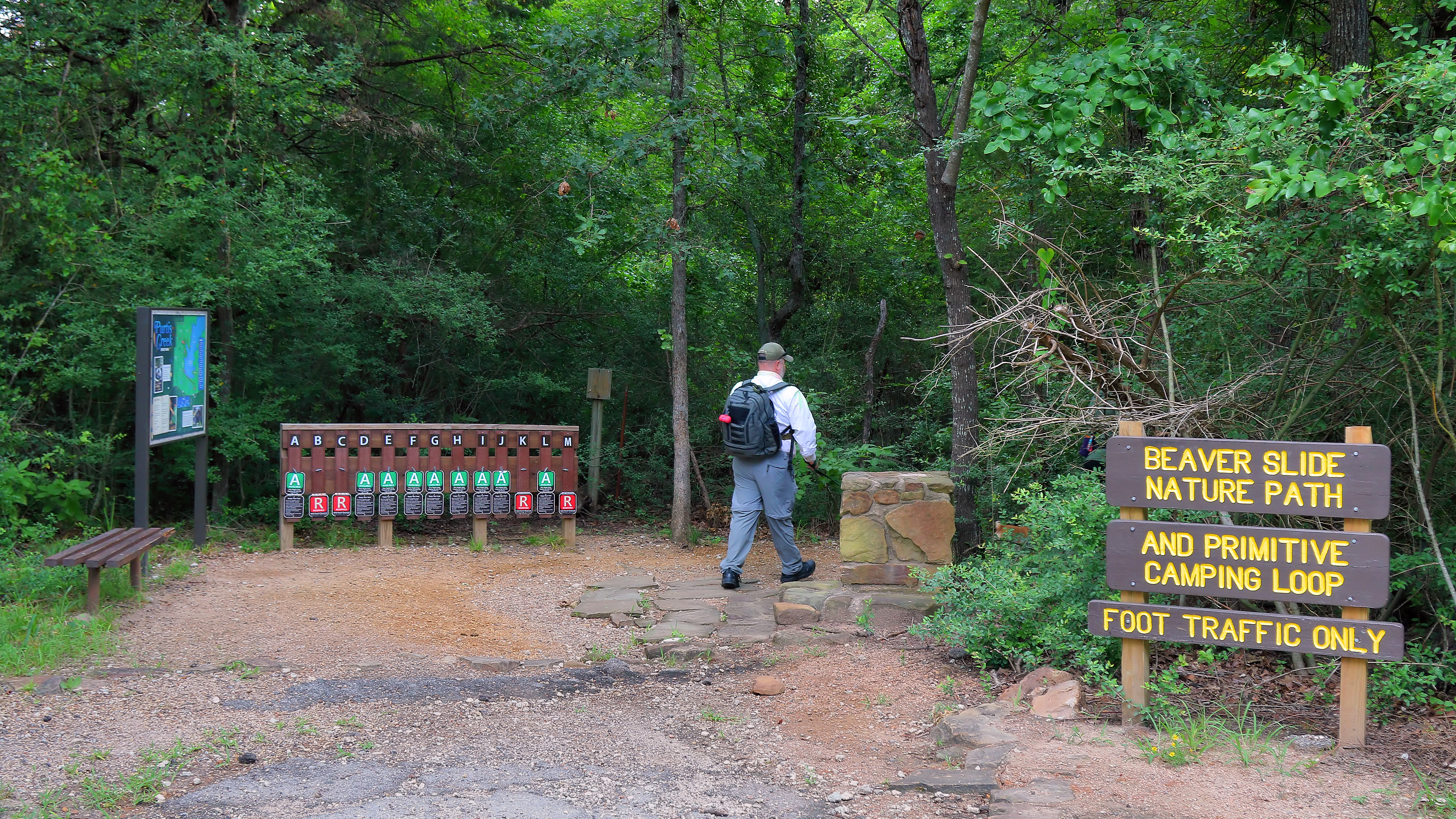
The photograph attached to this article was taken on a real Purtis Creek trail in July 2025. It accurately identifies the park rather than pretending to show a telescope gathering that has not yet happened. It is a daytime location image; it should not be mistaken for Friday’s observing site or evidence of what conditions will be like after dark. That distinction matters when readers use an image as an unspoken promise.
How to get a good view without disrupting everyone else’s
Wait for the person ahead of you to finish looking before you approach the instrument. Don’t grab a telescope or change its position unless the volunteer invites you to do so. If you’re unsure whether you see the target, say so. People who operate public telescopes are used to helping visitors adjust their position at the eyepiece. Avoid shining a flashlight in anyone’s face and try not to stand with a phone screen blazing toward the group.
A good question is ‘What should I notice?’ rather than ‘Is this supposed to look bigger?’ An observer might point out a bright region, a cluster shape or the way a target differs from a nearby star. One clear explanation makes a small view meaningful. Ask whether children can safely reach the eyepiece without climbing an unstable object. If someone has mobility needs, contact the park in advance; the event listing includes accessibility-contact information and mentions a grit wheelchair that may be available by arrangement.
What to verify before leaving
Confirm that Friday’s session is still running, check current park alerts and use Texas Parks & Wildlife’s event page for the latest organizer details. For regional ideas before or after the outing, Thunderfoot’s Northeast Texas area hub can help build a broader weekend without repeating a generic list of things to do. The first goal remains simple: arrive at the right place, keep the lights low and give the night sky your attention for an hour.