
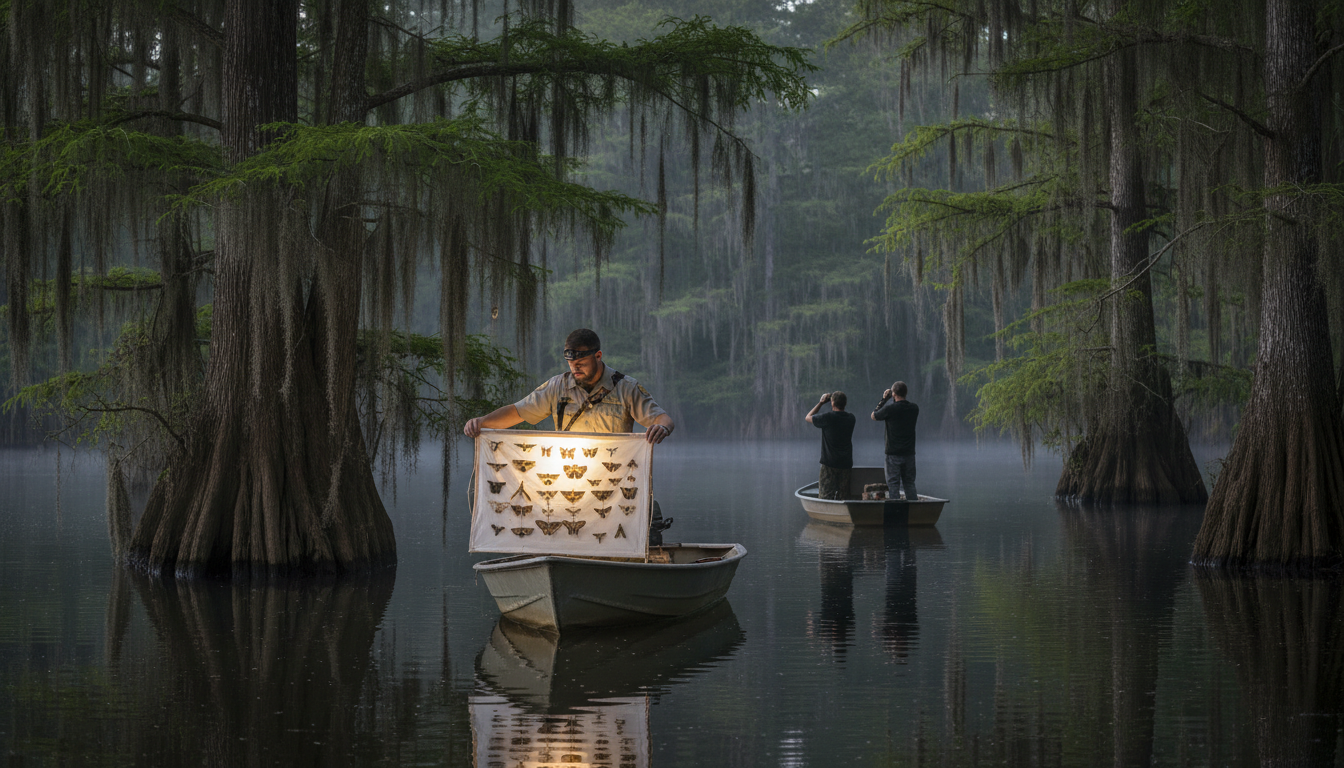
If you’ve visited Caddo Lake for its enormous cypress trees, try looking at something much smaller this Saturday night. At Moth Masquerade, a ranger will use ultraviolet light and a white backdrop to see which insects emerge from the darkness. The October 24 program runs from 8 to 10 p.m., with visitors helping observe and identify what appears. It sounds simple, but that is part of the appeal. Instead of trying to spot wildlife in a black forest, you can watch the night bring its own visitors into view—then learn why their patterns, shapes and behavior matter to the ecosystem.
The event is listed for 8–10 p.m. at the park amphitheater. Texas Parks & Wildlife says visitors can help observe and identify the moths and other insects, using iNaturalist as part of the experience. It is science without a laboratory, although there are several practical differences between a fun nighttime program and simply walking into a forest after dark. The official listing even carries a prominent warning: the park will be dark.
The secret lives of familiar places
One of the best parts of nature is the way an ecosystem changes when your usual schedule ends. A wooded park at 2 p.m. and the same park at 9 p.m. are not equivalent experiences. Different animals move, new sounds become noticeable, and many creatures that normally hide in daylight become more visible. Moths are an excellent example because people often know them only as the insects around porch lights.
Moths are enormously varied, and they play ecological roles beyond being food for other animals. They can participate in pollination, and their abundance and diversity can help observers notice features of a habitat. The program isn’t promising that every species will appear on command. It creates an opportunity to watch an actual natural system respond to light and then ask why. That is more interesting than seeing a staged display where the outcome was decided in advance.
A white sheet, a UV light, and an insect census
Attraction to light is a familiar behavior, but it isn’t universal across every insect species or every situation. A bright surface can make insects easier to see and photograph when they move toward a light source. That is why a ranger might use a white backdrop: tiny wing patterns and body shapes become more visible against a consistent background than against black trees or moving leaves.
This is an observation method, not a reason for visitors to collect insects without permission. If the ranger invites the group to help identify species, follow the instructions and avoid touching wings or handling animals unnecessarily. A delicate moth can be damaged surprisingly easily. Good natural history often begins with noticing details from a respectful distance and asking somebody knowledgeable what those details might mean.
How to take part even if you know nothing about bugs
You do not need to be a biologist. Start by looking for differences among insects that appear to be similar at first glance. One may have broad wings with bold markings; another may be tiny and almost invisible until it moves. Ask why two moths rest with their wings differently or why one species seems to appear earlier in the evening. A ranger can help distinguish what is known from what people are only guessing.
For older kids and adults, identification apps can add another layer. The park specifically mentions iNaturalist, which lets users contribute observations to a wider naturalist community. But do not spend the whole program staring into a phone. Look carefully first, then decide whether a photo will help. A memorable evening often comes from observing a few creatures well rather than collecting a long list you never look at again.
What the dark changes about safety
The official event description is unusually candid about nighttime risks. It mentions wildlife such as snakes, skunks, raccoons, coyotes, and bobcats along with biting insects and tripping hazards. That list isn’t meant to suggest all those animals will be standing beside the amphitheater. It is a reminder that the event takes place in an outdoor habitat, and the park does not become a controlled indoor venue just because it is hosting a program.
Stay with the ranger and follow the designated approach route. Use a flashlight or headlamp for walking, but be courteous about shining it into other people’s faces. Bring water and insect repellent. Avoid stepping off the path to chase an animal or improve a photograph. If a child is easily frightened by unfamiliar night sounds, talk about what to expect before arriving. Respect for the setting is a condition of enjoying it.
Accessibility is specific, not generic
Texas Parks & Wildlife says parking will be available at Saw Mill Pond and that there is a nearby restroom and drinking-water spigot. The amphitheater route includes a dirt path and a short flight of stairs, with benches at the destination. That detail may determine whether the program works for a family member with mobility limitations. It is more useful than an empty statement that the park is “family friendly.”
If someone in your group needs an accessible route, contact the park before committing. Do not assume every trail or approach in a state park can accommodate all mobility devices. A visitor who uses a walking aid, or a parent bringing a stroller after dark, deserves accurate information about the stairs and surface before beginning the drive.
What it costs
The Moth Masquerade program is free with paid park admission or an eligible Texas State Parks Pass. The listing identifies a $4 entrance fee for each visitor age 13 or older, while children 12 and younger enter free. That is a useful distinction: the educational activity doesn’t require a separate event ticket, but the park may still charge ordinary admission.
If you have several people coming from different households, confirm that everybody understands the entrance arrangement. Bring your pass if you have one, and check current park capacity or any alerts. The official calendar notes that the program can be cancelled for weather conditions, with updates expected on the park’s Facebook page. Verify status before traveling in unsettled weather.
Teenagers are often offered two unsatisfying options in October: something that feels designed for small children or a haunted attraction so intense that the evening becomes more about surviving than enjoying. A night naturalist program offers a third option. There is darkness and mystery, but the point is to learn something real. A teen interested in photography, ecology or outdoor adventure may find it more engaging than another costume contest.
Let them take some ownership of the trip. One person can research how UV light affects night insects; another can prepare a simple checklist of moth characteristics to observe. A third might learn how to use iNaturalist responsibly. Those small decisions make a two-hour ranger program feel like an adventure rather than an assignment handed down by an adult.
The cypress swamps of this region attract visitors who want the iconic daytime view. Moth Masquerade reveals a less photographed side of the place. Instead of grand reflections in dark water, you’re looking at small wing patterns against a bright surface. Instead of a dramatic panoramic scene, you’re listening to a ranger explain why a creature exists and what it does. The scale changes, but the sense of discovery doesn’t.
A trip to the park can be part of a broader Northeast Texas outing if you allow enough rest and avoid overstuffing the day. Browse Thunderfoot’s Northeast Texas hub or Piney Woods hub for other options, but be cautious about scheduling an exhausting daytime hike before a night program that already runs until 10 p.m.
Only in the sense that it takes place at night during Halloween season and features creatures many people don’t usually pay attention to. There are no official promises of actors, jump scares or elaborate sets. Visitors who primarily want a traditional haunted house should choose a different attraction. Moth Masquerade is a nature activity that uses a seasonal name and the inherent mystery of nighttime wildlife.
That difference is precisely why it deserves an article. There are people who love October but don’t want their evening to be a contest of how frightened they can become. This program gives them a chance to do something distinctive, educational and genuinely connected to the landscape. You can leave with the memory of a beautiful moth instead of a fabricated ghost.
Saturday, October 24, 8–10 p.m., Caddo Lake State Park amphitheater. Park at Saw Mill Pond according to the published directions and bring water, bug spray and a headlamp or flashlight. Expect a dirt path, steps and dark conditions. Stay with the ranger. Admission is the usual park fee or eligible pass. Check cancellation announcements and current park notices before leaving home.
Most of all, arrive curious. It would be easy to look at a moth for three seconds and dismiss it as ordinary. This program asks you to look longer. In a landscape famous for enormous trees, some of the most memorable discoveries this weekend may be small enough to rest on a fingertip.
Official program and safety details
Caddo Lake Moth Masquerade — Texas Parks & Wildlife. For other park activities, including earlier October 24 programs, see the Caddo Lake events calendar.