
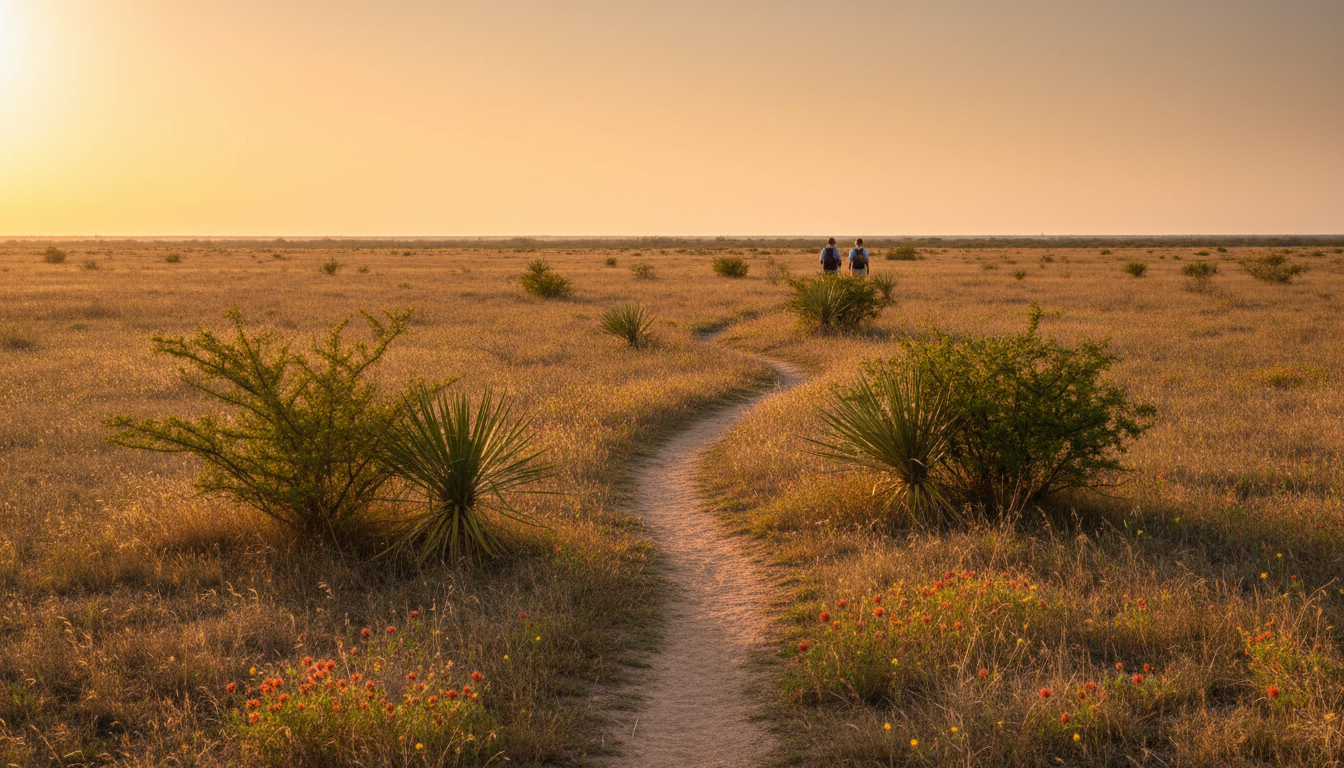
Sunday planning alert (October 18, 2026): Indoor opening and outdoor trail access at Sibley Nature Center could not be verified for Sunday from a current official schedule. Do not promise the family an indoor visit or assume entry. Contact the center at (432) 684-6827 before traveling; this is a guide to what to explore once access is confirmed.
Midland isn’t always the first city people think of when planning a nature walk. But the Sibley Nature Center at Hogan Park introduces the ecology and history of the southern Llano Estacado through trails, exhibits and education programs. It’s an especially useful place to begin if the open West Texas landscape looks empty from the highway and you want to learn what you’re missing.
The Midland tourism listing places the center at 1307 East Wadley Avenue. Conservation and regional heritage organizations describe a property of roughly forty-nine acres, with native habitats and paths designed for observation. This is an invitation to explore prairie ecology rather than a promise of dramatic mountains or a long wilderness trek.
The Permian Basin is more alive than it looks
Flat or rolling dry country can appear monotonous to someone accustomed to lush East Texas forests. But native grasses, shrubs, insects and birds are adapted to the environment. Sibley’s mission is to help people understand that local biodiversity, not replace it with exotic animals. Begin by looking closely at a single section of vegetation. Notice how plants conserve water and how bird activity changes near trees or wet areas. Learning to recognize ordinary species can make future walks around Midland more interesting than treating every outing as a search for a spectacular view.
The center is both outdoors and educational
Descriptions of Sibley include a trail system and opportunities for programs connected with regional nature and history. Some features may be accessed independently, while indoor facilities and scheduled programs operate under their own rules. Check the center before promising a child a specific workshop or animal encounter. A good visit might consist of a short path, a garden stop and a conversation about wildlife. The point isn’t to spend a fixed number of hours. It’s to observe something you did not recognize before.
Why the southern Llano Estacado matters
The Llano Estacado is a vast high-plains region stretching across portions of Texas and New Mexico. Its ecosystems include habitats that differ substantially from the wetter eastern half of Texas. Learning about the region’s plants and animals helps visitors understand how land use, rainfall and human settlement relate to one another. A nature center can be a gateway to that story without requiring a remote expedition. A useful question for any visitor is: what does this place tell me about living with limited water?
Birds are a practical starting point
Texas Parks and Wildlife’s Permian Basin wildlife route identifies Sibley and Hogan Park as a birding location and notes species such as roadrunners, cactus wrens and other high-plains residents. It also describes migratory birds using trees near the playa in spring and fall. That makes October a reasonable time to observe changes, though sightings can never be guaranteed. Bring binoculars if you own them, but start by listening and watching motion. A bird identified correctly after a few minutes of careful attention is more satisfying than guessing at everything that flies.
A family nature hunt without collecting anything
Give children a list of observations rather than objects to bring home: three leaf shapes, two different bird calls, one insect behavior and a place where the soil looks different. Use photos or sketches rather than picking plants or disturbing animals. Encourage them to ask why certain things grow near water or shade. A simple mission turns a short trail into an exploration that can work for different ages. Don’t promise a specific animal will appear, and let younger children finish when they’ve had enough. Curiosity, not distance, is the point.
The importance of walking slowly
In prairie environments, many interesting details are small. Tracks in the soil, seed heads, insect movement and the shapes of adapted plants can be overlooked at a brisk pace. Try walking quietly for five minutes without talking. Then ask everyone what they noticed. This can be a useful exercise for adults as much as children. It’s also a reminder that outdoor recreation doesn’t always need a high heart rate or dramatic terrain to be worthwhile. A little attentive walking is genuine engagement with nature.
Hours are not consistent across online directories
Some listings describe weekday indoor opening hours and weekend access differently, while regional sources discuss outdoor trails available during daylight. Those summaries may refer to the building, the trails or outdated operating policies. Instead of claiming a definite Sunday indoor schedule, contact the center directly before visiting. The Midland Chamber of Commerce lists the center’s telephone and general weekday hours, while conservation directories describe daily trail access. Treat those as starting points for confirmation, not permission to enter a closed building.
What to pack
Comfortable closed-toe shoes, water, sun protection and a hat are good defaults. Midland wind and sun can make a short walk feel different from the same duration in a sheltered park. Avoid assuming shade is continuous. If bringing a group, choose a time when everyone can participate comfortably rather than the hottest part of the day. Insect repellent may be helpful around vegetation and water features. Always follow posted trail restrictions, and leave plants and wildlife undisturbed.
Why an urban nature center is useful for beginners
Someone who wants to start hiking may find remote desert trails intimidating. A managed nature area in town offers an intermediate step: you can practice carrying water, following a path and observing conditions while remaining closer to ordinary city services. Beginners can establish a comfortable walking routine here, then expand to other West Texas destinations when they’re ready. That’s a valuable role for local public-interest sites. Not every outdoor adventure needs to begin with a challenging state-park loop.
What an experienced naturalist might gain
More advanced birders, photographers and native-plant enthusiasts can use Sibley to study a specific habitat rather than simply accumulate trail miles. One visit might focus on migrating birds; another on seeds and seasonal plant changes. Record observations honestly and avoid treating a single afternoon as proof of long-term ecological trends. Public nature education improves when participants note dates, weather and location accurately. If the center offers volunteer programs or workshops, those may be a way to contribute beyond casual observation.
An educational destination shouldn’t pretend to be a zoo
Photographs of wildlife and historical collections can create exaggerated expectations. The center’s purpose is environmental interpretation, not guaranteed encounters with tame animals. Children should not approach wildlife, reach into habitats or feed birds unless staff is running an authorized supervised program. Respect the organization’s mission and the safety of living creatures. A quiet walk where you learn to recognize a species can be just as meaningful as seeing an exhibit inside a building.
Pair it with a sensible Midland day
The Midland–Odessa & Permian Basin hub can help identify more outdoor and cultural experiences. But don’t rush from one wildlife area to another just to check boxes. A morning nature walk and a relaxed lunch can be enough, especially with children or people new to outdoor activity. If you want a more ambitious day later, consider another verified trail or museum on a different weekend. Familiar places become more interesting when you revisit them with a purpose.
What to verify before you leave
Confirm the building hours, trail access, any program registration and current contact information through Visit Midland or the nature center directly. Check weather, then choose a short route. Don’t rely on reviews describing access from years ago. The destination is at 1307 East Wadley Avenue near Hogan Park, but specific program meeting points may differ from a generic navigation pin. Ask if you’re unsure.
The takeaway
Sibley Nature Center makes the Permian Basin’s plants, birds and history approachable for people who might otherwise dismiss the landscape as empty. It is best experienced slowly, with realistic expectations and a willingness to pay attention. Bring the basics, confirm current access and let a simple walk become a better understanding of the southern Llano Estacado. Sometimes the first step toward a bigger adventure is learning to see what’s already in your own city.