
Sunday visitor note: The National Ranching Heritage Center lists Sunday hours of 1–5 p.m. and free admission. The outdoor historical park may have a shorter access window than the indoor exhibits, so confirm the park gate timing before arriving late in the day.
Lubbock visitors often build a weekend around football, music or a concert. The National Ranching Heritage Center offers a contrasting kind of experience: an outdoor historical park with authentic ranch structures, an indoor museum and a chance to understand the work that shaped much of the region. It can fit into a game-weekend morning, but rushing through it simply to fill a gap before kickoff would miss the point.
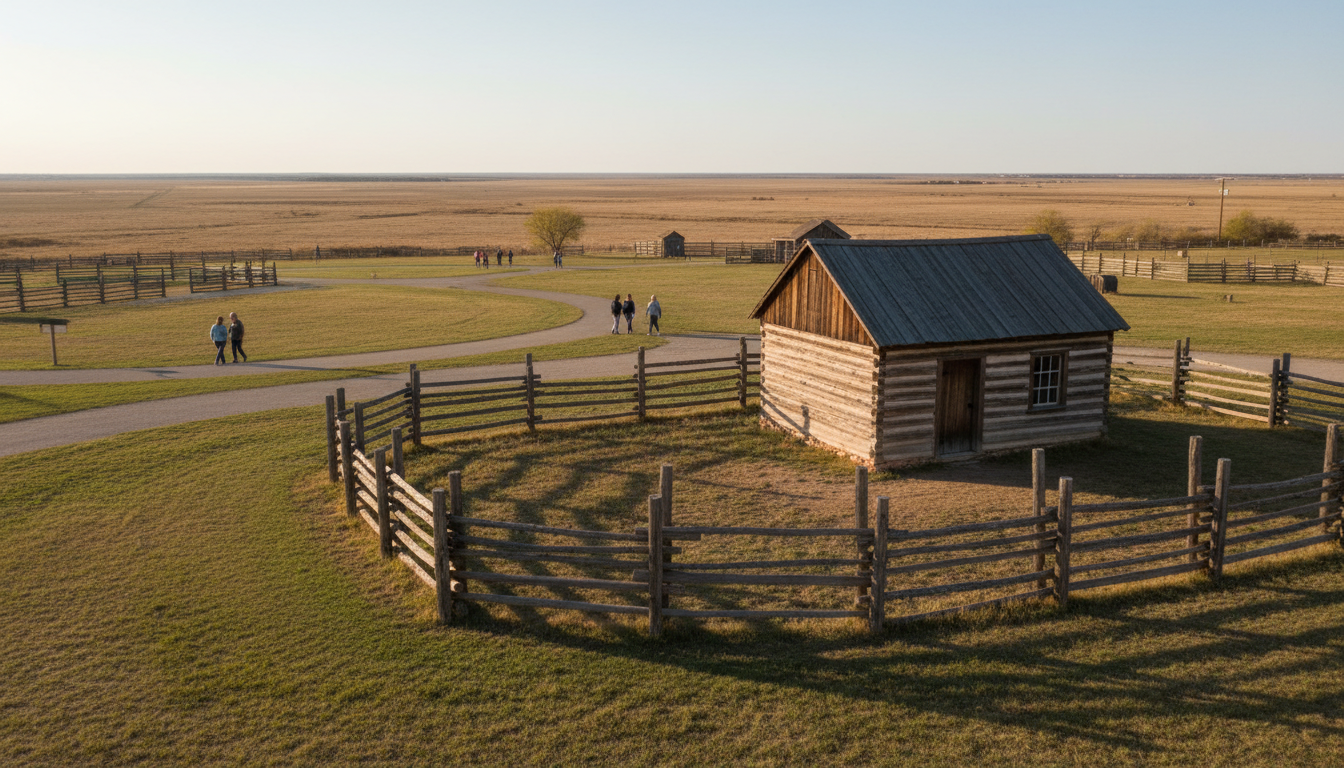
The Ranching Heritage Association lists the center at 3121 Fourth Street in Lubbock, with free admission and suggested donations. Its grounds cover roughly nineteen acres with more than two centuries of ranching history represented. This is an excellent destination for someone who wants an experience tied specifically to West Texas rather than a generic tourist attraction.
These buildings aren’t movie sets
The outdoor historical park features actual structures preserved and relocated to represent periods and practices in ranch life. Walking among them reveals how working spaces changed with available technology, transport and economic demands. Rather than treating each building as another photo stop, ask what problem its design was meant to solve. A simple cabin, a barn and a more complex ranch building carry different stories about labor and the movement of people and animals. The historical value comes from the structures and their interpretation, not from pretending the past was always picturesque.
Start with the question of work
Ranching is often reduced to a romantic image of a rider on horseback. In reality, successful ranch operations depended on water access, maintenance, food, transportation, recordkeeping and the work of many people. Examine structures with those practical questions in mind. How would supplies arrive? Where would people sleep? What could be repaired on site? These questions help visitors appreciate historic ranches as working communities rather than isolated scenes from western fiction. They also invite discussion of whose work traditional stories sometimes overlook.
The indoor exhibits complete the story
The center’s indoor museum provides cultural and historical interpretation that complements the outdoor buildings. It can be especially useful for people who want context before walking through the grounds or need a break from wind and sun. The Ranching Heritage Association also advertises experiences inspired by the Hank the Cowdog children’s series at its Cash Family Ranch Life Learning Center. Check current access and any special programming details before promising a particular activity. An indoor visit should help people understand the landscape rather than replace it with a string of disconnected facts.
Free admission changes the budget calculation
The current visitor page states that admission is free, with donations appreciated. That’s an appealing option for families already spending money on hotel rooms, game tickets or travel. It doesn’t mean you should race through the museum because the price is zero. The center relies on support and public interest, and visitors should treat its facilities respectfully. A small donation may be a meaningful way to help if the experience resonates, but it is voluntary. Spend your time learning rather than evaluating the visit purely by its ticket price.
Sunday opening hours are shorter than Saturday’s
The current official visitor page lists Monday–Saturday 10 a.m.–5 p.m., Sunday 1–5 p.m., and closure on Texas Tech holidays. The Texas Historical Commission also notes that the outdoor historical park may close at 4 p.m. on Sundays, so confirm the latest outdoor access rather than assuming both indoor and outdoor spaces run until 5. Don’t assume a seasonal living-history demonstration runs every weekend; the advertised 2026 Living History Saturdays program ended in September. If you’re visiting during October football season, plan for a self-guided historic outing unless a specific new event is confirmed.
An easy experience for mixed-age groups
One child may enjoy imagining how a ranch family lived, another may be interested in equipment and buildings, and an adult might prefer the wider historical context. Let each person choose a question or building to explore. Avoid making the visit an exhaustive history lesson. Pick a manageable route with breaks and talk about how ranch life differed from current life. Strollers and mobility aids may be accommodated on much of the property, but confirm specific routes and facilities ahead of time. A comfortable trip invites curiosity.
Why outdoor museums need weather preparation
Lubbock wind can change the feel of a walk among historic buildings. Wear shoes suitable for outdoor paths, bring water and consider layers for fall conditions. A pleasant morning may be followed by stronger wind or sun. The center notes that bad weather can affect outdoor access. If conditions turn poor, adapt to indoor exhibits or return another day rather than rushing through unstable conditions. The park is worth appreciating slowly, and photographs rarely show how the actual weather will feel.
What to photograph responsibly
Ranch structures, fences and open spaces are attractive photography subjects, but historic materials require care. Follow the museum’s photo policies and do not climb onto old equipment or enter roped-off areas. Some buildings may contain fragile surfaces or restored furnishings. If you’re sharing a photo online, identify it as a historic exhibit rather than suggesting an original ranch still operates exactly as it did in the nineteenth century. Accuracy makes the photograph more valuable as a cultural story.
The history is broader than cowboys
Ranching development intersected with Indigenous history, land use, environmental change, migration and evolving markets. Not all the consequences were simple or positive for every community. A strong visitor experience leaves room for those tensions rather than presenting the frontier as a story of unbroken progress. Ask what the exhibits reveal about workers, families and the people whose land or labor was affected by expansion. Historic interpretation can be engaging without abandoning nuance. That is one of the reasons this destination matters beyond school field trips.
Pairing history with homecoming
If your trip includes a Texas Tech football game, keep the historic center visit on a schedule that leaves plenty of time for parking, stadium access and meeting friends. An afternoon kickoff makes a short morning visit possible, but it doesn’t justify rushing through a major museum in twenty minutes. If the game is the centerpiece, choose a few exhibits. If ranching history is the centerpiece, visit on a different day and give it the attention it deserves. The weekend should serve your interests, not a list of obligations.
No full restaurant on site
The center’s visitor information states that full restaurant service is not available, although snacks and drinks may be sold at an on-site location. Plan meals elsewhere instead of assuming you can stop for lunch halfway through the historic park. It may be best to eat beforehand or visit a local Lubbock restaurant afterward. If the group includes children or anyone who needs regular meals, this detail matters more than the number of historic structures. A comfortable family is a more attentive family.
Why Lubbock residents should return
Museums like this can become repeat local outings when you change the focus. One visit might examine architecture. Another could be about tools and equipment, and a third could involve a special program or children’s activities. Free general admission makes those shorter visits more practical. The Lubbock & South Plains hub can help connect the museum with live music, sports and outdoor opportunities without requiring every activity on the same day.
The verdict
The National Ranching Heritage Center is an excellent way to understand West Texas outside the stadium. Go for authentic architecture, regional history and the questions those buildings raise about work and community. Admission is currently free, and the center is generally open on weekends, but verify holiday and outdoor access before traveling. Consult official visitor information rather than relying on older museum hours or assuming seasonal demonstrations continue in October. A region is more interesting when you understand how people lived in it.