
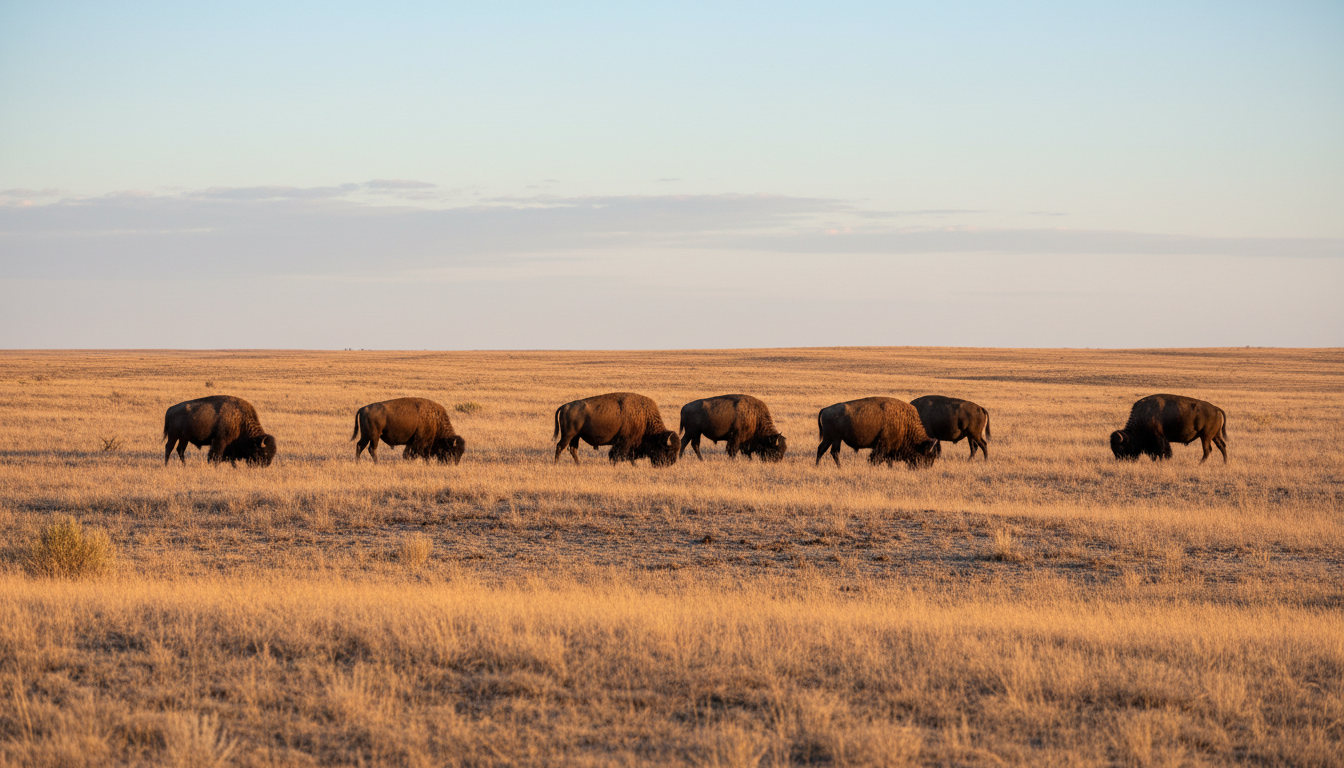
West Texas gives people plenty of reasons to keep their eyes on the horizon. The sky is enormous, the road can run straight for miles and the landscape reveals itself slowly. That makes it easy to overlook one of the area’s most interesting living history lessons: bison and longhorns grazing at San Angelo State Park. You do not need to turn the outing into a full-day safari to appreciate it.
Texas Parks and Wildlife lists a Bison & Longhorn Self-Guided Viewing program for Saturday, October 17, 2026, beginning at 9 a.m. Visitors can observe the animals at a designated wildlife viewing area, with rangers present to answer questions. The park lists admission at $4 for adults thirteen and older, free for children twelve and younger and for eligible Texas State Parks Pass holders.
The language ‘self-guided’ is important. This is an opportunity to observe living animals respectfully, not a promise of a staged encounter where everyone gets a close-up photograph on command.
Two animals that tell different Texas stories
Bison and Texas longhorn cattle are both iconic animals, but they should not be treated as interchangeable symbols. Bison are native North American grazers with a long ecological and cultural history. Longhorn cattle connect with the history of ranching, livestock movement and the way people transformed Texas landscapes. Seeing the two in the same outing offers a way to ask how an animal’s story becomes entwined with a state’s identity.
The obvious temptation is to begin with size. Bison can appear exceptionally powerful, especially around the shoulders and head. Longhorns draw attention through their remarkable horn spans and distinctive body shape. But form is only the starting point. Watch how they move, how they graze, and how they behave around one another.
These are large animals, and visitors should never mistake calm grazing for an invitation to approach, touch or feed them. Distance is not a disappointment. It is what makes wildlife viewing responsible and sustainable. Bring binoculars if you want to study details without invading the animals’ space.
A good question for a ranger is how the park manages its herds and interprets their histories. Do not invent answers before asking. Management practices and access rules belong to the park, and details can change.
What the Saturday program actually offers
The official description is concise: the viewing begins at 9 a.m., is self-guided, and has rangers on hand to answer questions. It does not promise a fixed ending time, close physical contact, feeding demonstrations or a narrated tour. Plan accordingly. If your group needs a very specific format or accessible location, call the park in advance.
The self-guided structure has real advantages. A family can pause to let a child ask an unexpected question. Someone with a camera can wait for a more interesting composition. An experienced outdoors person can look at the surrounding habitat instead of rushing from animal to animal. You can let curiosity decide how much time to spend.
What you should not do is treat the event like an amusement-park attraction with a guarantee that every individual animal will stand exactly where you want. Wildlife and livestock can move, conditions can change, and staff priorities include animal welfare. A good outing includes the possibility that viewing is different from the promotional image in your mind.
Arrive with a full water bottle and suitable walking shoes. Early morning is generally a sensible time to be outside in West Texas, but do not make assumptions about the temperature, wind or precipitation. Check that day’s conditions and ask about current site access if you have concerns.
A simple activity for curious children
Before you approach the viewing area, ask children to make three predictions. Which animal will have the broader-looking shoulders? Which will have horns that extend most noticeably sideways? Will the animals mostly stand, walk, or graze while you watch? Then have them compare those predictions with real observations.
The point isn’t to reward perfect guesses. It is to make children look carefully rather than glance and ask what comes next. A sketchbook can work better than a phone here. Drawing an outline encourages attention to head shape, body proportion and posture, even when the artistic result is charmingly inaccurate.
An older child can write a short field note describing one behavioral observation: a change of direction, a pause to graze, or how an animal responds to its surroundings. Keep the record descriptive. ‘The bison looked angry’ is less useful than noting the actual movement that led to that impression.
You can turn the exercise into a conversation about what animals need. Space, food, water and a habitat suited to their biology do not appear magically. Parks manage complicated environments while providing opportunities for public education. The viewing area makes that work visible enough to discuss.
For photographers: patience beats proximity
A telephoto lens is helpful when subjects need to be photographed from a respectful distance. A phone may produce a better wide landscape photo than a distant animal close-up. That’s fine. The point of an ethical wildlife photo is not to create the illusion that you stood a few feet away from something powerful.
Observe the light before taking pictures. Early morning can produce attractive contrast across the animals’ coats and surrounding grasses, but backlighting or clouds may change the look. Resist aggressive editing that makes the colors seem unreal or crops away all context. In a West Texas park, the landscape is part of the story.
Do not cross barriers, attempt to make animals look toward the camera, or use food to lure them. Avoid crowding other observers for the same sight line. If a ranger asks people to move or stop doing something, follow the instruction promptly.
A photograph that preserves a little distance and shows the animal as part of its environment will often age better than a forced close-up. That is a good editorial principle for anyone documenting outdoor Texas as well.
Why this works for experienced travelers too
A self-guided viewing might sound aimed at small children, but adults can use it as a jumping-off point for deeper questions about the region. How did bison shape prairie ecosystems? What does the story of longhorn cattle reveal about ranching economies? How do parks balance public encounters with animal needs? Those are subjects with more depth than a single morning can cover.
If you already know the basics, ask a ranger which local resources offer reliable historical or natural-history reading. Official interpretation is a better starting point than a social-media claim that collapses the complex history of Texas wildlife into a single romantic anecdote.
Consider the value of repetition, too. The park lists additional scheduled viewing dates later in October. Returning at a different time or with a different group could reveal new details without needing a brand-new attraction. A place becomes more meaningful when you learn to notice change, not only novelty.
For someone exploring the region for the first time, this is an easy addition to a weekend without turning the entire day into an endurance challenge. For locals, it is the kind of close-to-home experience that often goes overlooked because it doesn’t advertise itself with spectacular ticket packages.
Building a San Angelo day around the viewing
Start with the 9 a.m. program as your anchor and make the rest of the day optional. Afterward, consider a walk elsewhere in the park if conditions and available trails suit your group, or return toward town for a meal. You may decide that one strong experience is plenty for the morning.
Thunderfoot has covered the Fort Concho’s unusual history programming in other regions, and the same planning principle holds in the Concho Valley: separate confirmed event details from optional extra stops. The West Texas Event Schedule can help you look for more activities, but do not assume unrelated listings share the park’s hours or admission requirements.
If you’re bringing visitors from outside San Angelo, explain why the animals matter before arriving. The story helps make a quiet grazing scene meaningful. Adults who have spent long hours in traffic may especially appreciate an outing that does not require racing through a crowd.
The practical details and the safety line
The program is scheduled to begin at 9 a.m. Saturday, October 17, at San Angelo State Park. According to the official park calendar, admission is $4 for ages thirteen and up, free for children twelve and under and qualifying pass holders. Staff are expected to be present to answer questions during the self-guided experience. Contact the park for accessibility needs and updated entry guidance.
Large grazing animals should be observed only from approved public areas and at the distance park staff require. Never feed, pet, chase or attempt a close encounter. Teaching children that boundary is part of the event’s educational value, not a restriction that ruins the fun.
Visitors should also check the park’s active alerts, the forecast and any changes to the event posting before making a special drive. A scheduled calendar item is a useful plan, but the people operating the park have the latest information about access.
San Angelo does not need to manufacture a spectacle around these animals. The encounter is more powerful when everybody understands what they’re seeing and gives it room to remain real. One thoughtful morning can do more than another rushed day of sightseeing.