
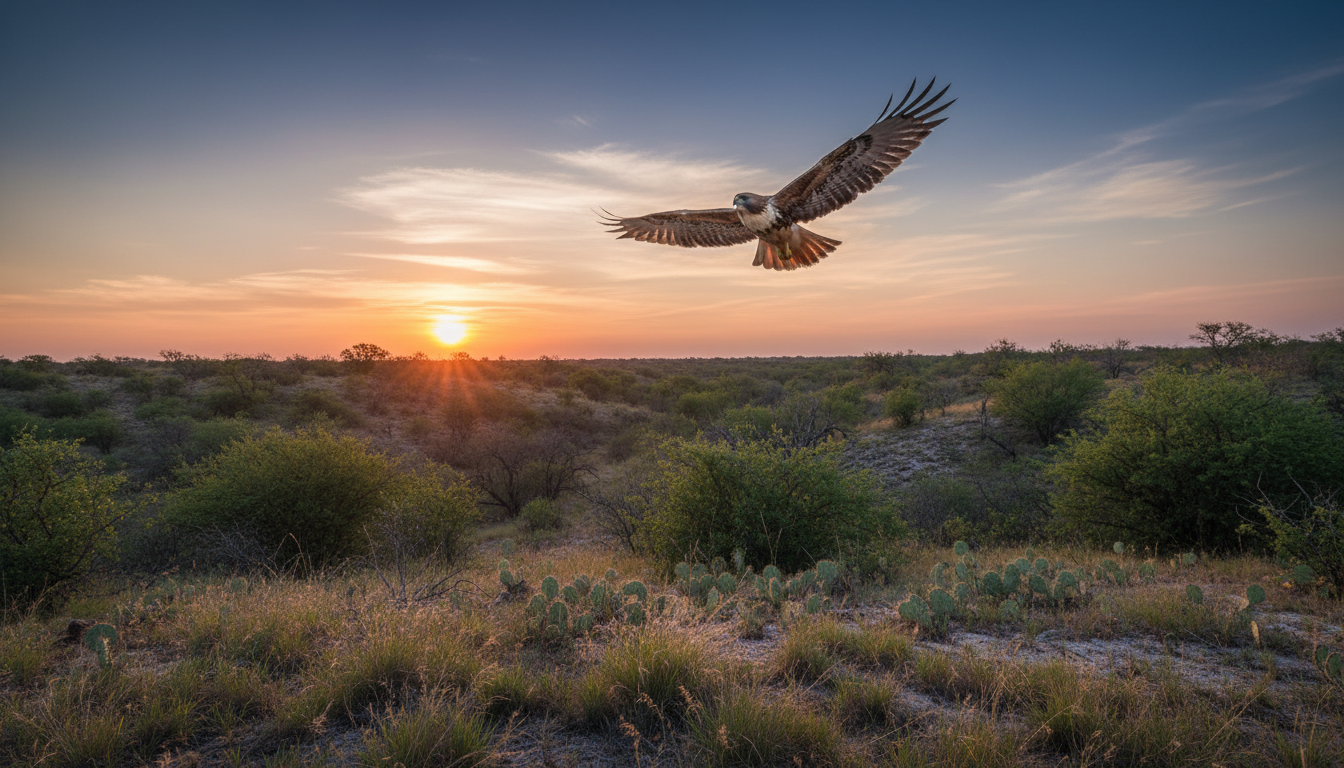
A hawk can cross the sky in a few seconds and disappear before most people decide whether to look up. That is part of what makes a hawk watch addictive. You are not walking toward an exhibit or waiting for a timed animal performance. You are making time to notice a migration that is happening whether anyone watches it or not. Saturday, October 17, offers South Texas readers a particularly approachable invitation.
The Texas Parks and Wildlife Hawk Watch listing shows a 9 to 11 a.m. session at Bentsen–Rio Grande Valley State Park. Participants meet at the Hawk Tower along the Rio Grande Trail, with shuttle service beginning at 9 a.m. Registration is not required, although shuttle space may be limited. The listing gives admission as $5 for adults, free for children twelve and younger, and free for applicable Texas State Parks Pass holders. Organizers recommend binoculars, sunscreen, a hat, water, and comfortable shoes.
That is enough information to get there. It doesn’t explain why this activity is worth a Saturday morning. For that, you have to understand what people are actually watching.
The difference between seeing a bird and seeing migration
A bird on a fence is a moment. A stream of birds moving over a landscape is a process. Raptors respond to weather, terrain, and opportunities to conserve energy. Some use rising warm air to gain height before gliding onward. Others follow routes that make long-distance travel more efficient. From a fixed observation point, a patient group can begin to recognize patterns that a single driver on a highway would never notice.
The exciting part is not necessarily an enormous flock. Some mornings are relatively quiet. On others, an observer may have to choose which patch of sky deserves attention. The value of a hawk count is the repeated, disciplined observation over time rather than a claim that any one visitor will see a particular species or number. Texas Parks and Wildlife notes that the count is associated with the Hawk Migration Association of North America, giving the experience a citizen-science connection beyond casual sightseeing.
There is a strong temptation to come home with a dramatic list of birds. Resist it. If your visit teaches you to separate a bird’s silhouette from the clouds and follow its flight long enough to notice how it travels, you have learned something useful. That is a better first-day achievement than copying names from the person standing beside you.
Where to start when every distant dot looks the same
Begin with the shape, not the color. Look at the relative width of the wings, the length of the tail, the way the bird holds its wings, and whether it flaps steadily, circles, or glides. Distance and changing light make colors less dependable than beginners expect. A dark bird against a bright sky can look almost featureless.
Next, learn to give useful directions. Instead of shouting, ‘There it is,’ try ‘above the tallest tree, moving left, fairly high.’ That lets someone else find the bird before it disappears. If an experienced observer offers a field mark, ask why it points toward one species rather than another. The reasoning matters more than the answer.
A good hawk watch also changes how you use binoculars. Locate a bird with your naked eyes first, then bring the binoculars up without looking down. Keep your elbows relaxed and scan deliberately. Constantly sweeping at maximum speed is a reliable way to miss what you were hoping to see. Give each view a moment to develop.
For children, skip the competitive identification game. Ask them to find three different flight patterns. For adults who have never spent an hour birding, set a goal of making one accurate field note. For accomplished birders, the challenge may be resisting the urge to move on after the first busy stretch. Migration often rewards patience more than impatience.
A practical two-hour plan
Arrive with time to understand the shuttle arrangement and park access. The official listing says the shuttle starts at 9 a.m. and space can be limited, so do not build your morning around arriving at the exact start and expecting an immediate transfer. If you need accessibility assistance or clarification about the route, contact the park before the outing.
Bring more water than you think a stationary activity requires. A hawk watch sounds less strenuous than a hike, but you may be outdoors and concentrating under South Texas sun. A broad-brimmed hat, sunscreen, sensible footwear, and a lightweight layer can all earn their place. Comfortable clothing beats a perfectly coordinated adventure outfit.
Use a small notebook or the notes app on your phone. Write down the time you arrived, the general sky conditions, and what you observed. You do not need specialized software to make the day memorable. If you photograph birds, remember that the best image may still look small on a phone. Consider capturing the wider habitat and the human scale of the experience instead of posting a severely enlarged blur.
Don’t turn the hawk tower into a place where people compete for the rail. Keep voices moderate when a guide is explaining, be considerate of shared equipment, and make room for new arrivals. A good public observation program is as much about welcoming curious visitors as it is about documenting the sky.
Why the Rio Grande Valley is a destination for this
The Rio Grande Valley is a place where habitats and geographic position make wildlife watching unusually compelling. Bentsen is part of a larger landscape known for birding, but visitors do not need a life list or a rare-bird obsession to enjoy it. The park offers a chance to encounter native thornscrub, the changing morning light, and people who have learned to pay attention to local wildlife.
The broader question is why certain places become repeat destinations. It isn’t always because they have a spectacular built attraction. Sometimes the landscape itself creates a reason to return in another season. A visit in October gives a different set of expectations than a visit in spring. Even the same hawk-watch tower can produce an experience shaped by weather and timing.
A useful conversation starter is asking a ranger or an experienced participant what changes through the migration season. Their observations may tell you more than a generic list of birds ever could. Remember that wildlife sightings remain unpredictable; no public calendar can promise a close flyover on demand.
Beginner, intermediate, and experienced birders can share this morning
A beginner should concentrate on learning two or three observation skills, not memorizing a book. Ask what the watchers are counting, how they distinguish a bird passing through from one circling locally, and how they avoid double-counting. Understanding the purpose of the exercise makes the entire activity more interesting.
An intermediate birder might keep a rough flight log and compare notes with the official counter if invited. Do not assume every bird is countable or make an identification sound more certain than it is. The discipline of uncertainty is part of serious wildlife observation, not an embarrassment.
An advanced birder may enjoy paying close attention to changes during the two-hour session. Are the birds moving higher as the morning develops? Are flights changing direction? What does the wind appear to be doing? Observe before speculating, and keep your personal field notes distinct from any official count protocol.
Families can build a small learning game around drawing wing shapes afterward. Children remember a migration more readily when they can explain the difference between circling and gliding in their own words. It is also a good reason to spend time outside without attaching a screen-based reward to every minute.
Make the rest of Saturday worth the trip
If the hawk watch is your headline, keep the rest of the itinerary flexible. A long drive followed by a strict list of attractions can make a peaceful morning feel like a logistical race. Consider lunch, an easy nature stop, or one cultural attraction within a comfortable travel range. Check hours and ticket requirements before building a route.
The South Texas Event Schedule can help identify what else is happening in the region. The Thunderfoot Attraction Finder is another starting point for a museum or family stop. Neither replaces official park instructions on shuttle availability or access, so keep your trip planning and your event verification separate.
If your party contains people with different interests, agree in advance that two hours at the tower is the main event rather than a surprise delay on the way to something else. Birding works best when it has permission to move slowly.
What to verify before leaving home
The scheduled session is Saturday, October 17, 2026, from 9 to 11 a.m. at Bentsen–Rio Grande Valley State Park. Meet at the Hawk Tower on the Rio Grande Trail; the shuttle begins at 9 a.m. According to the official listing, adults pay $5 for admission unless covered by a pass, and children twelve and under enter free. There is no separate registration, but shuttle capacity may limit convenience. Weather can also affect the program.
Consult the park’s events page before setting out. Then plan for the possibility that nature does not cooperate with your imagined photograph. A quiet sky isn’t an outing wasted. It might be the morning you learn the kind of patience that makes the next hawk unforgettable.