
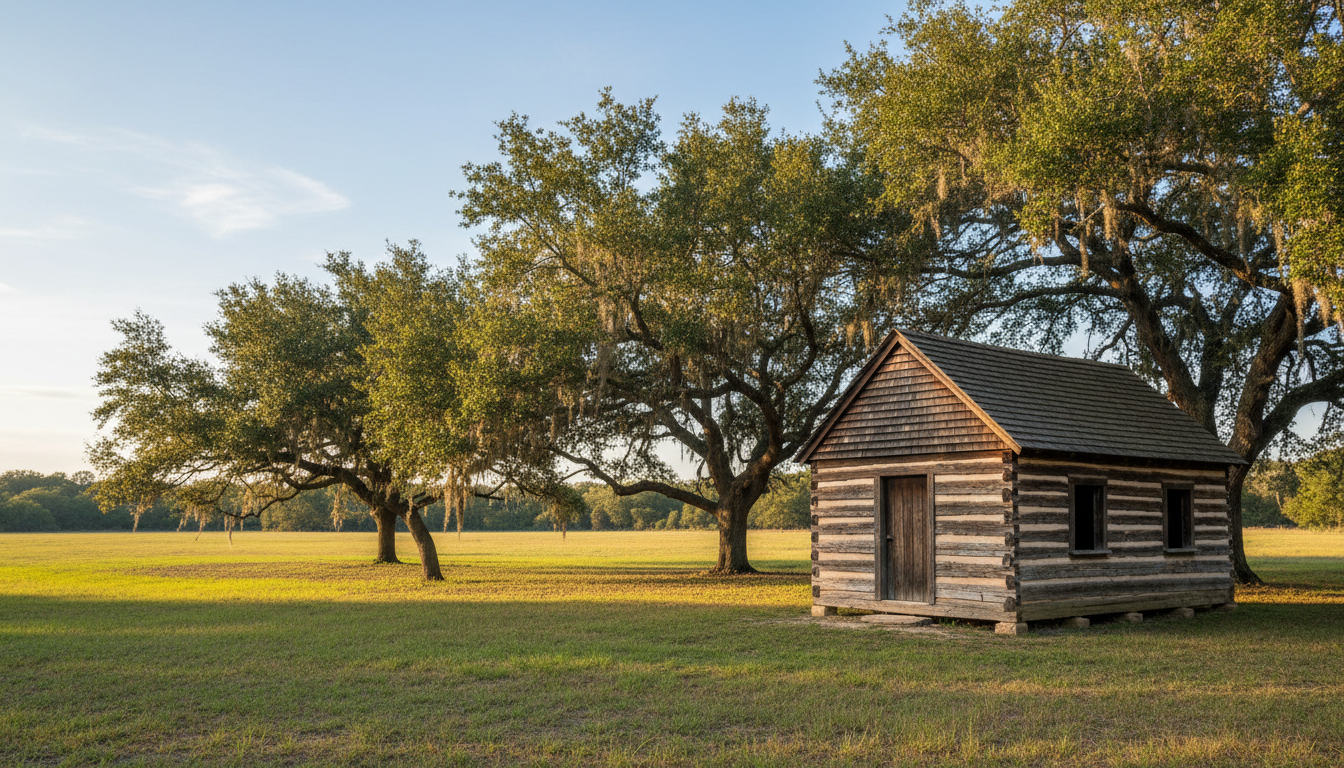
You’ve heard that Texas declared independence at Washington-on-the-Brazos. But what is there to see today—and is the newly renovated historic complex worth a full family visit? This guide goes beyond the famous date.
A place where a decision changed a country
Washington-on-the-Brazos is easy to reduce to one sentence: Texas declared independence here in 1836. But a visit becomes more interesting when you ask what that decision meant for the people who lived in the region and what followed. The site preserves a key chapter of the Texas Revolution, yet the story extends beyond a signature and a famous date. It includes competing visions of government, daily life in a changing society and the difficult realities of early Texas.
The Texas Historical Commission now operates the historic site as a complex with the Washington Townsite Experience, Star of the Republic Museum and Barrington Living History Farm. The experience is designed to connect a historically important place with the people and material culture of the era. It is a better reason to visit than simply saying you’ve stood near the spot where something famous happened.
Why the townsite matters
The convention that produced the Texas Declaration of Independence met in Washington in March 1836. The delegates were acting during a turbulent period, and the choices they made carried consequences beyond the building where they gathered. Standing on the grounds is an invitation to think about the difference between a political idea and the lives shaped by it.
An interpretive experience should make those questions accessible without pretending that every visitor arrives with detailed knowledge. Ask what the town was like when the convention met, how people communicated news, and why a riverside settlement became so consequential. Those are the kinds of details that help a teenager understand history as something that happened to real communities.
The newly renovated visitor experience
The Texas Historical Commission describes a major renovation of the site and museum, including an updated Star of the Republic Museum and a Washington Townsite Experience. These investments were intended to make the history more engaging and accessible. Check the current official website for which galleries and facilities are operating on your chosen date.
For a first visit, start with the visitor center. Understanding the layout and current programming before heading outdoors is especially helpful for groups with children or older adults. A short orientation saves time and helps everybody choose one part of the complex they genuinely want to explore.
The museum deserves more than a quick lap
A museum about the Republic of Texas should not be treated as a room full of objects that speak for themselves. Exhibits use artifacts and interpretation to raise questions about political institutions, communities and daily life. Take time to read how the objects connect to broader social and historical changes rather than rushing to photograph the largest display.
Visitors who enjoy deeper historical research can compare different stories presented in the galleries. Which voices are easy to find? What questions about the period remain contested or difficult? A good historical destination should help people think critically while preserving the physical evidence of the past.
Barrington Farm makes the scale human
Barrington Living History Farm gives visitors a different entry point: agricultural work and the rhythms of nineteenth-century life. The complex connects the home of Dr. Anson Jones, the final president of the Republic of Texas, with a living-history interpretation of everyday tasks. That can be more tangible for children than dates and political titles.
Ask what chores, equipment and farming practices reveal about labor and social relationships. A demonstration can show how much effort went into daily survival and production. It should also prompt visitors to think about the people whose labor is not always centered in traditional historical narratives.
Living history is interpretation, not time travel
Costumed interpreters and demonstrations can help a visitor imagine a place, but they are modern educational presentations. The events of 1836 aren’t being reenacted in perfect completeness. Ask staff where their knowledge comes from and what sources help them portray an activity accurately.
This attitude makes the experience richer. You can appreciate craftsmanship and storytelling while recognizing that real history includes disagreement, hardship and incomplete records. The most memorable question may be the one an interpreter encourages you to investigate after you leave.
The hours aren’t uniform across the complex
Current official visitor information lists ticketed experiences Wednesday through Sunday, with museum, townsite and farm hours differing somewhat. The visitor center and grounds have additional Monday and Tuesday access arrangements, but the museum and living-history facilities are not necessarily open on those days. That is the most important detail to check before promising the full experience to your family.
According to the current Texas Historical Commission listing, general visitor-center and grounds hours run from 9:30 a.m. to 5 p.m., with ticketed attractions operating on specified days. Don’t infer that every attraction remains open until the outer grounds close. Confirm the official schedule before traveling.
Plan for actual ticket costs
The official listing currently provides several admission categories, including an adult price, discounted qualifying categories, child admission and a family option. Read what each ticket includes rather than choosing solely by the cheapest apparent number. Group size and children’s ages can affect the best value.
If you’re planning for a school group or extended family, contact the site in advance about tours and accessibility. Programs may be available beyond the everyday ticket offerings, but they require coordination. A thoughtful visit starts with matching the ticket and schedule to the experience you want.
The family version
With young children, choose one museum or interpretive section and a focused outdoor stop. Let the children ask what people ate, how they traveled and what daily life looked like. Give them breaks and allow time to move. A history site can be absorbing without demanding that everybody read every panel.
Teenagers can tackle a larger question: what makes a declaration of independence meaningful, and what happens after a political decision is announced? Encourage them to look for evidence in the exhibits rather than accepting a simplified story. That makes the outing both educational and personal.
For the local visitor who has been here before
Revisiting after a renovation can be worthwhile even if you toured the site years ago. New exhibits and interpretation may change the emphasis and provide different entry points. Consider spending most of the visit in the section you previously rushed. Look for updates to gallery maps, educational programs or special events.
The surrounding Brazos Valley has its own communities and outdoor experiences, so the historic site can become an anchor rather than an isolated stop. Don’t automatically add an exhausting series of unrelated destinations. A relaxed local meal after a museum visit may be plenty.
Accessibility and comfort
The complex has visitor resources, and the Texas Historical Commission notes gallery and sensory-support options in its updated museum materials. For specific mobility, sensory or group needs, contact staff before visiting. Historic settings can include varied surfaces, so check the practical route between attractions instead of relying on generic accessibility labels.
Carry drinking water for outdoor portions and choose weather-appropriate footwear. A midday outdoor tour can feel different from a climate-controlled gallery. The most enjoyable itinerary alternates between them as needed rather than making everyone endure the same pace.
What to take away
Washington-on-the-Brazos isn’t valuable simply because a monument marks an important date. The experience becomes worthwhile when visitors consider decisions, people and material conditions together. A good historical site leaves you with questions about how the past shaped the region you travel through today.
Use the official site for hours and tickets, then explore Thunderfoot’s Brazos Valley area page for other local activities. Let the history be the main reason you came, not a rushed photo on the way somewhere else.
Official visitor details
Check the Texas Historical Commission’s official hours and ticket information and the Brazos Valley area page for nearby opportunities. Museum hours, programming and access can change.