
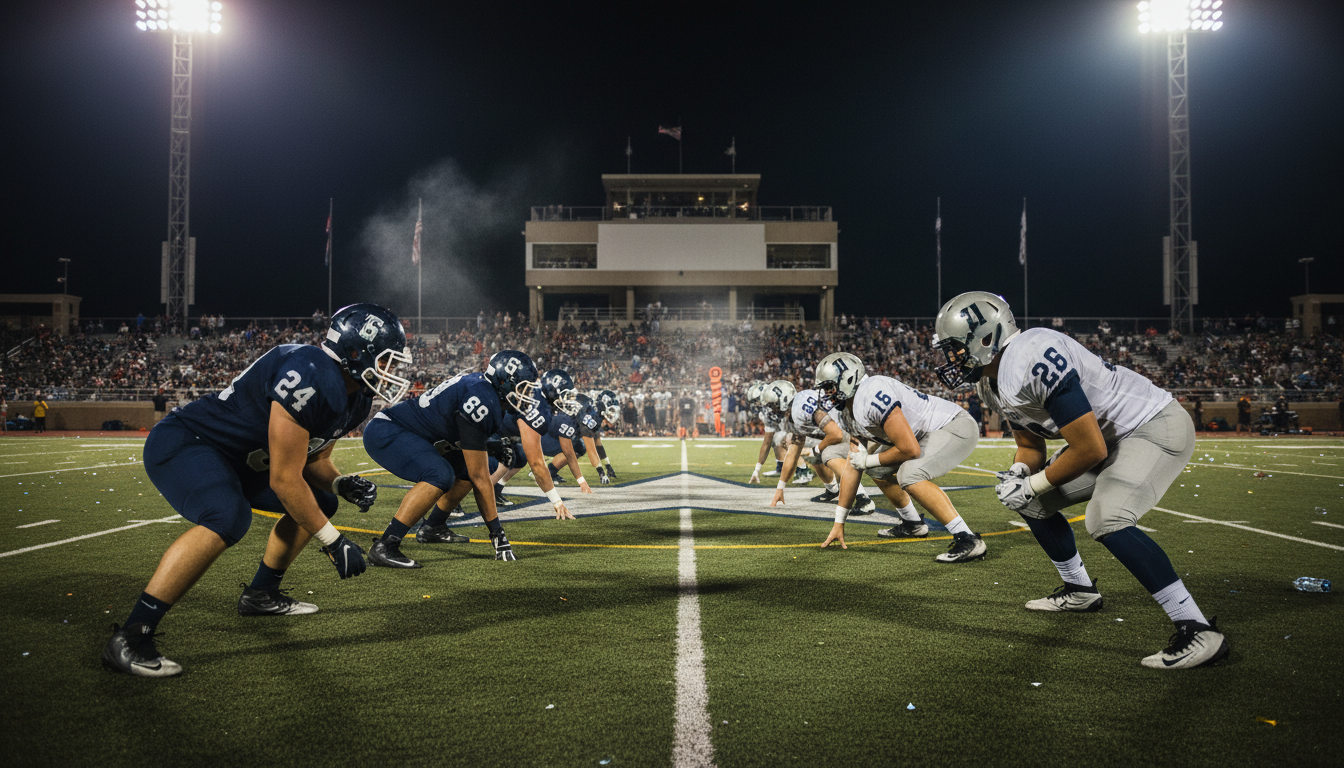
Houston high school football has reached the part of October when one point and one special-teams mistake can matter as much as a giant blowout. North Shore, Atascocita and Katy gave fans very different reasons to pay attention last week.
A one-point win can teach more than a blowout
Houston-area high school football had plenty of remarkable Week Seven scores, but the result that should change how people watch the next month may be North Shore’s 28–27 win over Summer Creek. Close games put pressure on every phase: how a team handles an early mistake, whether its quarterback creates a play when the first option is covered, and which unit can get one more stop. In October, those details are more informative than a stylish final score.
North Shore entered this part of the season as one of Texas’ highest-ranked teams, and the narrow victory kept the conversation alive. The useful question for fans isn’t simply whether the team ‘looked vulnerable.’ It’s which parts of the opponent’s approach created problems and whether other teams can reproduce them. A close game supplies evidence, not a verdict.
The quarterback who changes the geometry
Reports of the game credit North Shore quarterback Ja’Voris Taylor with significant production both passing and rushing. A quarterback who can escape pressure and convert broken plays changes a defense’s geometry. A linebacker who would normally attack a running back may need to account for an additional ball carrier. Defensive backs can be forced to cover receivers longer than expected.
Watch how opponents react. Do they keep a defender near the line of scrimmage to discourage quarterback runs? Does that open another passing option? A mobile quarterback is not automatically unstoppable. But understanding those tradeoffs makes the game far more interesting than counting yards.
Atascocita’s big number requires context
Atascocita’s 70–0 win over Channelview drew attention, and reporting highlighted eight touchdown passes by quarterback Corbin Smejkal. That is a dramatic individual statistical line. Yet a lopsided game doesn’t by itself tell a reader how the offense will perform when its quarterback faces relentless pressure or its receivers are challenged throughout the night.
This is where sports coverage should add depth. How often were receivers winning early in the route? Did turnovers or field position create short fields? Did protection hold consistently? Without film review and opponent context, a giant score is best treated as a noteworthy performance rather than a guarantee about the next matchup.
A defense can deserve as much attention as an offense
Katy remains a major part of the region’s football conversation, and its defender David Olotu-Judah has been reported among the area’s interception leaders. Turnovers are fascinating because they can come from different skills: anticipation, disciplined coverage, a well-disguised look or a hurried throw caused by pressure elsewhere.
Don’t assume every interception is simply a defensive back making a spectacular catch. Watch what happened before the ball arrived. Did a pass rusher disrupt timing? Did a defender bait a quarterback into throwing into a narrow window? Those details explain which plays may be repeatable against stronger opponents.
The overlooked middle of the standings
An area full of elite programs also contains less celebrated district races. By October, some teams are battling for a fourth qualifying spot rather than a headline ranking. Those games can be especially tense for local families because a single mistake may change the path to November.
UIL’s current 2026 calendar lists district certification for November 7 and playoff games beginning November 12. Fans should check each school’s actual district standing and tiebreaker rules before claiming a game is an elimination contest. A good preview separates likely stakes from mathematical certainty.
Friday night strategy: watch the line
It’s tempting to follow the ball exclusively. Instead, watch how offensive linemen handle twists, run-blocking angles and defenders crossing their faces. A running back who looks unusually quick may also be benefiting from a perfect crease. A quarterback who appears to hesitate may be responding to coverage or immediate pressure.
The first ten offensive snaps often reveal a plan. Is a team attacking one side of the line? Is it using motion to identify coverage? Does the defense react by changing personnel or alignment? You don’t need a coaching headset to notice the chess match if you take your eyes off the ball for a few plays.
Third down is the pressure point
A team’s third-down performance is often a clearer indicator of control than a single long touchdown. When an offense needs six yards, watch whether it has a trustworthy short route or must rely on its quarterback extending the play. On defense, observe whether pressure comes from the front four or requires extra rushers.
A team that regularly forces third-and-long can make a talented offense uncomfortable. On the other side, a quarterback who repeatedly converts third down can keep an opponent’s defense exhausted. This is one of the easiest things to teach a new fan because every conversion has an immediate consequence.
Don’t dismiss special teams
High school teams vary in kicking range, punt consistency and return coverage. A coach may choose to go for fourth-and-medium in a situation where a professional team would attempt a field goal. That decision may reflect actual personnel and field position rather than reckless aggression.
Watch the starting field position after each kick and the team’s behavior near midfield. A blocked punt or poor return decision can undo several strong defensive possessions. In an evenly matched October game, those overlooked plays are sometimes the difference between winning a district contest and needing help from other results.
When should you trust the rankings?
Rankings are useful for identifying programs to follow, and the October 12 statewide list has North Shore near the top of Class 6A. But a ranking is a synthesis of results, strength of schedule and editorial judgment. It is not a live probability that tells you what will happen on Friday.
Pair rankings with the actual schedule. A slightly lower-ranked team with a favorable matchup and a healthy roster can challenge a favorite. Conversely, a highly ranked team may have learned useful lessons from a narrow victory. The most interesting story is how teams respond, not merely whether their number changes.
A first-time Friday-night plan
Use Thunderfoot’s school sports schedules to find a game near your town and check official ticketing details. Local stadium rules vary. Plan for parking, seating areas, weather and whether the school restricts bags or outside food. Arrive before kickoff if you want the band, student section and community atmosphere rather than only the fourth-quarter score.
If you’re attending with children, explain the basics without turning the outing into a lecture. Find the home and visiting seating areas and respect both groups. These are students, not paid entertainers. Supporting a local program should be fun and generous, even when the score disappoints.
What to watch over the next three weeks
Choose one program with elite expectations, one rising contender and one district race you haven’t followed. Track how their results develop through late October and early November. When you read a dramatic score, ask what drove it. When you see a close game, ask which adjustments mattered. That’s how the story becomes richer than the ranking table.
Houston football offers an extraordinary range of competitions. The same weekend can produce an eight-touchdown passing performance and a one-point battle for survival. Both deserve analysis, but for different reasons.
The best takeaway
Week Seven delivered reminders that outstanding talent doesn’t eliminate uncertainty. North Shore had to win a close game. Atascocita produced extraordinary offense. Katy continued generating defensive storylines. As the district season tightens, fans can appreciate these performances without pretending any one result settles the playoffs.
Use confirmed school schedules and district standings to choose your next live game. A little context turns a Friday in the bleachers into something far more engaging than checking a final score afterward.
Official schedules and context
Check the UIL 2026 football calendar and East Texas regional guides for local schedule planning. Matchups, kickoff times and ticketing should always be confirmed through the schools.