
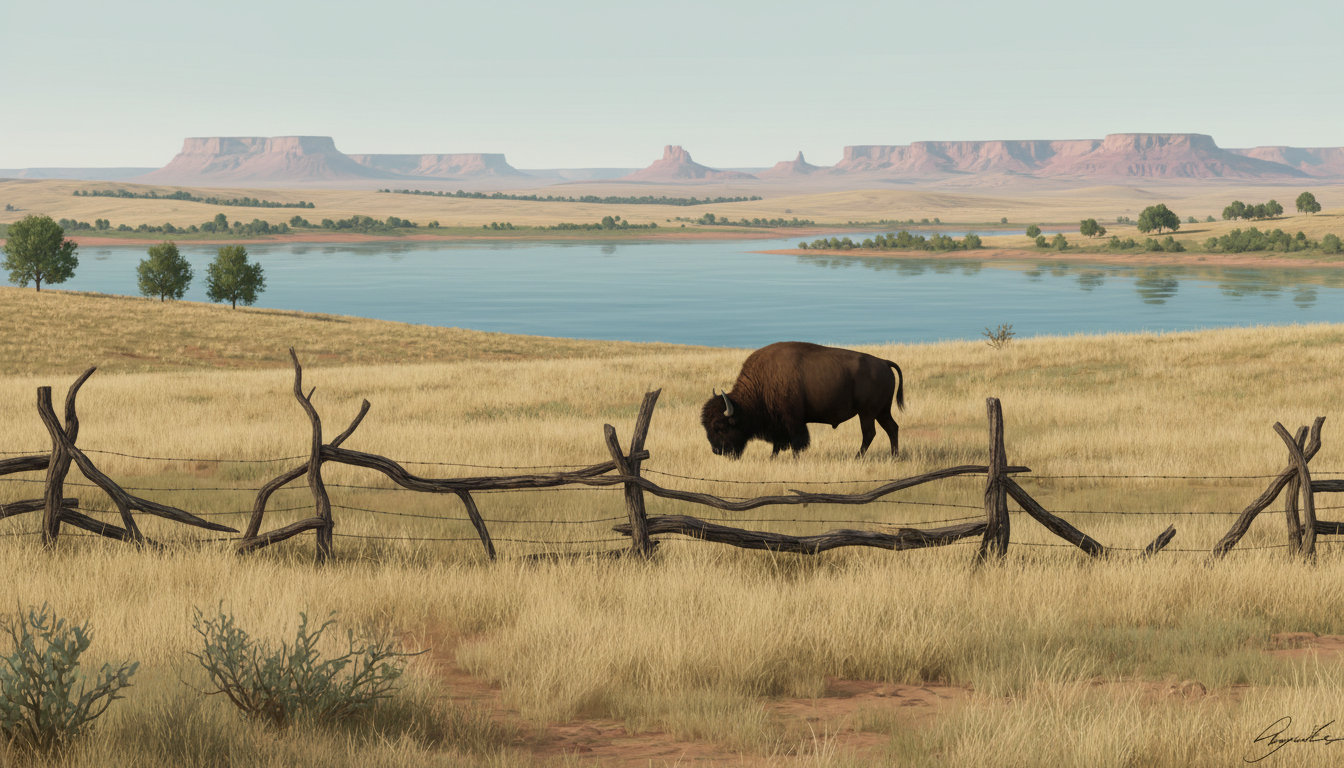
Want bison, fossil tracks and a proper outdoor outing without leaving San Angelo? This is a park with three different stories packed into one landscape—and none requires pretending you’re on a wilderness expedition.
The state park that refuses to fit one category
San Angelo State Park has a peculiar advantage over destinations built around one big viewpoint: a visitor can come for wildlife, geology, horseback riding, hiking or fishing and have a genuinely different day each time. Set near O.C. Fisher Reservoir and the Concho River, it preserves a landscape where natural history and Texas history meet. That makes it one of those places where children and adults may arrive with entirely different interests and still find a shared adventure. The first task is not deciding how to see everything; it is agreeing on the story you want the outing to tell.
For a first visit, choose one primary experience and one easy extra. A family intrigued by fossils should start with that interest, leave time for the bison and longhorn viewing areas, and avoid a long trek during the hottest part of the afternoon. Mountain bikers and serious hikers will need an entirely different itinerary. Knowing the difference between those outings is what turns a nice park into a place you’ll want to revisit.
Fossil tracks from before the dinosaurs
The park’s two-mile Dinosaur Trail sounds as though it was named purely to entertain children, but the science is more surprising. Texas Parks and Wildlife describes fossilized trackways of ancient animals from the Permian Period, before dinosaurs appeared. Imagine the changes required for soft impressions to become preserved evidence that people can still study today. The tracks connect this part of West Texas to a world very unlike the dry terrain visitors see now.
Give children a question to answer on the walk: what might the trackmaker have been doing, and what evidence would scientists need to know? Don’t insist on an elaborate explanation before the visit. Curiosity is the point. Protect the resource by staying on allowed routes and leaving fossils and other historic material exactly where you find them. The unusual thing about this trail isn’t the mileage; it’s the astonishing amount of time represented by the ground underfoot.
Bison and longhorns without the theme-park treatment
The bison and longhorn paddocks add another dimension. Here, animals that loom large in Texas history become more than logos on roadside signs. Stop at approved viewing areas, read the interpretation and observe from a safe distance. These are powerful animals, not props for a photograph. If you’re bringing a child, explain beforehand why nobody will be approaching or feeding them.
A good viewing session might involve several quiet minutes rather than an instant spectacle. Notice how the animals move and interact. Bring binoculars if possible, and do not crowd fences or ignore staff instructions to improve a picture. The reward is a chance to encounter living history responsibly. Any visit is subject to animal visibility and operational conditions, so don’t promise a guaranteed close-up encounter.
The park’s fifty miles are not one family hike
Texas Parks and Wildlife describes roughly fifty miles of multiuse trails between the park’s North and South units. That doesn’t mean the average visitor should try to tackle a significant fraction of them. Routes vary in distance and exposure, and they can be shared by walkers, mountain bikers and equestrians. A two-mile walk in bright sun can demand more energy than expected.
For a casual outing, choose a modest route with a clear turnaround. Carry a map, water and sun protection, and check trail conditions at the park before heading out. For longer adventures, think carefully about route length, surface conditions and the time required to return. Bikers should manage their speed around walkers and horses; hikers should remain alert rather than occupying the whole path. The best multiuse trail etiquette is the kind nobody has to argue about.
The horseback riding angle
Horse owners will see a destination with possibilities beyond the arena, but that doesn’t make it a casual outing. The park permits horseback riding on designated trails and requires riders to bring their own horses. Contact staff about current trail access, trailer parking, any animal health paperwork, water arrangements and whether particular routes are suitable for your horse’s fitness.
A horse that works comfortably on level footing may need to build endurance for a longer outing over varied terrain. Allow time for breaks and pay attention to heat. Be considerate around other riders and bicycles. There’s no prize for covering an extra mile if horse or rider is uncomfortable on the way back. Plan the route around a successful return, not a dramatic social-media photograph.
Reservoir plans need a reality check
The park also offers boating, fishing and paddling opportunities connected to O.C. Fisher Reservoir and the river. Before making water activities the headline of your trip, confirm current water levels, launches, access, park rules and weather. Reservoir shorelines can change dramatically as conditions vary, so a picture from a previous season may not reflect what you’ll find.
Anglers should confirm regulations for their exact spot, and paddlers should use appropriate life jackets and assess wind. A wide reservoir can become uncomfortable much more quickly than a protected pond. If water conditions don’t cooperate, wildlife viewing or an interpretive walk gives you a solid alternate activity. A trip isn’t wasted simply because one part of the park needs to be skipped.
An easy plan for children
Build a child-friendly morning around two distinct experiences: the fossil story and wildlife viewing. Start while everyone has energy, give each child a role such as spotting a track or reading a sign, and take frequent breaks. Pack enough water, snacks and sun protection that you can respond to a slow pace without getting irritated. Keep a simple picnic option in reserve.
After the main attraction, ask whether the group wants to continue. Children tend to remember the fascinating discovery, not how many stops were checked off. If the group is done, leave. A successful short visit becomes the foundation of a more adventurous trip later. Trying to stretch a good morning into an exhausting afternoon can have the opposite effect.
For intermediate and advanced visitors
Experienced hikers and cyclists can make the route itself the focus, but preparation should increase with ambition. Review the official trail maps and select a route that matches skill, daylight and temperature. Share the plan with somebody who isn’t joining the outing. Carry more water than you think you’ll need, and allow extra time for navigation and changing conditions.
Advanced visitors might also choose to explore the park’s ecological transitions or photograph wildlife from designated locations. Expertise isn’t always measured by a bigger physical challenge. The person who notices subtle animal behavior or understands the ancient trackways may discover more than somebody racing to cover the most miles.
How to make the trip work with San Angelo
Plan the park as the anchor of your day, not as a short stop between too many unrelated attractions. If you want to see downtown San Angelo or another cultural site, check its operating hours and choose a single companion experience. That gives you room to eat locally and actually enjoy the city. A hurried five-stop itinerary rarely reveals why a place matters.
Visitors staying overnight can consider camping where available and use the cooler parts of the day for outdoor activities. Confirm reservations and facility details before leaving. Whether you’re local or visiting from another part of Texas, the goal is to discover why the Concho Valley deserves more attention than a glance from the highway.
Practical questions before departure
Know which park entrance and trailhead you intend to use, and download the current map. Check park alerts, weather, heat conditions and any reservation requirements directly with Texas Parks and Wildlife. If a particular interpretive activity, guided program or facility is important, verify that it is operating rather than relying on an old schedule.
There is no need to pretend the park delivers the same experience to every visitor. Wildlife sightings vary; water conditions change; trails can be affected by weather. That variety is part of its character. If you arrive with a sensible plan and leave curious about something you didn’t manage to see, you’ve discovered the best reason to return.
Plan your San Angelo visit
Find current conditions at Texas Parks and Wildlife’s San Angelo State Park page and discover other things nearby on the San Angelo & Concho Valley area page. Check availability, alerts and specific activities before driving.