
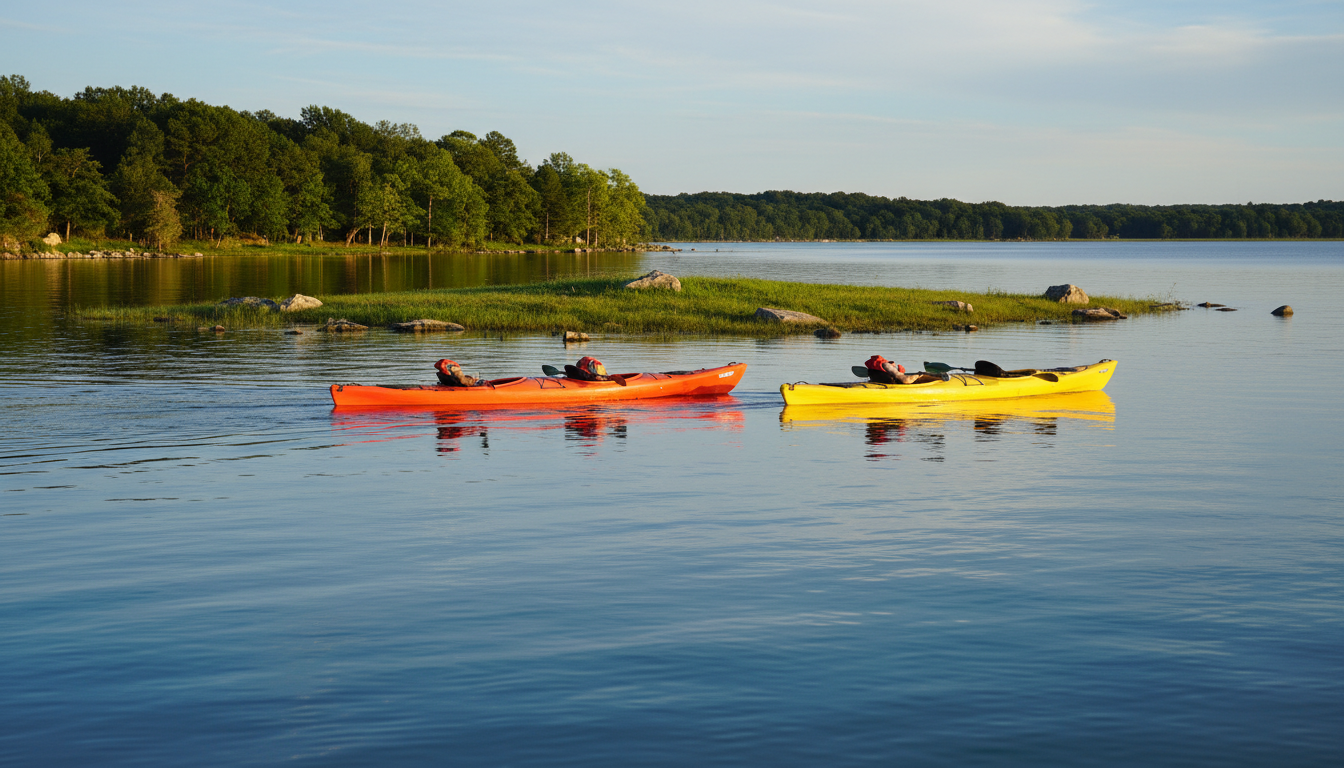
Lake Texoma looks completely different from a kayak. The islands stop being scenery and become a destination. The shore feels a lot farther away, and the wind suddenly matters more than anything else. A guided island paddle on Saturday, October 17, is a great way to see the lake without owning a boat. Before you sign up, though, there are a few questions worth asking.
The trip
Adventure Paddles is running its Treasure Island paddle out of Highport Marina, 120 Texoma Harbor Drive in Pottsboro, according to the Texoma Connect event listing:
- Time: Meet at 9 a.m., launch at 10. The outing wraps around 1 p.m.
- Craft: Kayaks, canoes or paddleboards
- Level: Listed as “newbie to novice”
- Ages: 15 and up
- Lunch: Catered sandwiches, fruit and ice water on the island
- Rentals: Paddleboards and kayaks for $35 or $55 a day
- Marina fee: Highport charges $10 to launch from the ramp
You have to sign up in advance through the Adventure Paddles ticket page. Questions can go by text to 469-806-7400.
How far is it, really?
Here’s where it gets fuzzy. The same listing describes the route three different ways: an easy 1-mile paddle to the islands, 3 miles round trip, and a total length of 2 miles through the marina and back. Those can’t all be right.
If you’re confident on the water, it might not matter. If you’re new, or bringing someone who is, text the organizer and ask for the actual round-trip distance and roughly how much of the four hours is spent paddling versus on the island.
Distance isn’t the whole story
On a big lake, the wind matters more than the mileage. An easy paddle out can turn into a grind coming back if the wind picks up in the afternoon. The listing itself mentions 100-foot depths and “some pitch and yaw,” so expect a little chop. This isn’t a sheltered cove.
Questions worth asking before you book:
- What wind or wave conditions cancel or shorten the trip?
- Does the route cross open water or boat traffic?
- Can a tired paddler turn back early with a guide?
- What’s the refund policy if the weather doesn’t cooperate?
Tell the guides if you’re new. A good outfitter will be glad you asked. If the answers leave you uneasy, there’s no shame in picking a calmer first trip.
Kayak, canoe or paddleboard?
Kayak: You’re sitting down, which feels more stable to most beginners.
Canoe: Room for gear and a partner, but you’ll need to paddle in sync.
Paddleboard: The best view on the water, but standing gets tiring fast when there’s wind and chop. Ask if it’s OK to kneel or sit when you need a break.
Pick the one you can control comfortably for a few hours, not the one that looks coolest in photos. If you’re bringing your own boat, confirm it’s welcome on the trip.
What to bring
- A life jacket that fits. Wear it, and adjust it before you launch.
- Water shoes. The listing calls the launch ramp rocky.
- Sun gear. The organizer suggests a wide-brimmed hat, sunscreen and sunglasses.
- A dry bag for your phone and keys.
- Snorkel gear, if you want it. The organizer says the water around the island is clear for several feet.
- Dry clothes waiting in the car.
Lunch and water are provided, but let the organizer know about any dietary needs ahead of time.
The day before
Confirm the trip is still on, ask exactly where the group meets (Highport is a big place), and check the wind forecast for Texoma itself, not the whole North Texas region. On the water, the guide’s call on conditions beats any forecast or ad copy.
Texoma is a lot more than a fishing lake. Check our Texoma & Red River page, the North Texas Event Planner and the Lake Texoma Fishing Map for more ways to spend a day out there.
The route matters more than the name
Treasure Island sounds like a destination from a storybook, but an open-water outing is shaped by practical conditions. Ask the operator about the actual launch point, approximate distance, expected time on the water and whether the group will stop on shore. The itinerary may change based on weather, wind or water levels. A paddler planning around a fixed distance without confirmation is preparing for an imaginary trip, not the one the guide will lead.
The most useful question for the operator is not simply whether beginners are welcome. Ask what a participant should already be comfortable doing: paddling continuously for a certain period, managing small waves, getting into and out of a kayak or following instructions in a group. If you are bringing a teenager or a first-time paddler, explain their actual experience honestly. That gives the organizer a better chance to advise you.
Why wind changes everything
On a large lake, wind can turn a manageable outing into hard work. A kayak sits low on the water and makes you aware of every headwind, while a paddleboard exposes the paddler differently to waves and gusts. Weather conditions at your driveway do not tell you what conditions will feel like on open water. Check the latest forecast, but follow the operator’s final go-or-no-go decision on the day.
Water safety is not a formality. Wear a properly fitted, appropriate personal flotation device, secure your valuables, keep a whistle or other required signaling device accessible and follow the guide’s instructions. Never assume being part of a group eliminates the need to understand your own limits. If you are uncomfortable swimming or getting back into a craft after a capsize, discuss that before booking.
What to pack without overpacking
Use a small dry bag for items that truly need to stay dry: identification, a phone, essential medication and a lightweight extra layer when appropriate. Pack water and sun protection, and wear clothing you would be comfortable getting wet. Footwear should stay on and protect your feet at the launch and any landing spot. Loose objects in an open boat have a talent for disappearing at exactly the wrong moment.
Ask whether equipment, paddles and life jackets are included in the reservation. Check the organizer’s rules on bringing your own craft and whether there is storage for belongings left behind. If you wear glasses, use a retainer strap. If you carry your phone for photographs, consider a secure waterproof case, but keep photography secondary to balancing and paddling safely.
The social side of a guided paddle
One of the underrated advantages of a guided outing is the chance to learn from other paddlers. Listen to how the guide reads the water and how experienced participants adjust their strokes, pace and spacing. You do not need to match the strongest person in the group. The best guided excursion is one where everybody can follow the plan and enjoy the landscape together.
For couples or friends, agree in advance that this is not a race. A quicker paddler may need to slow down; a beginner may need to ask for a break. Respect wildlife, keep noise reasonable near shore and carry out everything you bring. Islands can feel remote without actually being immune to litter or disturbance.
A plan for the day before
Recheck the booking email, launch instructions, arrival time, cancellation policy and weather notices. Identify exactly where to park instead of navigating only to a broad lake destination. Eat beforehand and leave extra time for changing clothes or signing forms. If the operator has not clarified a key safety detail, ask before the morning of the trip.
A good outcome is not measured by whether you reached an island no matter what. Sometimes wind or storms require a changed route or cancellation. Responsible operators make those decisions for a reason. Choosing a safer day is part of enjoying the lake, not a failure to complete an adventure.
Thunderfoot research note: Event details come from a third-party calendar. Confirm the route, prices and conditions directly with Adventure Paddles before you go. The image with this story is an illustration and isn’t from the actual outing.