
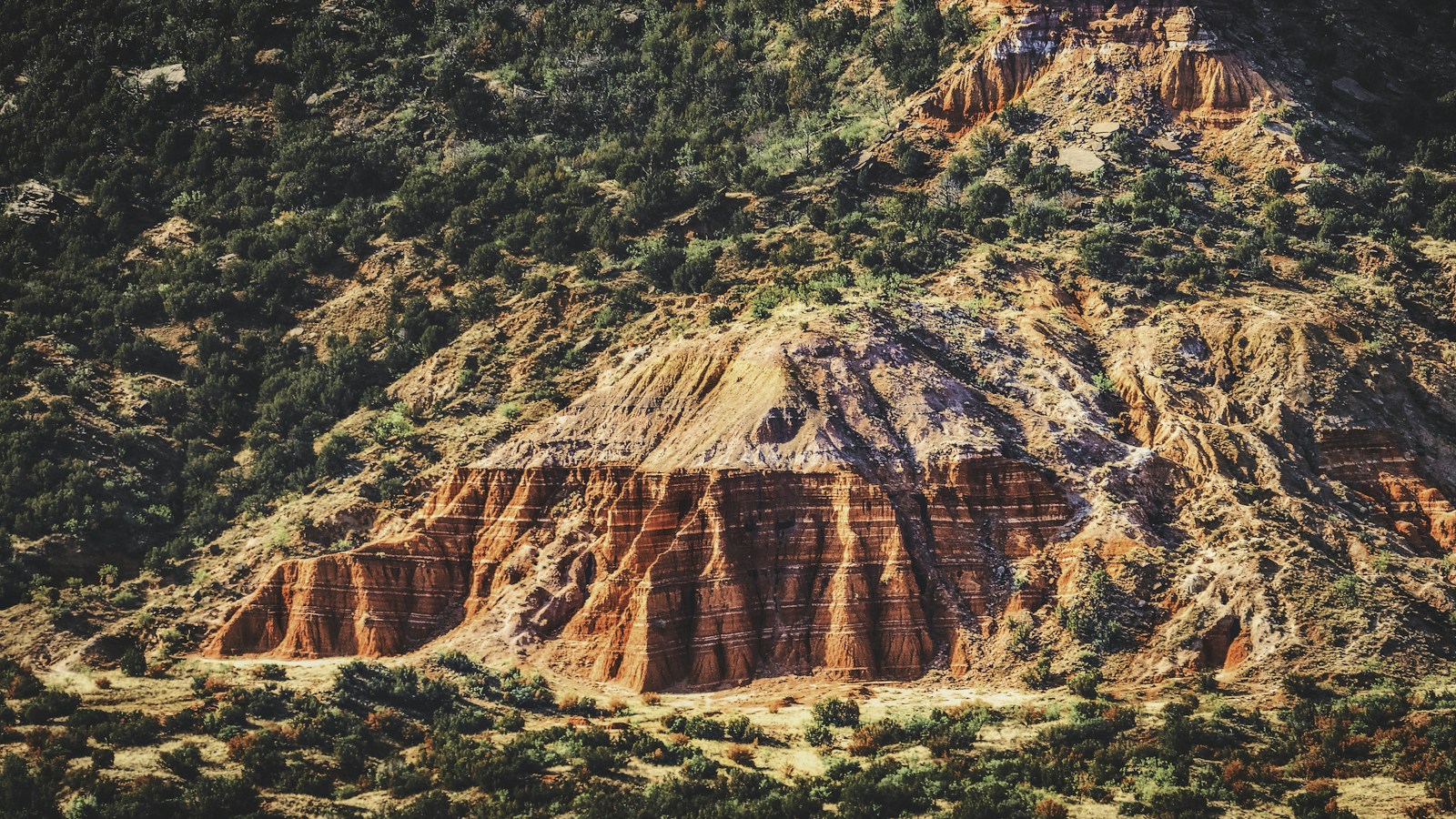
Thunderfoot Sports • October 11, 2026. A marathoner can train diligently for months and still be surprised by Palo Duro Canyon. That is because the challenge of the 41st Palo Duro Trail Run on Saturday, October 17, 2026 is not just the number printed on the bib. It is sand, exposed rock, steep changes in grade, temperature swings, and the mental effort of pacing across terrain that refuses to become predictable. The organizer offers 25K, 50K and 50-mile distances. The longest race is an endurance event; even the shortest requires real respect.
This is not an ordinary road-race upgrade
Palo Duro Canyon State Park is known for dramatic red-rock walls and a landscape that makes every trail run feel like a journey through a different part of Texas. But beauty is not an excuse to underestimate it. On a road course, a runner may be able to settle into an even rhythm and use mile splits as a primary guide. On rocky singletrack, the ground itself decides when you can move quickly and when you must shorten your stride.
The official 2026 race page describes rolling singletrack, sand and rock, and short, steep technical ascents and descents. It warns that mid-October conditions can range from freezing at the start to extreme afternoon heat. This is a race to approach with an effort plan rather than a simplistic goal pace.
Three distances, three entirely different games
The 25K is roughly 15.5 miles: a meaningful step beyond a half marathon, with enough technical terrain to challenge road runners who are comfortable on pavement. A first-time trail racer should not think of it as ‘just a little longer.’ The hills and uneven footing can make the effort feel substantially harder than its road equivalent.
The 50K extends to about 31 miles, pushing well into ultramarathon territory. The critical challenge becomes managing nutrition, time on feet and fatigue over several hours. The 50-mile race adds another layer: decision-making while physically tired. It is for runners with a serious long-run history, a well-tested fueling plan and honest knowledge of how their body responds to heat and technical descents.
Start times and the clock you cannot ignore
The organizer lists the 50-mile start at 6:30 a.m., 50K at 7 a.m., and 25K at 7:20 a.m., meeting at the Mack Dick Pavilion area. Its race-day schedule also describes early packet pickup. These details should be rechecked the week of the event, especially because the course and event operations depend on state-park conditions.
Official cutoff details matter as much as the start. The page lists a 2:30 p.m. continuation cutoff for the 50-mile distance, a 1 p.m. cutoff for the 50K, and course closure at 7 p.m. This changes how runners should think about pacing. The goal isn’t simply to finish eventually; it is to progress safely within the event’s supported timeframe.
The most important equipment fact: this is a cupless race
The organizer says its aid stations will refill runners’ bottles and hydration reservoirs but will not provide disposable cups. That sounds like a small operational detail until someone arrives relying on a normal road-race water table. Every participant needs a personally carried drinking system that they have already tested on a long run.
A handheld bottle may be appropriate for a shorter distance if capacity and refill plans are adequate; a vest or reservoir may suit longer stretches. Whatever you choose, practice retrieving the bottle and drinking while moving on uneven terrain. The organizer even advises packing a small reusable cup if you want drinks such as soda or pickle juice at aid stations. Do not buy a new vest on Friday and assume it will be comfortable for 50 miles on Saturday.
The rain and trail-closure issue deserves attention now
The official 2026 race page specifically notes recent rain and trail closures and says organizers are monitoring course conditions. It points runners to UltraSignup, the race’s Facebook updates and a planned Monday or Tuesday communication on October 12–13. This is a concrete reason not to rely on a static article for race-week certainty.
If trails are closed or portions of the route change, the organizer has to prioritize safety and park access. Runners should save the official update channels, confirm any route revision, and adjust expectations accordingly. A beautiful forecast does not guarantee dry or open trails after earlier storms.
How to train the final week without sabotaging your race
Anxiety tempts runners to squeeze in one last hard hill session. Resist it. Seven days out, there is little meaningful endurance gain left to capture, but plenty of fatigue or injury risk to add. Keep easy movement in the schedule if it is normal for you, check equipment, arrange travel and protect your sleep.
Walk through your fueling with actual times rather than vague promises: when will you eat breakfast, carry calories, refill fluids, and check effort? Test your shoes and socks on terrain similar to what you expect. Tape, blister management and sun protection are more useful when familiar. If the plan has an unknown, solve it before race morning where possible.
A spectator experience that respects the race
The looped course allows crews to see runners at the start/finish area during the day, according to the organizer. That does not make every trail junction a legal spectator location. Runners may only receive outside assistance in permitted places; the official instructions prohibit support on course beyond designated aid stations. Know where you’re allowed to be before heading into the park.
If you’re going to support a runner, bring a chair, snacks, water, shade or layers as conditions require, and an exact list of the supplies they want at each pass. A calm crew member who can retrieve the correct bag is much more useful than a crowd of people shouting contradictory advice. Support crew plans should always follow the park’s and race’s current access rules.
A trail race should open the door to the outdoors
Not everyone who loves Palo Duro Canyon needs a race bib. Spectators, photographers and hikers can appreciate the landscape while respecting race routes, park regulations and trail closures. For someone curious about trail running, attending an established event can be a useful way to understand terrain, gear and pacing before signing up for a future race.
The lesson of this race is broader than ultrarunning: Texas offers serious outdoor challenges beyond familiar gym routines and road races. Choosing the right level makes those experiences more rewarding. A carefully trained 25K can be an enormous achievement. A patient 50-mile effort can teach even seasoned runners something new about themselves.
The canyon’s real opponent is bad decision-making
The most dangerous mental trap in a technical trail race is believing that discipline matters only after you are tired. Early descents can invite reckless speed while legs are fresh. Sandy stretches can push runners to chase a target pace that the terrain will not support. A more useful goal is to keep the effort sustainable, move cautiously over loose footing, and preserve enough attention to make safe decisions in the final hours.
Ultrarunners should review the route profile, available aid stations and official cutoffs in the same sitting. Those three pieces of information belong together: a steep climb before a cutoff could change the energy you need to preserve, and a long stretch between approved support points influences how much water and food you must carry. Do not calculate aid availability from straight-line mileage without checking the course map.
The course is also subject to conditions no runner can control. Rain can change rock and dirt surfaces; trail closures can alter the supported route; high temperatures can demand a different pacing strategy. The event’s instruction to follow official race-week updates is not a formality. It is the most important piece of planning information that can change after a feature like this is written.
And remember that stopping when conditions or health demand it is not a moral failure. If a runner becomes confused, develops concerning symptoms, or cannot move safely, they should seek event medical support instead of trying to prove toughness. The canyon rewards preparedness far more than it rewards stubbornness.
Find your next outing: Use Thunderfoot’s Texas Race Calendar to find trail races statewide; follow the official Palo Duro race updates for course and cutoff changes.
Editors’ note: Event inclusion is based on Thunderfoot planner listings and cited organizer information. Confirm operating hours, tickets, weather and venue policies with the organizer immediately before traveling.