
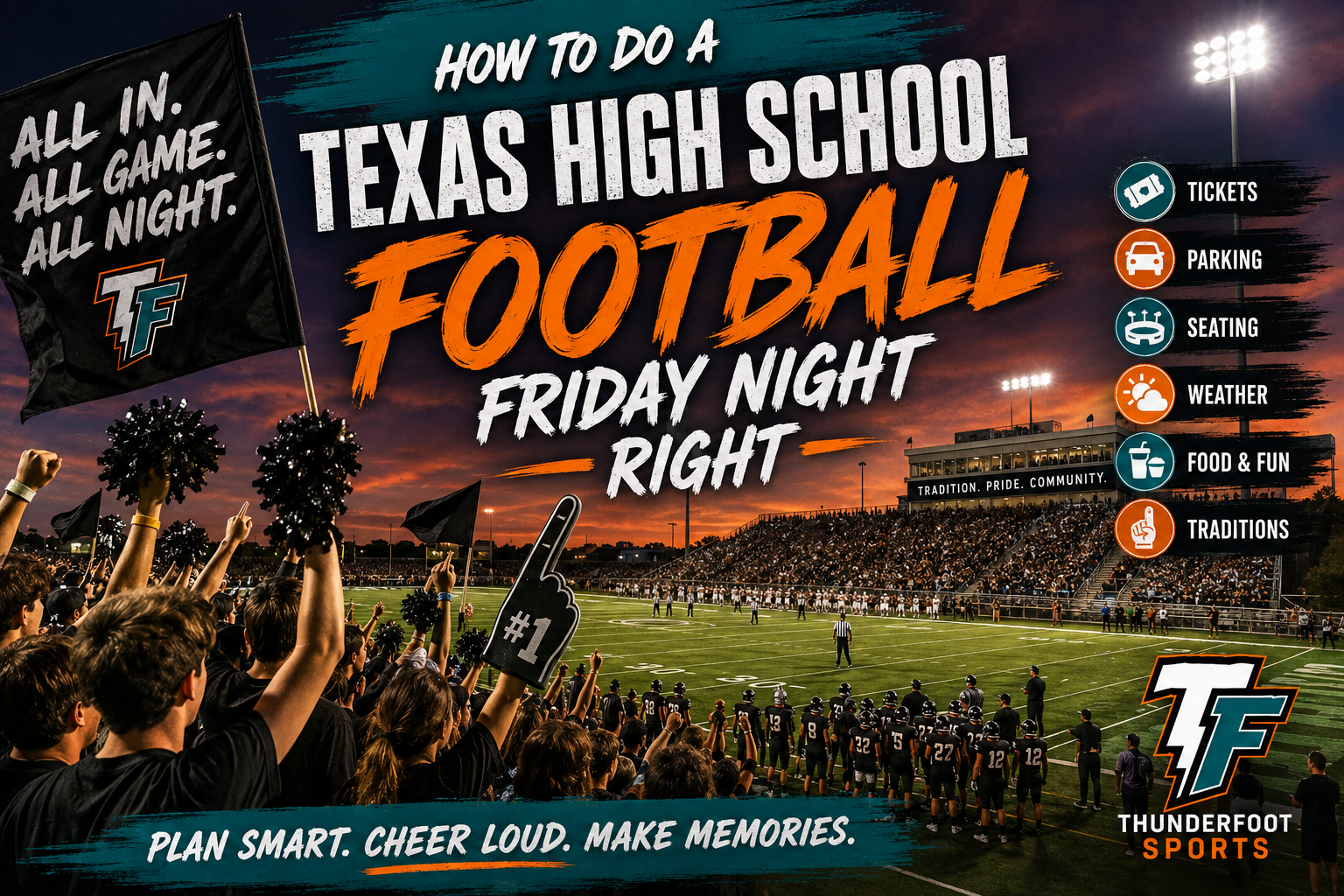
Texas high school football is rarely just a game.
It is the band warming up behind the stadium. It is parents hauling seat cushions, younger siblings chasing each other beneath the bleachers and students showing up in enough body paint to permanently alter the school’s plumbing.
It is barbecue smoke drifting across the parking lot, fight songs echoing through the neighborhood and half the town arriving early enough to discuss the offensive line before the gates even open.
Doing Friday night right, however, takes more planning than simply entering the stadium address into your phone.
Tickets may be digital. Parking may be limited. The visitor entrance may be on the opposite side of a sprawling stadium complex. August games can begin in serious heat, and a thunderstorm can turn a normal night into a two-hour weather delay.
Whether you are supporting your own child, visiting a rival school or simply looking for an affordable local sports night, this guide will help you arrive prepared and enjoy the full Texas high school football experience.
JUMP TO GUIDE

Know when the season begins
The 2026 Texas high school football season officially opens with Week One games on August 27, 28 and 29. UIL schools have 11 weeks to play a maximum of 10 regular-season games, with district certification due November 7. The first playoff round is scheduled for November 12–14, followed by the state championships during the week of December 16–19 at AT&T Stadium.
Not every game takes place on Friday.
Thursday games are increasingly common, especially when several schools share one stadium. Sub-varsity teams may play Wednesday or Thursday, while six-man schools, neutral-site games and playoff matchups can also follow different schedules.
Before making plans, confirm:
- The correct date and kickoff time
- Varsity versus junior-varsity or freshman game
- Home, visitor or neutral-site designation
- Exact stadium—not merely the school’s address
- Whether kickoff was changed because of weather, heat or stadium availability
Use the school district’s athletics page or official team account as the primary source. Social-media graphics shared by relatives are useful, but occasionally survive several schedule changes and continue roaming Facebook like untethered wildlife.
Buy tickets before leaving home
Many Texas school districts now sell football tickets digitally. Others accept cards or cash at the gate, and some use different systems for home games, road games and playoff contests.
Do not assume last year’s process still applies.
Check the host district’s website and look for:
- Presale and gate prices
- Student ticket rules
- Senior-citizen or employee passes
- District athletic passes
- Children’s admission policy
- Whether cash is accepted
- Refund or rainout rules
- Separate home and visitor ticket links
Buy tickets early for rivalry games, homecoming, senior night and playoff matchups. Large community stadiums may have plenty of seats, but smaller campus facilities can reach capacity.
After buying a digital ticket, save it to your phone wallet or take a screenshot when permitted. Stadium cellular service often slows once thousands of people arrive, which is the worst possible time to discover your ticket is trapped behind a spinning login screen.
Do not activate or redeem the ticket until the gate attendant instructs you to do so. Some systems treat activation as final.
Make sure you are driving to the stadium
The high school and football stadium may not share an address.
Many districts operate centralized stadiums used by several schools. Others play at middle-school complexes, municipal stadiums or facilities located miles from the main campus.
Before leaving, confirm:
- Stadium name
- Street address
- Home-side parking entrance
- Visitor-side parking entrance
- Accessible parking location
- Parking fee or digital parking pass
- Whether certain lots are reserved
- Which gate matches your ticket
A map screenshot can save time when the district website becomes difficult to load from the road.
For a major rivalry, arrive 45 to 60 minutes before kickoff. That gives you time to park, clear the entrance, find seats, visit concessions and watch the bands and teams enter.
Arriving five minutes before kickoff may still get you inside.
It may also place your vehicle behind the agricultural barn, two softball fields and what appears to be a drainage project.
Dress for the actual weather
The first several weeks of Texas football are summer games wearing fall decorations.
Even an evening kickoff can begin with direct sunlight on one side of the stadium. Aluminum bleachers retain heat, and packed crowds reduce airflow.
Bring:
- Lightweight, breathable clothing
- Hat or visor
- Sunscreen
- Refillable water bottle when permitted
- Cooling towel
- Small hand fan
- Stadium-approved seat cushion
- Insect repellent
- Light rain layer
- Portable phone battery
Check the stadium’s bag policy before packing. Clear-bag rules are common but not universal, and allowed dimensions vary between districts. Outside drinks, metal bottles, umbrellas and folding chairs may also be restricted.
The new 2026–2027 UIL heat standards require schools to monitor conditions using Wet Bulb Globe Temperature during outdoor athletics and marching-band activities. Although the formal practice limits do not apply directly to competitions, UIL recommends monitoring game conditions, adjusting start times or breaks when appropriate and maintaining emergency plans. A rapid-cooling zone must be available at contests once specified WBGT thresholds are reached.
Fans should also respect the heat.
Drink water before arriving, seek shade when possible and pay attention to dizziness, nausea, headache, weakness or confusion. Older spectators, small children and people with medical conditions may need more frequent cooling breaks.
There is no honor in remaining on a metal bleacher while your body is submitting a formal resignation.
Prepare for lightning delays
Texas storms can develop quickly, especially during the early season.
UIL lightning guidance says activities should not resume until at least 30 minutes have passed since the last observed lightning or thunder. The clock resets whenever additional lightning or thunder occurs. Safe shelter means a substantial building or fully enclosed metal-roofed vehicle—not an open concourse, tent, dugout or uncovered bleacher.
When storms are possible:
- Park where you can reach your vehicle safely
- Keep a rain layer in the car
- Charge your phone
- Follow the district’s official updates
- Do not gather under isolated trees
- Do not argue with staff enforcing evacuation instructions
- Expect the restart time to keep moving when thunder continues
A lightning delay is not the time to stand beside a metal fence explaining that the storm “looks farther away now.”
Go to the designated shelter and wait for official instructions.
UIL rules allow Friday games affected by severe weather to be moved to another site, played Saturday or rescheduled under district procedures when conditions persist.
Pick the right seats
The best seat depends on why you are attending.
For following the game
Sit between the 30-yard lines and high enough to see plays develop. Lower seats feel closer but can make it difficult to judge running lanes and defensive coverage.
For supporting your athlete
Ask where that position group spends most of the game. Linemen, receivers, defensive players and special teams may gather in different sideline areas.
For watching the band
Sit near midfield or slightly toward the band’s seating section. Varsity halftime can last up to 28 minutes under UIL rules, although districts may use a shorter intermission. Junior-high and sub-varsity halftimes should not exceed 20 minutes.
For younger children
Choose an aisle near restrooms and concessions. Avoid the loudest part of the student section unless your child considers air horns a relaxing sensory experience.
For visiting fans
Confirm which side is designated for visitors. Some stadiums prohibit crossing between sides after entry, meaning the concession stand you can clearly see may be operationally located in another country.
Understand the rhythm of the night
A Texas high school football game includes much more than four quarters.
Arriving early lets you experience:
- Team warmups
- Band entrance
- Cheer and drill-team performances
- School songs
- Player introductions
- National anthem
- Coin toss
- Community recognitions
UIL guidance requires pregame activities to finish and non-team personnel to clear the field no later than six minutes before kickoff so the coin toss and game can begin on time.
During halftime, give the band, cheerleaders, drill team and student performers your attention. Those students may have spent months preparing for the same night.
Friday football works because the entire school contributes to the atmosphere—not merely the players carrying the ball.
Bring money for concessions and booster clubs
High school concessions are part snack bar, part fundraiser and part test of whether one volunteer can serve 200 people during a three-minute timeout.
Payment options vary. Some stadiums are cashless; others still move faster with cash. Bring both a card and a small amount of cash unless the host district clearly states otherwise.
Popular items may include:
- Hamburgers
- Hot dogs
- Nachos
- Popcorn
- Candy
- Bottled water
- Sports drinks
- Local barbecue
- Spirit wear
Buying from the concession stand or booster table often supports student programs, athletics, band, cheer or parent organizations.
The best meal may be outside the stadium. Many communities have restaurants, food trucks or barbecue stands that become part of the Friday-night routine. Eating before the game reduces time spent in line and gives you a chance to support another local business.
Just remember that a giant plate of queso immediately before climbing 46 rows of bleachers is a decision with downstream consequences.
Respect the student section and hometown traditions
Every school has its own rituals.
There may be a team walk, victory bell, cannon, inflatable tunnel, fight song, mascot routine or fourth-quarter tradition that makes little sense to outsiders and perfect sense to everyone wearing school colors.
Join the atmosphere without becoming the adult who tries to out-yell teenagers.
Good spectator behavior includes:
- Cheer for your team rather than insulting students
- Avoid yelling at officials from 70 yards away
- Stay out of restricted field and track areas
- Do not block aisles or accessible seating
- Follow rules about photography and recording
- Keep younger children away from railings
- Respect the marching band during performances
- Clean up your seating area
UIL permits individual recording only with the schools’ consent, and recording cannot obstruct another spectator’s view. District and stadium policies may be stricter, so check before bringing professional equipment or setting up a tripod.
Have a plan for younger siblings
A three-hour football game can feel like a full geological era to a six-year-old.
Pack permitted items that make the night easier:
- Hearing protection
- Small approved snack
- Water
- Quiet activity
- Light jacket
- Hand wipes
- Portable charger
- Emergency contact card
Establish a meeting point in case anyone becomes separated. Show children what stadium staff, police officers and school administrators look like.
Write your phone number inside a younger child’s wristband or pocket rather than relying entirely on them to remember it during a loud, crowded event.
Teach children not to run beneath the bleachers, climb fences or enter the track. That mysterious open space is not an auxiliary playground. It is usually where equipment, electrical cables and exhausted adults are trying to work.
Stay through the school song—but leave intelligently
Leaving with two minutes remaining may beat traffic.
It may also mean missing the play everyone discusses for the next decade.
When the game is close, stay and enjoy it. When the result is settled and younger children are fading, leaving slightly early can make sense.
After the final whistle:
- Allow players, bands and buses room to move
- Follow parking-lot directions
- Avoid stopping in traffic to pick someone up
- Keep pedestrians in view
- Do not attempt a three-point turn against the entire exiting crowd
- Be patient with volunteer parking attendants
When possible, wait 10 or 15 minutes before leaving. Listen to the postgame band, congratulate friends and let the first wave of traffic clear.
A calm exit is better than turning a great community night into a demolition derby involving three pickup trucks and a band trailer.
The Thunderfoot Friday-night checklist
Before leaving home, confirm:
- Correct game date and kickoff time
- Stadium address
- Digital tickets downloaded
- Parking entrance identified
- Bag policy reviewed
- Weather and lightning checked
- Water and heat gear packed
- Phone charged
- Seats or cushions ready
- Cash and card available
- Family meeting point selected
Final whistle
Texas high school football is one of the best local sports experiences available.
It is affordable, energetic and deeply connected to the community. You can watch future college players, support student performers, see neighbors in the stands and participate in traditions that have lasted generations.
The best Friday nights begin with a little preparation.
Buy the correct ticket. Verify the stadium. Arrive early. Pack for heat and storms. Support the band and booster club. Cheer loudly without embarrassing your household, and give the kids on the field the kind of environment youth sports should provide.
The scoreboard decides who wins the game.
The community decides whether the night feels special.
Plan it right, enjoy every part of it and remember: Life Is Better Outside—especially under the Friday-night lights.
