
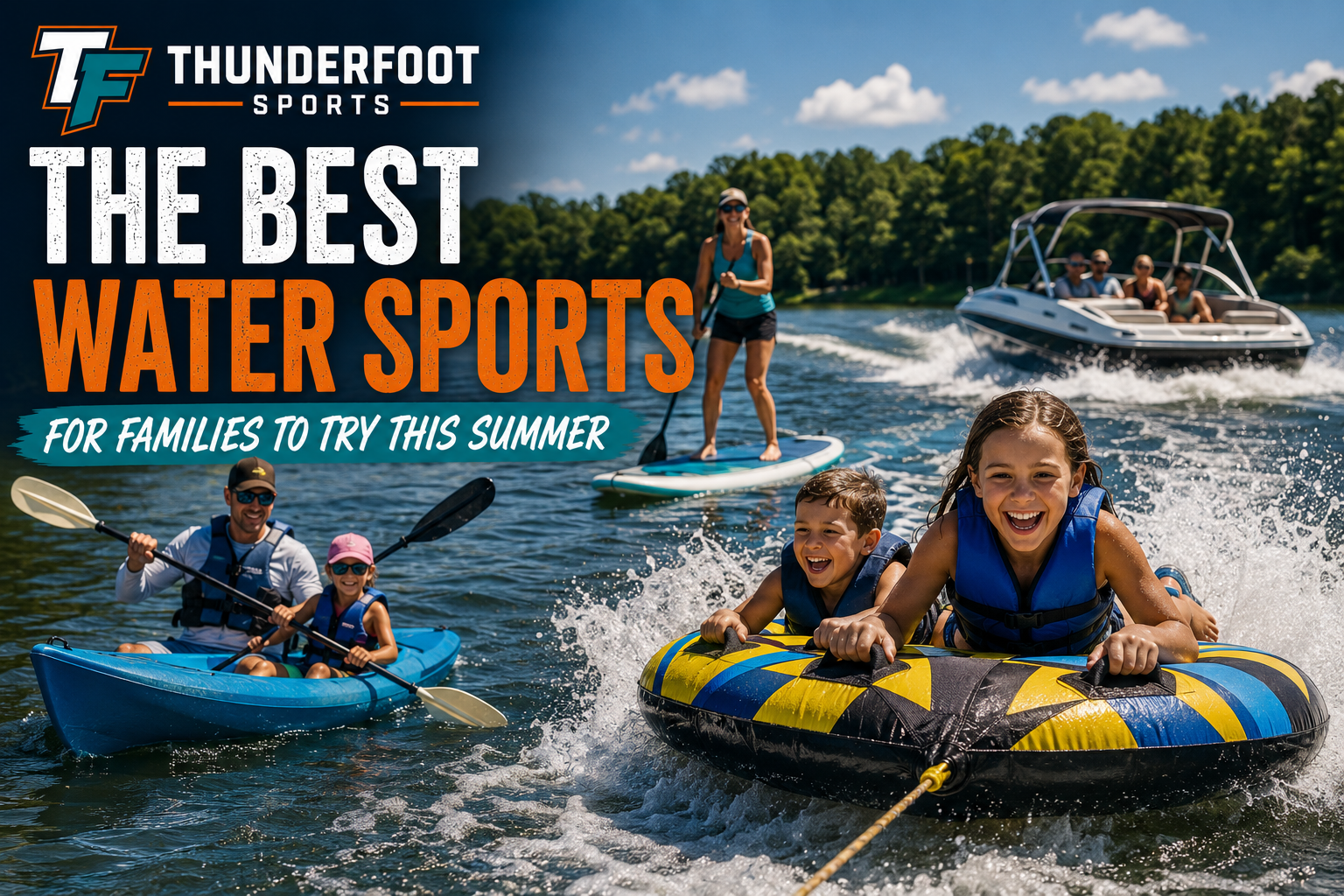
Summer feels different when the family gets off the patio and onto the water.
A lake, river or calm coastal bay can turn an ordinary weekend into a full day of paddling, swimming, tubing and friendly competition. Water sports also give families something increasingly rare: an activity that works for different ages, different athletic abilities and different levels of enthusiasm.
One person can paddle hard enough to count it as a workout. Another can drift along and watch the shoreline. The kids can race, splash and invent rules nobody else understands. Even the family member who claims not to enjoy sports may suddenly become very interested once a boat and an inflatable tube are involved.
The challenge is choosing an activity that matches your group.
Some water sports are easy to learn and require very little equipment. Others need a boat, an experienced operator or professional instruction. Weather, swimming ability, water conditions and the ages of your children should all influence the decision.
Here are the best family water sports to try this summer, from beginner-friendly paddling to full-speed tubing.

1. Kayaking: The Best All-Around Family Water Sport
Kayaking is one of the easiest ways to introduce a family to paddlesports.
Recreational kayaks are generally stable, simple to operate and available as either single-person or tandem models. A tandem kayak works particularly well when a younger child is not ready to control a boat alone.
Families can paddle on lakes, protected bays, calm rivers and quiet sections of the Texas Gulf Coast. The activity can be relaxed or athletic depending on how far and how fast you travel.
Kayaking also gives everyone a real job. Each paddler helps steer, maintain balance and move the boat forward. That makes the experience feel more like a shared adventure than a ride.
Why Families Like It
Kayaking has a low learning curve. Most beginners can understand the basic forward stroke and steering movements within a few minutes.
It also provides access to places that larger boats cannot easily reach. Families can explore coves, paddle beside marsh grass, watch birds and stop along a quiet shoreline for lunch.
The American Canoe Association offers family and youth paddling resources that cover basic strokes and water-safety principles. Its beginner materials emphasize making paddling instruction engaging rather than overwhelming. (ACA)
Best Beginner Setup
Start with a sit-on-top recreational kayak rather than a narrow touring model.
Sit-on-top kayaks are generally easier to enter and exit, and many people feel less confined in them. Choose a calm, protected area with little boat traffic and stay close to the launch point during the first outing.
For younger children, use a tandem kayak with an adult in the rear position.
Thunderfoot Family Challenge
Set a visible turnaround point and have each kayak collect points along the way:
- Spot a bird: one point
- Paddle around a buoy: two points
- Reach the turnaround point without arguing: five points
- Return with every water bottle still aboard: automatic victory
Keep the challenge light. The goal is to make the children want to paddle again.

2. Stand-Up Paddleboarding: The Best Balance Challenge
Stand-up paddleboarding looks difficult until you realize that beginners do not have to stand immediately.
A new paddler can begin on their knees, learn how the board responds and then gradually rise to a standing position. Wider recreational boards provide enough stability for many first-time users.
Paddleboarding combines balance, core strength and paddling technique. It can feel like exercise, exploration and a family competition at the same time.
Why It Works for Families
Everyone can approach paddleboarding differently.
Adults and teenagers may enjoy learning to stand and paddle efficiently. Younger children can ride on the front of an adult’s board when conditions, board capacity and safety practices allow. Less-confident participants can remain kneeling and still move around comfortably.
The American Canoe Association’s introductory paddleboard instruction covers equipment, balance, paddling technique and essential safety skills, making a short lesson worthwhile for first-time families. (ACA)
Start in Calm Water
Do not begin in waves, strong current or heavy boat traffic.
Choose a protected cove, small lake or sheltered bay. Wind matters more than many beginners realize because a paddleboard can be difficult to control when the breeze pushes it away from shore.
Begin by practicing close to land:
- Kneel in the center of the board.
- Paddle forward on both sides.
- Practice turning.
- Rise slowly with feet near the center handle.
- Keep your knees slightly bent and look ahead.
Staring directly at your feet is a surprisingly effective way to fall into the water.
Make Falling Part of the Fun
Every new paddleboarder should expect to get wet.
Teach family members to fall away from the board rather than trying to land on it. Climb back on from the side and use the board’s leash where appropriate for the location and conditions.
A family balance contest can include kneeling turns, standing for 30 seconds or paddling around a marker.
Do not begin with paddleboard yoga unless your family needs immediate video evidence of poor decision-making.
3. Canoeing: The Best Teamwork Sport
Canoeing is old-school in the best possible way.
A canoe can carry multiple people, picnic supplies, fishing equipment and enough snacks to survive a minor expedition. It works particularly well for families who want to paddle together instead of using separate boats.
The paddler in the front provides power and helps identify obstacles. The person in the rear contributes power while steering. Children can sit in the middle, paddle with smaller equipment or focus on wildlife spotting.
Why Canoeing Still Works
Canoes offer more storage and shared space than many recreational kayaks. They are excellent for slow lake exploration, fishing and calm-river trips.
They also force families to communicate.
When both adult paddlers repeatedly stroke on the same side while nobody steers, the canoe provides immediate feedback by heading toward a tree.
Best Use
Choose a wide, stable recreational canoe and calm water. Avoid overloading it with people and gear.
Practice entering and exiting near shore before launching. Keep everyone’s weight low and centered, and discourage passengers from suddenly changing seats.
A canoe is stable when used properly. It becomes less convincing when somebody stands up to retrieve a dropped bag of chips.
4. Recreational Tubing: The Easiest Way to Relax
Not every water sport needs to feel like training.
Floating a calm river in an individual tube can be one of the easiest family water activities. It requires little technique and lets everyone relax while the current does most of the work.
River tubing is different from being towed behind a boat, which we will get to shortly.
Best for Older Children and Relaxed Groups
Choose a professionally managed or well-known family float route with mild current, clear entry and exit points and current information about water levels.
Rental outfitters often provide tubes, shuttle service and guidance about trip length. Ask about minimum ages, current speed, obstacles and whether the route is appropriate for children.
The National Park Service notes that tubing conditions and crowd levels can vary considerably by day and location. Some waterways are calmer and more family-friendly during weekdays or Sundays than during peak Saturday periods. (National Park Service)
Keep the Trip Manageable
A float that sounds relaxing for four hours can feel considerably longer once someone is hungry, sunburned or asking whether the exit is around the next bend.
For a first trip, choose a shorter route.
Wear secure footwear rather than flip-flops that disappear at the first rocky section. Keep valuables in waterproof storage and secure coolers so they do not drift away.
Never tie people together in a way that prevents them from separating safely around obstacles.
5. Boat Tubing: The Biggest Family Thrill
Being pulled behind a boat on an inflatable tube is one of the fastest ways to turn a lake day into a full sporting event.
It requires less skill than waterskiing or wakeboarding, which makes it accessible to a wider range of riders. Participants hold on, communicate with the boat and try to survive turns without launching into low orbit.
Why Families Love It
Tube designs range from flat deck-style inflatables to more supportive cockpit models.
Younger or more cautious riders may prefer a seated tube with a backrest. Teenagers and adventurous adults may want a lower, faster design.
The boat operator controls the experience. A smooth, moderate ride can be fun for beginners, while aggressive turns should be reserved for capable riders who actually requested them.
Use a Dedicated Spotter
The boat operator should focus on driving.
Another responsible person should watch the riders, relay hand signals and alert the driver when someone falls. Riders should know simple signals for faster, slower, stop and return to the boat.
Anyone being towed should wear an appropriate U.S. Coast Guard-approved life jacket. Federal and state rules vary, so verify the requirements where you are boating. The Coast Guard also states that children under 13 must generally wear an approved life jacket while a vessel is underway unless they are below deck or in an enclosed cabin. (USCG Boating)
Start Slower Than You Think
Beginners do not need sharp turns.
Begin with a straight ride at a moderate speed. Allow the rider to become comfortable before gradually adding wider turns.
Keep the tube away from docks, shorelines, markers, other boats and shallow water. Shut the engine off when bringing riders close to the stern for boarding.
6. Water Skiing: The Best Classic Challenge
Water skiing remains one of the most satisfying family water sports because standing up feels like a genuine achievement.
The beginner starts in the water with knees bent, skis pointed forward and arms extended. As the boat accelerates, the skier allows the boat to pull them upward instead of trying to stand too early.
That sounds simple.
It often takes several attempts.
Best for Patient Beginners
Children, teenagers and adults can learn to ski, but the experience works best when the driver and instructor are patient.
A training boom or instructional bar attached to the side of a boat can make learning easier. Some beginners also benefit from connected trainer skis that help keep the skis aligned.
Professional instruction may be worth the cost because a good instructor can correct body position immediately and reduce the number of exhausting failed starts.
Make the First Goal Small
The first goal is not crossing the wake or making a dramatic turn.
The first goal is standing for a few seconds.
Celebrate progress. Do not make a struggling beginner stay in the water for endless attempts while everyone in the boat provides conflicting advice.
Three people shouting “lean back,” “stand up” and “bend your knees” at the same time has never improved a sporting experience.
7. Wakeboarding: The Best Choice for Athletic Teens
Wakeboarding combines elements of water skiing, snowboarding and board sports.
The rider uses a single board with secured bindings and holds a tow rope behind the boat. Beginners start sideways in the water and rotate the board into position as they rise.
Wakeboarding is more technical than tubing and usually takes longer to learn. It is best suited to athletic older children, teenagers and adults who are comfortable in the water.
Why Teens Gravitate Toward It
Once riders learn the basic start, wakeboarding provides room for steady progression.
They can work on crossing the wake, controlling edges and eventually learning small jumps or tricks.
It also has an undeniable cool factor, which matters greatly when trying to convince a teenager that a family activity was not designed as punishment.
Use Instruction and Proper Equipment
Bindings should fit correctly, and the board should match the rider’s size and experience.
Begin with a slower boat speed and an experienced driver. A wakeboard-specific lesson can shorten the learning curve and help prevent bad habits.
Helmets may be appropriate depending on the activity, equipment and local guidance.
8. Pedal Boats: The Best No-Stress Option
Pedal boats do not receive much attention in conversations about water sports, but they are excellent for families with younger children.
They are stable, easy to operate and typically used in calm, controlled water. Adults or older children pedal while younger passengers enjoy the ride.
This is not the choice for adrenaline.
It is the choice for a family that wants to get on the water without managing paddles, tow ropes or repeated falls.
Pedal boats are also useful for mixed-generation groups because grandparents, parents and children may all be able to participate together.
9. Fishing From a Kayak or Canoe
Fishing can turn a quiet paddle into a family sport.
A recreational kayak or canoe allows anglers to reach coves, shorelines and structure that may not be accessible from land.
For beginners, keep the setup simple. Use one rod per person, basic tackle and a waterway with manageable boat traffic.
Do not overload a small craft with coolers, tackle boxes and equipment. Keep hooks secured when not in use and avoid casting across other passengers.
A family fishing challenge can award points for the first fish, most species spotted or best fishing story.
The fish do not necessarily need to cooperate.
Choosing the Right Water Sport for Your Family
Match the activity to the least-confident person in the group, not the most adventurous.
Choose kayaking for easy exploration and light exercise.
Choose paddleboarding for balance, short sessions and friendly competition.
Choose canoeing for teamwork, fishing and carrying gear.
Choose river tubing for a slow, social day.
Choose boat tubing for excitement without a difficult learning curve.
Choose water skiing or wakeboarding for athletic family members who want a challenge.
Choose pedal boats for young children, grandparents or anyone who prefers stability.
A successful family outing does not require everyone to do the same thing. One parent can paddle while a child rides. Teenagers can tube while others stay on the boat. The family can rotate activities during the day.
The Non-Negotiable Safety Rules
Water sports are fun because they introduce movement, speed and adventure. Those same elements require planning.
Wear the Right Life Jacket
Every person should have an appropriately sized, properly fitted U.S. Coast Guard-approved life jacket suited to the activity.
Do not place a child in an oversized adult jacket. A life jacket should remain secure when lifted gently at the shoulders.
The American Canoe Association’s safety checklist recommends wearing a life jacket, assessing flotation needs, carrying a spare paddle and filing a float plan before paddling. (ACA)
Check the Weather
Review the forecast before launching and continue watching conditions throughout the day.
Summer thunderstorms can develop quickly. The National Weather Service warns that every thunderstorm produces lightning and that a lightning strike to a vessel can be catastrophic. Get off the water before a storm reaches your location rather than waiting for the rain to begin. (National Weather Service)
Tell Someone Your Plan
Share your launch location, route, group size and expected return time with someone who is not participating.
This is especially important for paddling trips, river floats and outings beyond busy recreation areas.
Stay Hydrated
Water does not protect you from heat.
Bring more drinking water than you think you need, apply sunscreen and schedule breaks in shade. Avoid letting excitement turn a two-hour outing into an all-day heat exposure experiment.
Know When to Stop
End the activity when participants become tired, cold, overheated or frustrated.
Fatigue affects balance, judgment and swimming ability. The final run of the day is rarely worth forcing when everyone is worn out.
What to Pack
A basic family water-sports kit should include:
- Properly fitted life jackets
- Drinking water and electrolyte beverages
- Sunscreen
- Hats and sunglasses with retainers
- Water shoes
- Towels and dry clothing
- Waterproof phone storage
- First-aid kit
- Whistle or signaling device
- Snacks
- Required boat-safety equipment
- A weather and route plan
Paddlers should also consider a spare paddle, pump or bailer, tow line and repair supplies appropriate to the craft.
The Thunderfoot Take
The best family water sport is not necessarily the fastest or most impressive.
It is the one that gets everyone involved without making the least-experienced person miserable.
Kayaking is the best all-around place to start. Paddleboarding adds a fun balance challenge. Canoeing rewards teamwork. Recreational tubing creates an easygoing day, while boat tubing delivers the biggest laughs and loudest reactions.
Water skiing and wakeboarding give athletic family members something to work toward, and pedal boats prove that a water activity does not have to be extreme to be memorable.
Start small. Choose calm conditions. Wear the life jackets. Keep the first trip shorter than you think it needs to be.
The goal is not to master every sport before Labor Day.
The goal is to finish the day tired, sun-soaked and already planning the next trip.
Because summer is better on the water.
And life is better outside.