
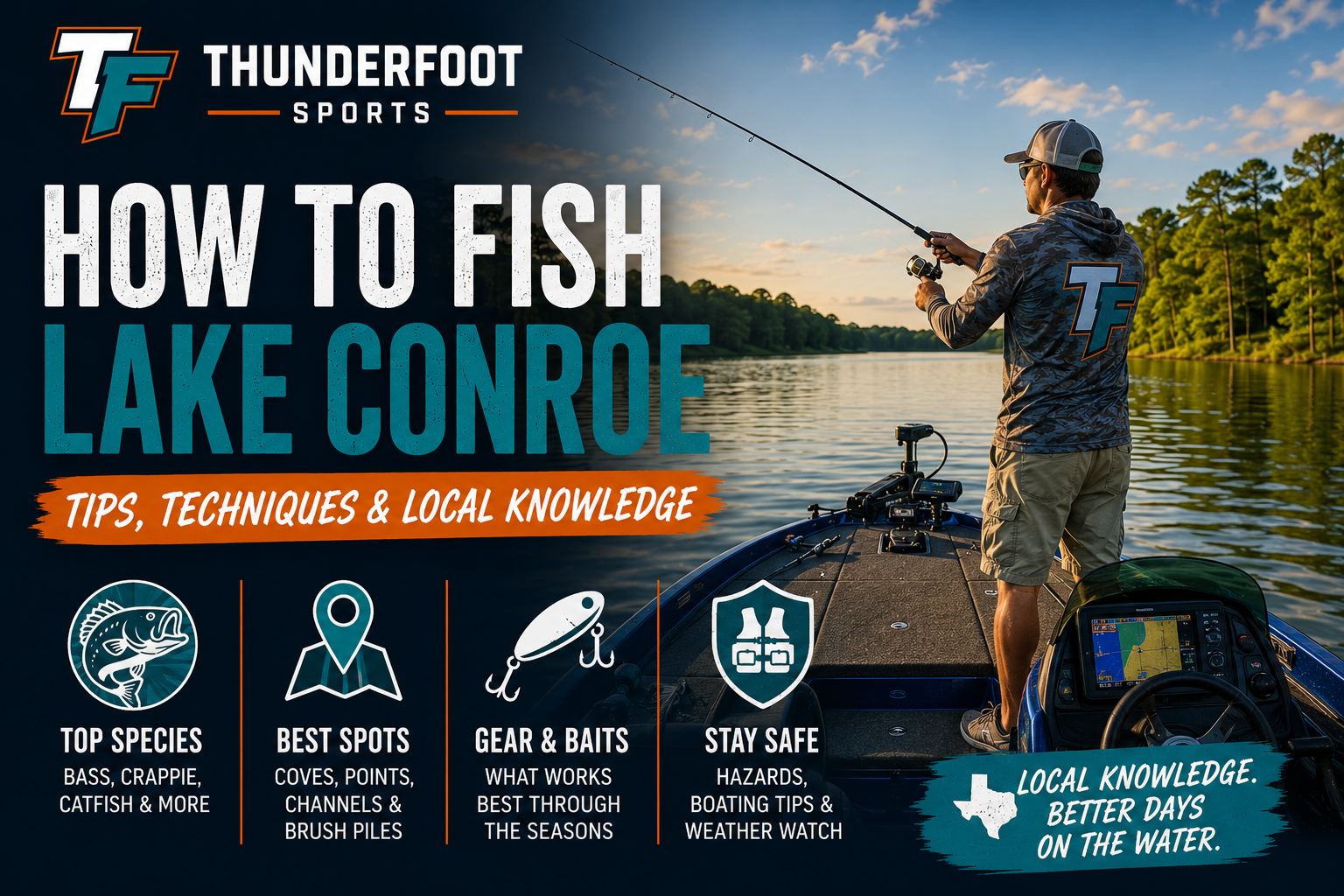
Lake Conroe can look deceptively simple from the shoreline.
It is a big lake close to Houston, surrounded by marinas, neighborhoods, restaurants and busy recreational areas. You launch the boat, find some water and start casting. How complicated could it be?
Then the wind picks up, weekend boat traffic begins pounding the main lake, your lure disappears into a brush pile and somebody mentions that the productive fish were holding on an old submerged roadbed.
Lake Conroe rewards anglers who understand its different personalities. The southern half has deeper water, marinas, docks, bulkheads and heavier recreational traffic. The northern end becomes more river-like, with creek channels, vegetation, flooded timber and shallower cover. Between the two are points, humps, bridges, riprap, brush piles and enough offshore structure to keep a fish finder busy all day.
The reservoir covers roughly 21,000 acres and extends about 21 miles from the dam to the upper reaches of the West Fork of the San Jacinto River. About 5,000 acres lie within Sam Houston National Forest.
Here is how to fish Lake Conroe safely and effectively, whether you are chasing largemouth bass, crappie, catfish, hybrids or simply trying to help the kids catch something.

Know the Lake Before You Launch
The first step is choosing the kind of fishing day you want.
For beginners and families, the protected coves, marina areas and shoreline cover of the middle and southern lake can be easier to manage than the open main lake. These areas provide docks, bulkheads, points and nearby facilities without requiring a long run.
More experienced anglers may prefer the northern lake, especially when targeting flooded timber, vegetation and creek-channel structure. The trade-off is that shallow hazards become more common and navigation requires greater attention.
Public launch options are available around Lake Conroe, but ramp conditions can change with water levels, construction and weather. The San Jacinto River Authority maintains a public boat-ramp resource that should be checked before leaving home.
Before launching, check:
- Current lake level
- Wind speed and direction
- Thunderstorm potential
- Ramp status
- The latest TPWD fishing report
- Your fuel level and safety equipment
The conservation pool level is 201 feet above mean sea level, but lake elevation changes with rainfall, releases, evaporation and water use. Lower water can expose hazards that were previously submerged, while rising water may cover shoreline obstacles.

The Main Fish You Can Catch
Lake Conroe provides several strong fishing options, which is good news when one species refuses to cooperate.
Largemouth Bass
Largemouth bass are the lake’s most pursued sportfish. They can be caught around docks, vegetation, riprap, creek channels, points, roadbeds and offshore structure. The lake has also produced exceptionally large bass, including a documented 15.93-pound water-body record caught in 2009.
Bass fishing receives additional support through stocking. TPWD’s Lake Conroe stocking records show substantial stockings of Lone Star and Sunshine bass during 2025 and 2026.
Crappie
Black and white crappie provide excellent opportunities around brush piles, bridge structure, docks and creek channels. TPWD notes that crappie fishing has benefited from stocking and restoration efforts.
Catfish
Channel catfish are among the lake’s most abundant sportfish and can be caught throughout the year. Blue and channel catfish are commonly targeted near channels, points, baited areas and deeper structure.
White Bass and Hybrid Striped Bass
White bass and hybrid striped bass often relate to open-water baitfish, humps, points and deeper structure. Finding them usually requires watching sonar, looking for birds or locating schools of shad.
Sunfish
Bluegill and other sunfish are ideal for children. Fish worms beneath a small bobber around docks, shaded shoreline cover, rocks and shallow brush.
How to Catch Largemouth Bass
Bass fishing on Lake Conroe changes throughout the year, but a few patterns remain dependable.
Spring
As water temperatures rise, bass move toward shallower flats, protected coves, shoreline cover and spawning areas.
Try:
- Texas-rigged soft plastics
- Wacky-rigged worms
- Spinnerbaits
- Chatter-style bladed jigs
- Square-bill crankbaits
- Soft-plastic swimbaits
Target docks, shallow vegetation, secondary points and transitions between rock and softer bottom.
Move quietly in protected coves. A trolling motor is more useful than roaring directly into shallow water and announcing your arrival to every fish in Montgomery County.
Summer
Summer bass frequently move deeper after the morning feeding period.
Fish main-lake points, ridges, roadbeds, channel edges, bridge areas and deeper brush. Deep-diving crankbaits, Carolina rigs, football jigs and large plastic worms are useful.
Fishing early and late gives you a better chance to find bass feeding near the surface or around shallow cover. During the brightest part of the day, docks provide shade and can hold fish.
Fall
Follow the baitfish.
Bass may move into creek arms and pockets as shad migrate. Spinnerbaits, shallow crankbaits, lipless crankbaits and swimbaits allow you to cover water quickly.
Watch for surface activity, birds and small baitfish scattering near points.
Winter
Slow down and fish deeper structure.
Jigs, suspending jerkbaits, drop-shot rigs and slowly worked soft plastics can produce around channel swings, points and deep cover.
How to Catch Crappie
Crappie are an excellent Lake Conroe target because they can provide fast action once you locate a productive brush pile.
Use electronics to search for submerged brush, standing timber and fish holding near bridge columns or docks. Crappie may suspend above the cover rather than sitting directly inside it.
Try:
- Live minnows
- Small tube jigs
- Marabou jigs
- Small soft-plastic minnows
- Roadrunner-style underspins
Lower the bait vertically and keep it just above the fish. Crappie usually feed upward, so burying your jig beneath the school is rarely helpful.
In spring, look shallower around protected coves, brush and spawning cover. After the spawn and through warmer months, search deeper brush piles and structure.
The current TPWD Lake Conroe fishing report should be checked before every trip because depth, water temperature and productive bait recommendations change throughout the year.
How to Catch Catfish
Catfish are the most dependable option for families who care more about action than tournament strategy.
Fish near:
- Creek-channel edges
- Main-lake points
- Bridges
- Deeper holes
- Baited areas
- Windblown shorelines
- Areas holding shad
Effective baits include cut shad, prepared punch bait, chicken liver, worms and other legal natural baits.
Anchor safely away from navigation routes and place several baits at different depths. If nothing happens after 20 to 30 minutes, move.
For children, simplify the setup with a moderate sinker, circle hook and bait that stays attached. Circle hooks work best when anglers allow the fish to load the rod instead of attempting a dramatic television-style hookset.
Fishing From Shore
You do not need a bass boat to fish Lake Conroe.
Shore anglers can target:
- Public park shorelines
- Fishing piers
- Marina areas where fishing is permitted
- Riprap
- Bridges and causeways with legal access
- National forest recreation areas
Use worms or small jigs for sunfish and crappie. Cast cut bait or prepared bait toward deeper water for catfish. Bass anglers can work soft plastics, spinnerbaits and small crankbaits around visible cover.
Confirm that the property is public and that fishing is allowed. Much of Lake Conroe’s developed shoreline is privately owned, and a visible dock does not create public access.

The Biggest Lake Conroe Hazards
This section matters as much as the fishing advice.
Lake Conroe is busy, developed and capable of becoming rough quickly. It has also experienced serious boating incidents, including a July 2026 single-vessel crash in which a boat struck a bulkhead and ejected two occupants.
Submerged Timber and Stumps
Flooded timber is common in northern creek arms, particularly below the Cagle Recreation Area and upstream from Scotts Ridge.
A stump may sit just below the surface and become harder to see in stained water, low light or boat wakes. Slow down when leaving marked channels or entering shallow northern areas.
Do not assume that following another boat guarantees safe water. Its draft, route and knowledge may be different from yours.
Unmarked Brush Piles and Underwater Structure
Anglers and property owners have placed numerous brush piles in the lake. These are great for fishing and less charming when they grab an anchor, propeller or expensive lure.
Approach offshore targets carefully and use sonar before running over them.
Boat Traffic and Large Wakes
Summer weekends can bring heavy traffic from ski boats, pontoons, personal watercraft and cruisers.
The open southern lake can develop short, closely spaced waves that are uncomfortable or dangerous for small fishing boats and kayaks.
Keep your bow properly trimmed, reduce speed and cross wakes at a controlled angle. Never anchor in an active traffic lane.
Sudden Wind and Thunderstorms
Open water provides little protection when Gulf Coast thunderstorms develop.
Check radar before launching and watch the sky throughout the trip. Return early when storms approach. Waiting until lightning is visible over the lake is not toughness; it is a bad evacuation plan.
Bulkheads, Docks and Cables
The developed southern shoreline contains docks, bulkheads, lifts, pilings and occasional cables or lines.
Give structures room. Fish them slowly rather than drifting so close that wind or a wake pushes the boat underneath a dock.
Low Water
Falling lake levels reduce clearance over stumps, rocks, bars and other structure.
An area that was safe during a previous trip may not be safe today. Review current SJRA lake conditions before launching.
Heat and Dehydration
Texas summer heat affects judgment, coordination and endurance.
Carry more water than you expect to drink. Wear sun protection and schedule breaks. Early morning fishing is usually more comfortable and often more productive anyway.
What You Need to Fish Legally
Most people fishing Lake Conroe need a valid Texas fishing license with a freshwater endorsement. TPWD lists limited exceptions, so confirm your status before fishing.
Lake Conroe has water-body-specific fishing regulations. For the 2025–2026 regulation year, largemouth bass have a 16-inch minimum length, and the combined daily bag limit for black bass species is five fish. Regulations can change, so always verify the official Lake Conroe page before keeping fish.
Texas law also requires boaters to drain water from boats and onboard receptacles when approaching or leaving public fresh water to reduce the spread of invasive zebra mussels.
Carry:
- Fishing license
- Properly fitted life jackets
- Throwable flotation device where required
- Navigation lights
- Whistle or horn
- Fire extinguisher where required
- First-aid kit
- Phone in waterproof storage
- Updated lake chart or mapping app
A Simple First-Trip Game Plan
For a low-stress first fishing trip, launch shortly after sunrise and stay within a manageable distance of the ramp.
Start by fishing docks and nearby points with a Texas-rigged worm or small spinnerbait. If the bass do not cooperate, move to a known brush pile and try minnows or jigs for crappie.
By late morning, switch to catfish near a channel edge or point.
This gives the group three different fishing styles without requiring a long, high-speed run across the lake.
Finish before afternoon heat, wind and recreational traffic reach their peak.
The Thunderfoot Take
Lake Conroe is not a lake you master in one outing.
Its fish move with weather, water temperature, baitfish and seasonal patterns. Its boating conditions can change between sunrise and lunch. Its most productive structure is not always visible from the surface.
Start small.
Learn one section of the lake instead of trying to cover all 21 miles. Fish docks, points and brush carefully. Use electronics when you have them, but do not ignore wind, birds, water color and visible cover.
Most importantly, respect the lake’s hazards. Slow down near timber. Watch the weather. Stay out of traffic lanes. Wear the life jacket while the boat is moving.
A successful Lake Conroe trip does not require a trophy bass.
Sometimes success is a cooler morning, a few crappie, a catfish for the kids and a safe ride back to the ramp.
That is still a good fishing day.
And on Lake Conroe, there is always another spot to try next weekend.