
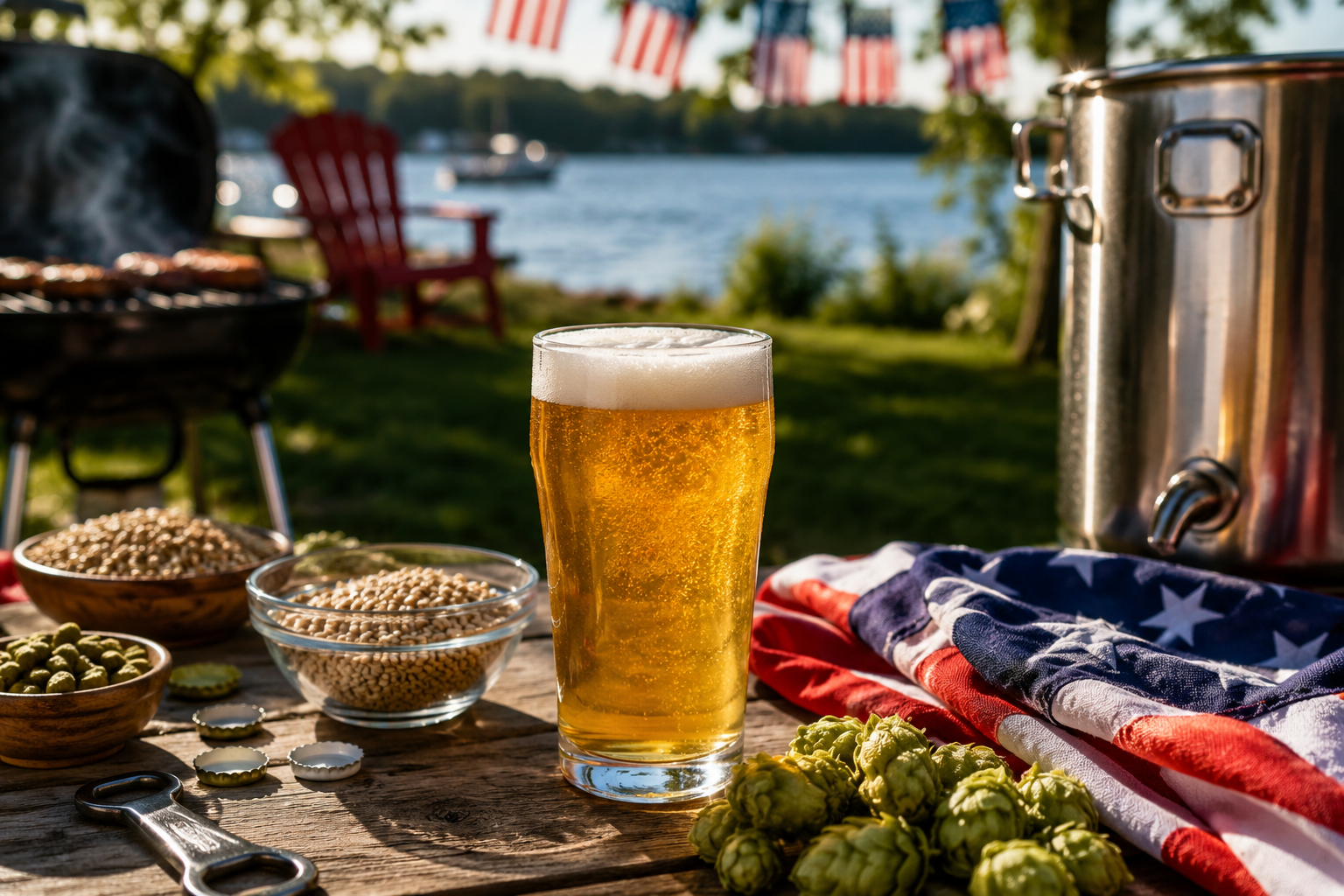
There’s something about the Fourth of July that practically demands cold beer. Maybe it’s the smoke rolling off the grill, maybe it’s the lake water still dripping off the dock, or maybe it’s just America doing what America does best — turning a random Thursday into a full-day backyard festival.
But this year, skip the crowded beer aisle and brew your own.
Homebrewing sounds intimidating until you realize it’s basically cooking with patience. You don’t need a warehouse setup or a chemistry degree to make something your friends will crush all weekend long. You just need the right style, a clean process, and enough time to let it ferment before fireworks season hits.
And for the 4th of July? The goal is simple:
Make something cold, crisp, refreshing, and dangerously easy to drink.
Pick the Right Beer Style
The biggest mistake first-time homebrewers make is trying to brew some 11% triple-barrel-aged monster loaded with coffee beans and maple syrup.
Wrong holiday.
The Fourth of July is about heat, sunshine, pools, boats, yard games, and drinking multiple beers over several hours without needing a nap by 4 PM.
The best styles for Independence Day brewing are:
- Blonde Ale
- American Wheat
- Cream Ale
- Light IPA
- Kölsch
- Citrus Pale Ale
These styles are refreshing, approachable, and crowd-friendly. Even people who “don’t like craft beer” usually end up grabbing a second one.
If you want the safest win possible, brew a Blonde Ale with citrus notes. It’s the backyard quarterback of summer beers — reliable, easygoing, and everybody likes having it around.
Your Basic 4th of July Brewing Setup
You don’t need a massive garage brewery to get started.
A beginner setup usually includes:
- Brew kettle
- Fermentation bucket or carboy
- Airlock
- Sanitizer
- Siphon
- Bottles or keg
- Brewing ingredient kit
Most starter kits run between $100–$200 and can produce around 5 gallons — roughly two cases of beer.
That sounds like a lot until your neighbors “just stop by for one.”
Ingredients Matter More Than Fancy Equipment
You can make great beer with basic equipment.
You cannot make great beer with bad ingredients.
Fresh hops and quality malt extract make a huge difference. For a classic summer beer, look for ingredients featuring:
Hops
- Cascade
- Citra
- Centennial
- Amarillo
These hops bring citrus, grapefruit, and light tropical flavors that scream summer.
Malts
- Pilsner malt
- 2-row pale malt
- Wheat malt
Keep the grain bill light and clean.
Yeast
Choose a clean American ale yeast like:
- US-05
- WLP001
- Imperial Flagship
These ferment clean and let the crisp flavors shine.
Sanitation Is Everything
Seriously.
This is the difference between “Wow, this tastes amazing” and “Why does this smell like lawn clippings and vinegar?”
Anything touching your beer after the boil must be sanitized.
Not rinsed.
Not “looks clean.”
Actually sanitized.
Most brewing disasters happen because bacteria got into the fermenter. The good news? This is also the easiest problem to avoid.
Be obsessive here and relaxed everywhere else.
Brew for Summer Conditions
Hot weather changes how beer drinks.
Heavy beers feel exhausting when it’s 96 degrees outside and somebody’s cannonballing into the pool every 12 seconds.
For a perfect 4th of July beer:
- Keep alcohol between 4.5%–6%
- Aim for crisp finishes
- Use citrus flavors sparingly
- Avoid overly bitter hop bombs
- Carbonate slightly higher for extra refreshment
Think “dock beer,” not “beer tasting competition.”
Add a Backyard Twist
This is where things get fun.
You can customize your brew with subtle summer additions like:
- Orange peel
- Lime zest
- Honey
- Watermelon
- Jalapeño
- Fresh basil
The key word is subtle.
Nobody wants a beer that tastes like somebody dropped salad ingredients into the keg.
One of the best summer combinations is a light wheat beer with orange peel and a touch of honey. It pairs perfectly with smoked ribs, burgers, grilled shrimp, and late-night fireworks.
Timing Your Brew Before the Holiday
Beer takes time.
For most beginner-friendly ales:
- Brewing Day: 1 day
- Fermentation: 10–14 days
- Bottling/Kegging: 1 day
- Carbonation: 1–2 weeks
That means you should brew at least 3–4 weeks before the Fourth of July.
Waiting is the hardest part of brewing because the beer usually smells incredible halfway through fermentation. Resist the temptation to rush it.
Green beer is real, and it tastes exactly like impatience.
The Ultimate 4th of July Beer Pairings
A great backyard beer should work with classic summer food.
Perfect pairings include:
Blonde Ale
Pairs with:
- Burgers
- Hot dogs
- Smoked chicken
- Poolside snacks
American Wheat
Pairs with:
- Fish tacos
- Shrimp skewers
- Citrus marinades
- Chips and salsa
Light IPA
Pairs with:
- BBQ ribs
- Brisket
- Wings
- Jalapeño poppers
This is where homebrewing gets addictive. Once you nail the pairing between your beer and your grill setup, store-bought beer starts feeling a little less exciting.
Final Pour
The best part of homebrewing isn’t saving money.
Trust me — once you buy equipment, hops, gadgets, and “one more fermenter,” you’re not saving anything.
The best part is creating something people remember.
When your friends crack open a beer you brewed while fireworks explode over the lake and somebody’s arguing over cornhole rules in the backyard, that’s the whole point.
That’s summer.
That’s the Fourth of July.
And honestly? That first cold pour out of your own keg hits different.