
The most interesting treasure at Mother Neff State Park on Saturday might be the one you cannot buy. The park is hosting a Geocaching 101 program on October 24, an outdoor introduction to finding hidden caches using maps, a compass and a smartphone or GPS device. It sounds like a casual search game, but the promise is bigger than locating one container. Once you understand how the tools fit together, a normal trail walk can become a puzzle you solve by paying attention to the land around you.
The official Texas Parks & Wildlife event listing places the program at Mother Neff State Park in Central Texas. Its headline time is 9 a.m. to 1 p.m., but the description also says this is a come-and-go event running 10 a.m. to 1 p.m. That’s an internal inconsistency, not an invitation for us to choose whichever time sounds nicer. Confirm with park staff when instruction begins if you need the full session; the detailed description gives the later drop-in window.
You don’t need a satellite expert to find your first cache
Geocaching is a contemporary treasure-hunt activity where participants use location coordinates and clues to locate concealed containers. Many caches hold a logbook, and some include small trade items. The important rule is leaving a cache where it belongs after recording your visit, so the next person has a chance to find it too. The park’s program connects modern GPS-based searching with traditional navigation rather than treating the activity as a game played entirely on a phone screen.
The organizer says participants will learn how to read trail maps, interpret a compass and understand how those skills relate to geocaching. Then they can try locating one of the park’s caches. That’s a good reason to attend instead of simply downloading an app and wandering into an unfamiliar area. Learning to compare a map with a real trail intersection helps you stay oriented when a device isn’t providing a perfect signal or when you are tempted to walk straight toward a waypoint through rough terrain.
The packing list is short but specific
Bring a charged phone with the Geocaching app by Groundspeak if you plan to use it. The organizer says trail maps can be picked up at park headquarters and that a dedicated GPS unit is optional. Sun protection is recommended. Long pants and good hiking shoes may be useful if you want to continue hunting caches outside the main program, where conditions may be less accessible. A little water is also sensible for an outdoor morning.
Before arriving, create an account or explore the app at home rather than depending on an uncertain cell connection in the park. Learn how to view coordinates, read a hint and distinguish a found cache from one that has been reported missing. But don’t become so focused on the screen that you miss the interpretive lesson. A person who leaves knowing how to understand a compass and a trail map has gained something that lasts even when the phone battery dies.
The meeting point and the accessible portion
Visitors meet near the day-use bathrooms, not at an unspecified pavilion. According to the official event page, the instructional area is outside on level ground suitable for visitors with limited mobility and wheelchair users, with accessible parking nearby. That is a useful opportunity for someone interested in outdoor recreation who is wary of steep or rugged trails. The park also warns that many caches elsewhere in the park are in less accessible areas. The accessible class does not make every optional scavenger-hunt route equally accessible.
People using mobility equipment should still contact the park about current conditions, especially after rain. Level ground can have natural irregularities and a parking area may be affected by temporary closures. Knowing where the program starts and where the optional exploration begins allows participants to choose the part that truly suits them. Outdoor inclusion means giving people accurate information, not promising that every path is effortless.
The first geocache doesn’t need to be difficult
Newcomers often think a treasure hunt should require heroic effort, but the best first cache is one you can reach safely while learning the rules. Start with an easy difficulty rating and a clear permitted route. If the device points through dense vegetation or across an off-limits area, don’t follow it blindly. There may be a proper trail approach, or the cache could be in a location that is not suitable for your party. Respect posted closures and property boundaries.
Once you’re near a likely location, use ordinary observation. Look for a container or placement that fits the hint without dismantling rocks, peeling bark or damaging vegetation. A cache is meant to be found, not excavated. If it cannot be located without disturbing something important, stop and ask an experienced volunteer. Geocaching should develop thoughtful attention to a place, not reward the person most willing to tear the environment apart.
Intermediate players can learn something, too
A visitor who has already located dozens of caches may enjoy seeing how a ranger or local expert explains navigation to a beginner. Practice translating between map features and physical landmarks, or consider whether your own methods rely too heavily on the blue dot of a smartphone. The terrain around a cache can be more informative than a few feet of reported GPS accuracy. Satellites, tree cover and device performance can affect coordinates, so learning to interpret context makes the hunt more efficient.
Advanced enthusiasts can contribute by helping new participants without spoiling the search. Resist pointing directly at a container the moment someone hesitates. Ask what the clue suggests or where the map indicates the trail should continue. Helping another person build a skill is more valuable than completing the cache for them. That small courtesy may be the reason a newcomer wants to try geocaching again next weekend.
Why Mother Neff is a meaningful place for the game
Mother Neff has a long history in the Texas state park system, with CCC-era features and a varied landscape of woodlands and open areas. A geocache can encourage visitors to slow down and notice details they might pass during an ordinary walk. The park’s history adds texture, but the event is not permission to enter restricted structures or disturb historic features. Rangers can explain which parts of the site are open and how caches are placed responsibly.
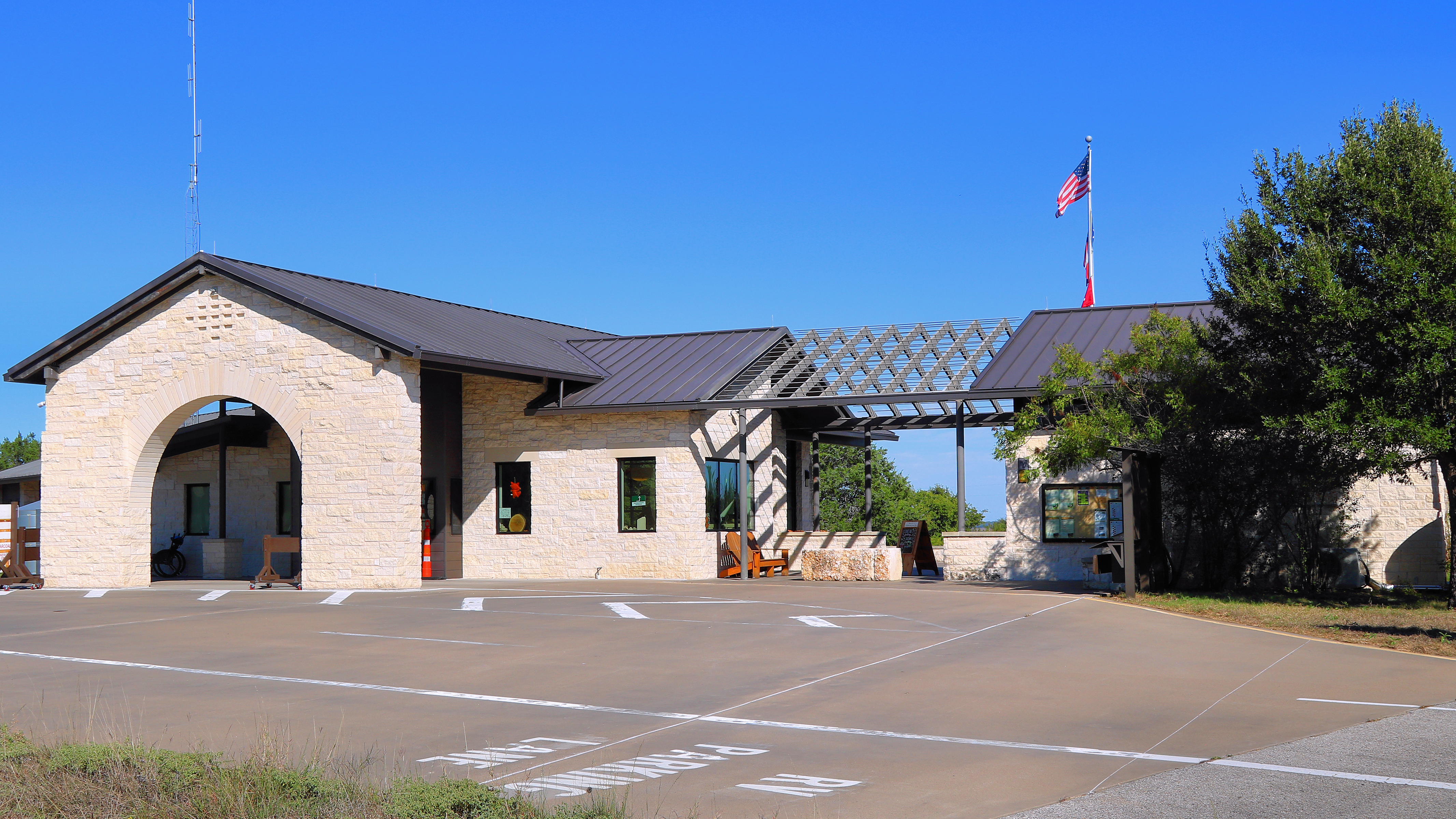
The feature photograph shows the real Mother Neff State Park headquarters as photographed on October 18, 2026. It is a current, authentic view of the destination, not a fictional cache location or an image of the upcoming lesson. The actual meeting point is near the day-use bathrooms, so the image should not be mistaken for a photograph of the exact class area. This distinction makes the article more useful, not less.
A family activity that works without a perfect result
For children, a geocache can turn a walk into a cooperative challenge. Give one child the map, another the job of observing trail markers and another the chance to suggest a search area. Rotate roles so everyone contributes. Explain that the search is not a race through the park or a reason to hide from the adults. If the family doesn’t find a container during the first attempt, the outing can still succeed because everyone learned to use a new tool.
It helps to set rules early: stay on permitted routes, don’t take a cache container home, respect other users and never leave food as a trading item. Keep the logbook dry if one is present and replace the container exactly as it was found. These customs are part of what makes geocaching possible across many places. Without them, one person’s prize becomes the next visitor’s disappointment.
The hours to double-check
The official page lists 9 a.m. to 1 p.m. at the top but says 10 a.m. to 1 p.m. in the descriptive text. If you want the first guided instruction, confirm the start with the event contact before traveling. The program is free with normal park admission, and entrance is covered by a valid Texas State Parks Pass. Weather can force the activity indoors or lead to cancellation. Check park alerts and current day-pass availability before leaving.
For other nearby Central Texas activities, Thunderfoot’s Waco, Temple & Killeen hub gives a regional starting point. But this particular weekend opportunity is distinct: it teaches a navigation skill in a genuine outdoor setting. Bring a charged phone and curiosity, find the right day-use meeting point and let the clues lead you somewhere worth noticing.