
A driving range is a forgiving place. You can hit a bad shot, step back, retrieve another ball and convince yourself the previous one never happened. A golf course doesn’t offer that kind of generous amnesia. Saturday’s ‘Golfing with a Ranger’ program at Lockhart State Park is designed for exactly that transition: people who have learned some golf basics but want more experience putting them together on an actual course. The name sounds casual. The registration rules and recommended skill level are not.
Texas Parks & Wildlife lists the class for Saturday, October 24, 2026, from 1:30 to 3:30 p.m. Participants meet at the Park Headquarters building. The instructor is Ranger Steven, and the class is intended for those who have completed the park’s beginner series or learned golf elsewhere and want more on-course practice. It recommends ages ten and up. This isn’t a beginner lesson where someone hands you a club and explains which end to hold.
The registration mistake to avoid
The organizer’s official event notice says registration is required, class space is limited and registration is accepted online only. It explicitly says not to email a registration request. That matters because outdoor programs often allow email signups, and a visitor who assumes this one does could end up without a place. Use the registration link on the park’s current event page, then check your confirmation before making the drive.
There is no separate program charge beyond park admission according to the listing. Regular entry is $3 per adult, with children age 12 and younger admitted free; check the current fee information if using a pass or different entry arrangement. The event asks participants to bring their own clubs, water and weather-appropriate clothing. If your plans change, the notice provides contact information to cancel. Don’t keep a scarce seat reserved when you already know you won’t attend.
Who this class is actually for
The ideal participant can make contact with the ball, understands basic golf safety and is ready to make decisions from one shot to the next. You don’t need to be a strong player. You do need enough familiarity that a course-based session can focus on what happens after the first swing. Someone entirely new to golf might be better served by a beginner class before trying to move through a guided group on a real fairway.
A beginner who has practiced elsewhere is eligible under the park’s description, which is good news for the person who learned from a relative or through other lessons. But be realistic about the pace and the group. If it takes ten minutes to find a club in the bag and another five to remember which direction the ball should go, a two-hour on-course class may not be a relaxing experience. Prepare the night before and bring a manageable set of clubs.
Four skills you can learn faster on grass than on a mat
First is choosing a safe line. A range mat points toward a giant target area and removes most decisions. On the course, you have trees, slopes, hazards and other players to consider. Picking a line means understanding where a miss might end up, not simply aiming at the flag. A conservative shot that leaves a comfortable next attempt is often better than trying to clear a hazard you rarely carry in practice.
Second is club selection from uneven lies. A ball on a slight uphill or downhill slope asks your balance to do something that a level hitting bay never tests. Keep expectations realistic; the objective is to produce a safe, repeatable stroke, not to recreate a tour player’s swing. If the instructor offers an adjustment, try it deliberately and notice what happens. Golf instruction is more useful when each shot answers one question instead of producing six swing thoughts at once.
Third is the short game. Most recreational golfers spend too much practice time trying to hit the ball farther and not enough learning what to do from thirty yards in. On a course, you can discover the value of leaving an uncomplicated chip or putt rather than constantly chasing heroic recoveries. Ask how the instructor reads a slope and chooses between a putt, bump-and-run or higher shot. Those practical choices can save more frustration than another attempt to overpower the driver.
Fourth is pace. Good pace of play doesn’t mean hurrying through every shot. It means being prepared when it’s your turn, knowing where your equipment is, repairing the course appropriately and being considerate of people behind you. A guided class can help newer players learn this rhythm without feeling that every group in the county is waiting on them. The etiquette lesson is just as important as the swing lesson.
Lockhart is an unusual setting for a golf lesson
Lockhart State Park includes a real nine-hole course as part of a Civilian Conservation Corps-era state park landscape. Golf here feels different from visiting a large suburban resort complex. The park’s setting gives the round a more modest, approachable character, and that is part of its charm. You aren’t entering a glossy tournament hospitality tent. You’re showing up to learn how to play an ordinary course more confidently.
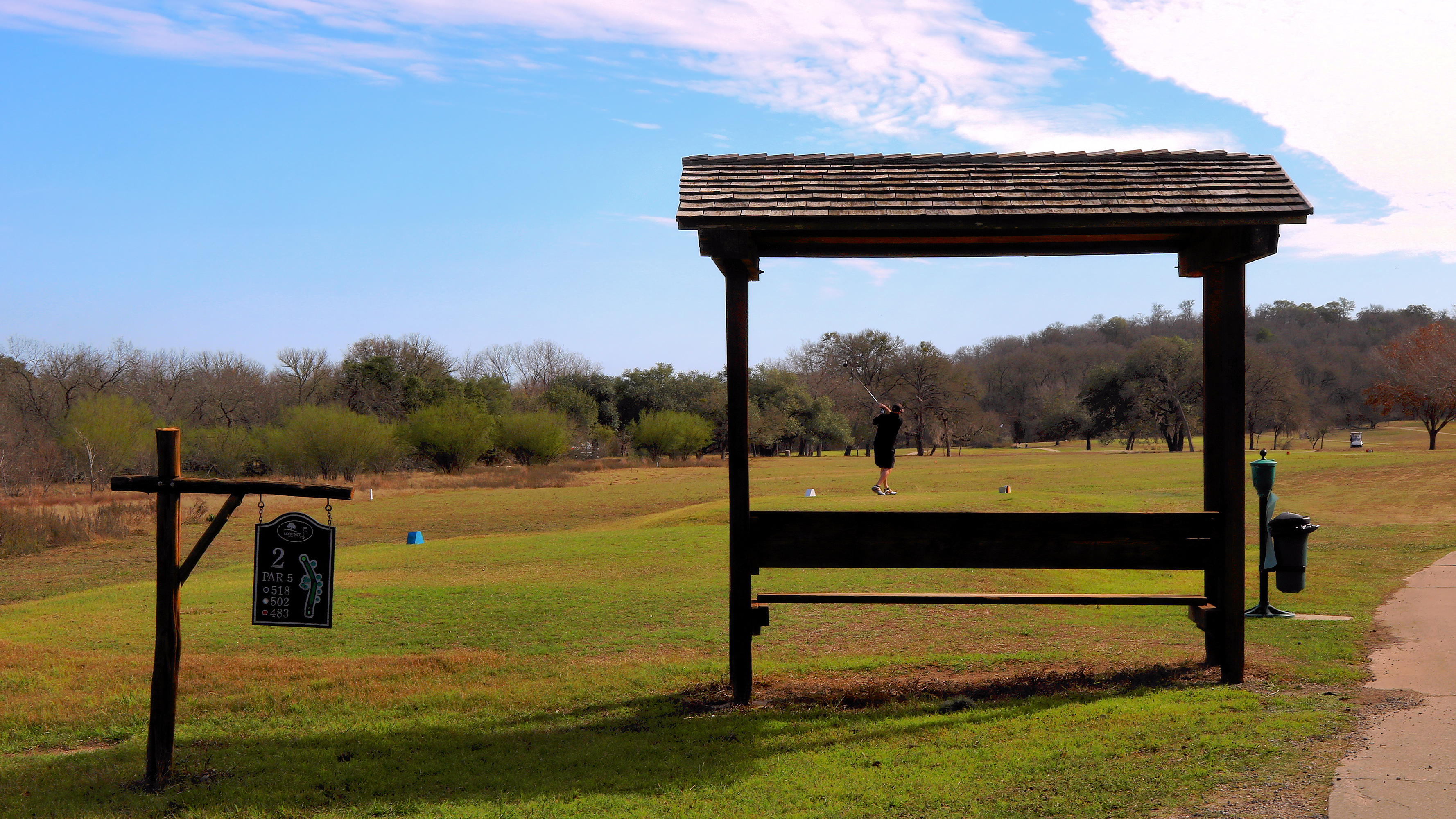
The feature photograph for this story is a true image of Hole 2 at Lockhart State Park, captured in 2026. It shows the actual park course rather than a generic golf image of an imaginary green. It doesn’t show Saturday’s class or the ranger, and it should not be read as proof of Saturday’s grass condition. Real photographs can help readers understand a place without pretending a future event has already occurred.
Make the most of two hours
Arrive early enough to handle entry and find Park Headquarters without searching at the last minute. Use the few minutes before class to confirm your clubs, gloves, water and any simple questions you want answered. ‘When should I lay up?’ is better than arriving with the impossible mission of fixing your entire game. Choose one or two habits to work on, perhaps club choice on short holes or managing the ball around the green, and treat the rest as exposure to real playing conditions.
After the class, write down the two ideas you actually want to remember. Not twelve complicated instructions about your elbow; two. The next practice session should test those ideas in a low-pressure setting. If the coach recommends a change that feels awkward, give it sensible practice time before judging it from one swing. Golf progress rarely arrives as a spectacular transformation during a single Saturday.
An easy town, but don’t overstuff the day
Lockhart is also known for barbecue, which makes it tempting to assemble an entire food-and-golf itinerary. That’s fine if the timing works, but the two-hour class already occupies the middle of Saturday afternoon. Eat before you become hungry, make sure you stay hydrated and avoid scheduling something distant immediately after the program. This is a golf-learning day, not a contest to see how many things one person can cram between lunch and dusk.
Check conditions. Texas fall weather can make a comfortable afternoon or a windy session where ball flight behaves differently from your expectations. If the class is canceled for weather, don’t assume your registration guarantees a replacement session without confirming with the park. If you have a mobility concern or a particular equipment need, contact staff ahead of time. A practical course lesson works best when everyone arrives aware of the real environment.
What the ranger isn’t promising
The event description does not promise a full 18-hole round, a personal fitting or a formal certificate. It is two hours of supervised practice for people ready to apply golf knowledge on a course. That’s plenty of value if expectations are honest. A participant hoping to break 80 by Sunday is shopping for the wrong miracle. A participant hoping to feel less lost during the first three holes of their next round has found a sensible opportunity.
For the wider local calendar, Thunderfoot’s Austin Metro hub has additional regional ideas. Golfers exploring other places can use Thunderfoot’s golf sections, but the direct Lockhart program page is the only reliable path to this particular registration process. Verify availability before driving. Bring your clubs, water and a willingness to learn from a few ugly shots; that’s usually how progress begins.