
Most people visit a park to use a trail. Far fewer think about who keeps that trail usable after rain, foot traffic and years of erosion. This weekend Hueco Tanks State Park & Historic Site, outside El Paso, offers a way to see that work from the other side. The park is recruiting volunteers for trail maintenance and erosion-control projects on Saturday and Sunday, October 24–25, 2026. The days begin early enough that the volunteer crew may already be working before ordinary visitors reach the gate.
For someone who loves West Texas, that makes this a more interesting weekend option than another general list of scenic overlooks. You aren’t simply taking a picture of famous rocks. You’re joining a group that helps protect paths around a culturally and ecologically important place. The program is not a commercial guided tour, and nobody should mistake it for a free pass to climb or enter restricted areas. It’s a chance to contribute labor under staff direction and understand why managing fragile desert landscapes requires more than good intentions.
The exact schedule — and why the gate time matters
Texas Parks & Wildlife’s official volunteer listing describes work days on Saturday, October 24, and Sunday, October 25, both from 7:30 to 11:30 a.m. Volunteers are asked to arrive by 7:15 a.m. to check in and meet the crew. The park ordinarily opens to visitors at 8 a.m., but this opportunity starts earlier. The notice specifically directs people who need help entering at that time to contact Ranger Carlos before arriving.
This early start is not a decorative detail. A person who shows up at 8 expecting a relaxed orientation may miss instructions or cause delays for a crew that has already divided the work. If you’re interested, complete the park’s linked signup, confirm your participation and ask how early access will work. Do not assume a normal day-use reservation or an arrival at the public opening time is enough for a volunteer assignment. The official page contains contact information for the coordinator and an online signup form.
What to bring — and what not to bring
The organizer says snacks and supplies will be provided, but volunteers should bring refillable water bottles and gloves if they have them. Dress for the weather and the work. Trail maintenance can involve uneven ground, bending, lifting manageable objects and time in the sun, although the specific duties should be assigned by the crew leader. Sturdy closed-toe footwear, comfortable clothing that allows movement and sun protection are sensible. If you have physical limitations, talk to the coordinator in advance rather than guessing what will be expected.
The program is not pet-friendly, and participants age 12 and younger must be supervised by an adult. That means this isn’t a good opportunity to bring a dog along for company or to leave young children wandering while you work. Parents should decide whether their children can safely participate in a morning focused on maintenance rather than recreation. Nobody should feel pressure to attempt a job beyond their ability; safe volunteer programs rely on clear instructions, appropriate tasks and people who say when they need assistance.
Bring the right attitude as well as gear. A trail crew is not the place to improvise construction methods, move natural or cultural objects without permission or decide that a shortcut would be better than the existing path. Park staff understand the terrain, erosion concerns and restrictions that a visitor may not notice. Listen carefully, stay within assigned areas and treat tools and materials according to the leader’s instructions. Effective volunteer work is measured by useful improvements, not by how dramatic a photograph looks.
Why Hueco Tanks needs special care
Hueco Tanks is not an interchangeable collection of desert boulders. Its rock formations have drawn people for generations and preserve important cultural heritage, including pictographs that require protection. The area’s natural basins and challenging terrain also make it a renowned destination for climbing and exploration. The very qualities that attract visitors—rock surfaces, winding access routes, unusual formations and the feeling of discovering something—also create pressure when too many people improvise their own ways through sensitive places.
Erosion control isn’t glamorous, but it can determine whether a path stays intact or becomes a widening scar. When rainwater follows a trail downhill, repeated foot traffic can deepen ruts, expose roots or direct runoff into places where it causes additional damage. Trail crews may work to address these problems under park guidance. It’s important not to assert that a particular project will occur on Saturday unless the coordinator confirms it; the official notice refers broadly to multiple maintenance and erosion-control projects.
This is a good opportunity to think about how ‘leave no trace’ actually functions. A visitor can carry out trash and stay on designated routes, but a trail still needs ongoing attention. Park staff plan, inspect, repair and sometimes restrict access for reasons that are not obvious in a vacation photograph. Volunteers extend that work. If you’ve ever enjoyed an unexpectedly stable path across difficult terrain, someone probably made a series of thoughtful choices long before your visit.
The right way to photograph this outing
Hueco Tanks is spectacular to photograph, but volunteers need to respect both the work and the site’s cultural resources. Ask staff before photographing people, tools or areas subject to special protection, and avoid posting precise locations of sensitive cultural features that should not receive casual foot traffic. Never touch or mark pictographs for a better shot. A social post can highlight the value of a volunteer morning without turning fragile places into directions for unauthorized exploration.
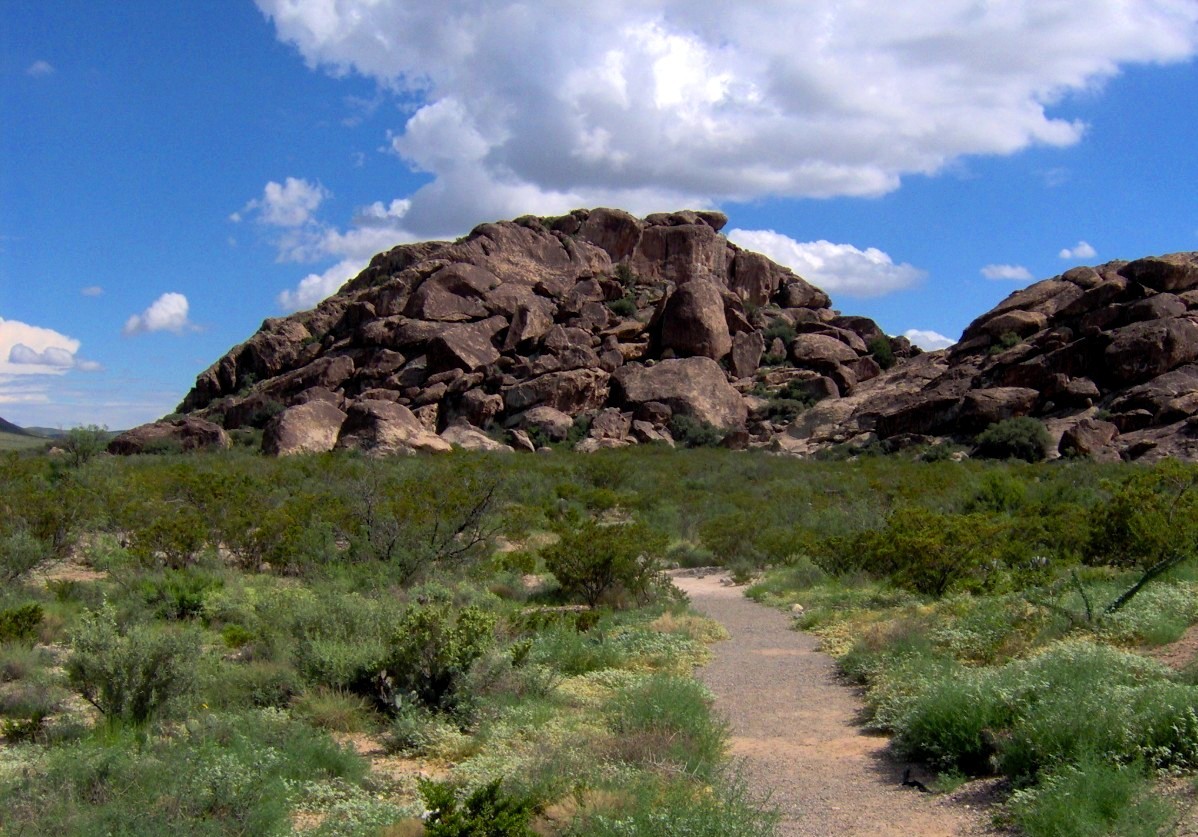
The featured image for this article is a real archival photograph of East Mountain at Hueco Tanks State Park, not a digitally invented landscape. It does not show the October volunteer crew or claim to document the exact worksite. That restraint is a better editorial choice than generating a fictional team standing beside fabricated rock art. Anyone planning to visit should rely on the park’s current access requirements, not interpret a photograph as a map.
Who will get the most out of volunteering?
People who hike often but have never participated in trail work may find the morning eye-opening. It changes how you see a slope, water drainage or the placement of a rock along a route. Experienced volunteers may enjoy applying their skills in a new place, so long as they defer to the park’s local methods and restrictions. Families with suitably prepared older children can learn the value of shared stewardship, but the adult-supervision rule for younger participants should be treated seriously.
It may be less suitable for visitors who primarily want an unrestricted recreational day, are unable to arrive before dawn travel preparations or have no tolerance for outdoor work. That doesn’t mean Hueco Tanks isn’t worth visiting another time. The park offers other official opportunities to learn about the area, and some require reservations or guides. A volunteer work day and a general visit have different purposes. Choose the one that actually fits your goal.
Make the early drive manageable
Check the actual drive from El Paso or your overnight location the day before. The 7:15 a.m. requested check-in leaves little room for searching for breakfast, discovering a forgotten water bottle or struggling with unfamiliar access instructions. Pack your gloves and refillable bottle the night before and make sure you know which entrance arrangement the park has provided for volunteers. If you’ve registered, save the organizer’s contact details so a delay or access question can be handled correctly.
For visitors from outside the El Paso area, it may make sense to stay nearby rather than start with an exhausting overnight drive. If you work both Saturday and Sunday, allow time to recover, eat well and remain hydrated. West Texas afternoons may offer other interesting activities, but stacking a demanding morning with an overly ambitious sightseeing schedule can turn a rewarding volunteer opportunity into a tiring obligation. The goal is to help the park and enjoy the experience enough to want to return.
What happens after the tools go away
A satisfying trail-maintenance day may not provide a dramatic before-and-after transformation. Some of the most valuable work involves repetitive small improvements that keep future problems from growing. Ask staff what the project is intended to prevent, what visitors should do differently and how to support the site between volunteer events. Learning that connection can make a two-hour or four-hour shift meaningful beyond the immediate task.
Don’t assume volunteering gives you automatic permission to explore additional protected areas afterward. Hueco Tanks has specialized visitor-management rules and cultural-site protections. If you’d like to extend your day into a normal park visit, ask staff what reservations, guides or access arrangements apply. A helpful volunteer should be the first person willing to follow restrictions, not the first to look for exceptions.
How to join the October 24–25 trail crew
Use Texas Parks & Wildlife’s volunteer event page to sign up and confirm details. The listed shifts run 7:30–11:30 a.m. both mornings; check-in is requested by 7:15. Bring refillable water, gloves if available and work-appropriate clothing; leave pets at home and arrange adult supervision for any participating child age 12 or younger. Because the work starts before normal park opening, resolve entrance instructions with the organizer rather than guessing at the gate.
For other outdoor ideas in this corner of the state, explore Thunderfoot’s El Paso & Far West Texas hub. But this particular weekend deserves its own category. It’s not about consuming another attraction. It’s about making a real place better for the people who come after you, one carefully maintained stretch of trail at a time.