
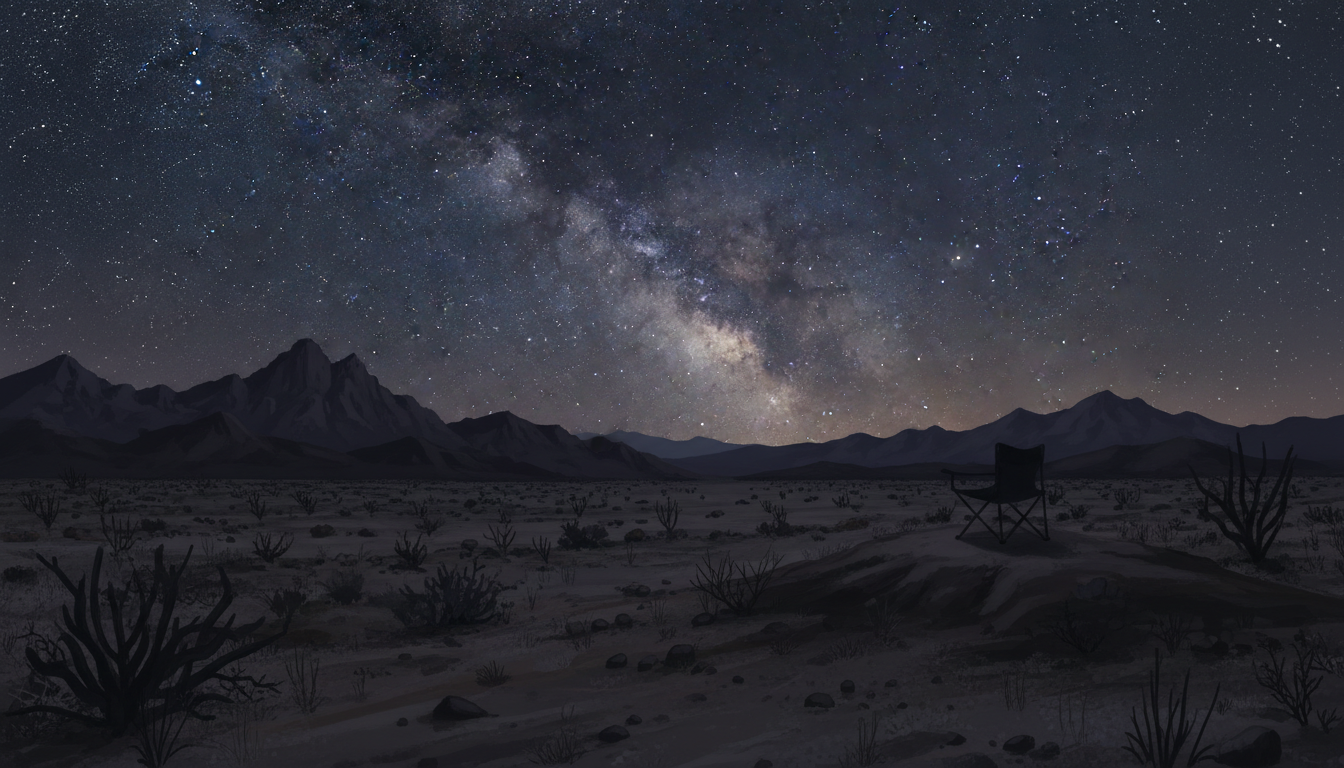
West Texas is worth staying up for. San Angelo State Park has an October 23 star party, while Big Bend Ranch offers some of the state’s darkest skies. They’re two very different experiences, and one is much better for a first-timer.
West Texas after sunset is a different destination
There are places where people drive for mountains and canyons, then go inside just when one of the region’s best experiences begins. West Texas has night skies that can make the familiar constellations look radically different from how they appear over a city. The sparse artificial light around parts of Big Bend creates unusual darkness, while a guided star party in San Angelo offers a friendlier introduction close to a population center.
The options are not interchangeable. A ranger-led program can help beginners learn what they’re seeing and manage practical logistics. A remote desert stargazing session requires more independent judgment about access, weather, travel and safety. Choosing the correct level of adventure is part of making the experience worthwhile.
San Angelo’s October 23 star party
San Angelo State Park lists a Star Party for Friday, October 23, from 7:30 to 9 p.m. The program brings park rangers together with the San Angelo Astronomy Association to explore stars, planets, constellations and other celestial sights. The official meeting location is Bell’s Trailhead Parking Lot near the North Unit, with instructions to check in at the south gate first.
That’s the kind of operational detail visitors should read twice. Driving to the wrong gate after dark can be frustrating, particularly when a timed program is already underway. Save the official directions and allow time for check-in. Ask the park about any day-use reservation requirements before you make the trip.
What to bring to a star party
The organizer recommends a chair or blanket, water, weather-appropriate clothing and a red-light flashlight if available. Red light helps preserve night vision better than a bright white beam. Aim the light toward the ground and avoid illuminating other observers or their equipment. A regular phone screen held at full brightness can disrupt more than just your own view.
Bring patience. Looking through a telescope may involve taking turns, and clouds can interrupt viewing. Ask the volunteers what the night’s best target is and how to recognize it with the naked eye. You don’t need to master the names of dozens of objects to enjoy the experience.
The admission reality
Texas Parks and Wildlife lists this San Angelo program as included with normal park admission. The official event page gives four dollars for adults and free entry for children twelve and younger, with Texas State Parks Pass benefits applying where eligible. Fees and conditions should still be checked before leaving home.
Do not confuse the program’s inclusion with guaranteed access to a full parking area. The park recommends advance day-use reservations. If you’re traveling from another city, that extra planning step is worth doing rather than assuming an evening event means unlimited entry.
Big Bend Ranch: the other end of the spectrum
Big Bend Ranch State Park is designated as a dark-sky park and occupies some of the darkest terrain in the state. Texas Parks and Wildlife identifies stretches along River Road, West Contrabando Trailhead, Big Hill and the Hoodoos as accessible stargazing locations. That last word matters: visitors should select approved places they can reach safely with their vehicle and skill level.
The broader park contains remote trails and unimproved roads that require specialized vehicles and preparation. Stargazing is not a reason to drive onto a difficult backcountry route after dark. Choose designated accessible locations, confirm the relevant gate and access rules, and stay alert to traffic when stopping near a roadway.
Understanding the Bortle scale
The Bortle scale describes night-sky brightness from very dark rural conditions to heavily light-polluted urban skies. Big Bend Ranch reports some areas near Class 1, with the Barton’s Warnock and Fort Leaton areas showing different ratings. Those numbers explain why two places within one region can look so different after sunset.
The darkest sky doesn’t guarantee the best particular evening. Clouds, moonlight, dust, humidity and local lighting all influence what an observer can see. A clear, comfortable night at a more accessible location may be more satisfying than an ambitious drive into remote country during poor conditions.
Moonlight changes the experience
A bright moon can wash out fainter stars, but it also changes the desert landscape in a beautiful way. Before planning a Milky Way photograph, check the moon’s phase and when it rises and sets. A star-party night might still be worthwhile under moonlight because the moon itself becomes an interesting telescope target.
If you want an exceptionally dark view, plan around favorable moon conditions and cloud forecasts. Don’t assume the time printed on a calendar guarantees darkness. Astronomical twilight and local lighting conditions can matter, and a knowledgeable program leader can help newcomers understand the difference.
Photographing the night sky without overcomplicating it
A modern phone may capture bright stars or a dramatic horizon under favorable conditions, but astrophotography often requires stabilization, long exposures and an understanding of how the camera handles darkness. Don’t spend the entire outing troubleshooting settings unless photography is your actual reason for being there.
For a first visit, put the phone away for several minutes. Let your eyes adjust, notice the brighter constellations and enjoy the silence. If you do photograph the sky, use a tripod where permitted, keep bright screens pointed away from others and avoid stepping onto fragile ground for a better composition.
Children can enjoy it without a telescope
Ask children to find a constellation shape, compare bright and dim stars or count how many satellites they notice if conditions allow. Tell them that the sky changes over the night and through the seasons. A comfortable chair and a short session may be enough for younger visitors.
Avoid making the experience an endurance test. Kids who become cold, hungry or frightened in the dark will remember those feelings more than the stars. Choose a program with clear structure, tell them what to expect and have an easy departure plan.
The remote-safety checklist is different
Remote West Texas travel requires fuel, water, weather awareness and a route that works after dark. Save offline maps before losing service. Let someone know your plans and avoid exploring unfamiliar terrain at night. Scorpions, uneven ground, sudden weather and traffic can all create hazards where visibility is poor.
Do not trespass onto private land or park in an unsafe location simply because a photo looks better there. A dark sky can be found without taking needless chances. Remember that remote sites may have limited facilities; bring what you need and check official access instructions.
A first-timer and an advanced observer need different plans
The first-timer should consider an organized star party in San Angelo. It offers interpretation, a scheduled gathering and people to ask questions. An intermediate observer might choose a familiar public viewing area and practice using binoculars or identifying objects. An experienced astrophotographer may plan around moon phase, weather and specific approved viewpoints.
What does not change is respect for the location and others. Preserve darkness, control artificial light, leave no trash and follow park rules. Experience should make a visitor more considerate, not more entitled to ignore restrictions.
Make the night part of a bigger West Texas experience
San Angelo’s star party can complement an earlier walk or a local meal; Big Bend Ranch might be the central reason for a much longer trip. Don’t pretend those destinations are close enough to combine casually. Use Thunderfoot’s West Texas pages to discover activities appropriate to the area you’re actually visiting.
A clear night can turn an ordinary weekend into a memory that lasts. Check the latest weather and park notices, prepare for darkness thoughtfully and look up long enough to notice how extraordinary the region really is.
Official resources
Read the San Angelo Star Party announcement, Big Bend Ranch dark-sky guidance and West Texas on Thunderfoot Sports. Always confirm current weather, gate access and reservation requirements.